Addendum to Early article: The legacy of the Sadlowski campaign was swamped by the tsunami of the 1980s steel industry crisis
By Garrett Brown
Officially, Ed Sadlowski lost the 1977 election for president of the United Steel Workers of America (USWA) by a margin of 43% to 57% to the candidate of the union’s officialdom, Lloyd McBride. Some Sadlowski supporters in his rank and file organization, Steelworkers Fight Back (SFB), believed that he actually won the contest, but voter fraud in Canada (more votes than local union members) led to the electoral loss. The SFB campaign in Canada was simply not strong enough to prevent that kind of fraud, if that’s what happened.
But Canadian irregularities may not have been necessary as the officialdom’s mobilization of its 800 appointed “international staff” to threaten local union officers and members that if they voted for Sadlowski, then the international’s staff at local, regional and national levels would turn its back on the local unions when it came to grievance hearings, local contract bargaining, or other support from the international union, was anything but an idle threat.
The fact that SFB was credited with 43% of a national union election was remarkable in documenting the ferment in the union and the openness to a new, more radical approach by working steelworkers.
But within a few short years this potential was swamped by the collapse of the steel industry, and the inability of the SFB leaders to generate an alternative program to the union officialdom’s complicity with management’s slow-motion suicide.
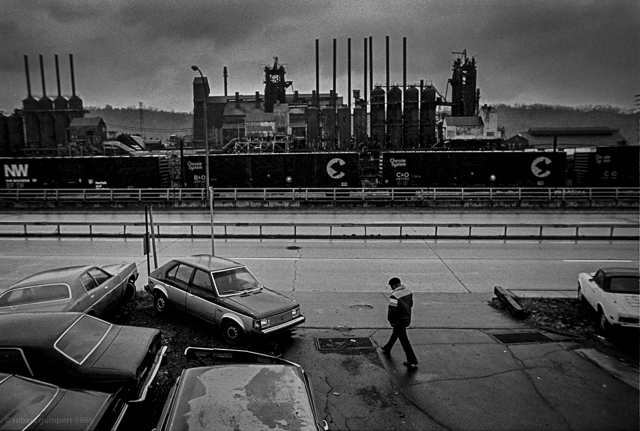
1986: Duquesne, PA.: The Duquesne Steel Works, closed and now gone. Photo: Robert Gumpert
Coming out of the Second World War, the U.S. steel industry was the industry world leader and steel towns around the country boasted some of the best jobs and most stable, well-resourced working class communities anywhere. Forty-five years later, the industry was in crisis and steel towns were well down the road of ruin and abandoned rubble, a la Bruce Springsteen’s Youngstown.
This happened because the owners and managers of American steel made two big decisions:
1) Instead of continuing the industry’s traditional reinvestment of a percentage of profits into renovation and technology, they opted to follow the siren call of Wall Street’s “go-go 1980s” sending nearly all profits to the “coupon-clipper” shareholders
2) Industry managers stubbornly refused to adopt new, more efficient technologies being installed by Europe’s steelmakers (rebuilding from the ashes of WWII) and new steelmakers like Korea and Brazil. Instead of investing in the basic oxygen process (“BOP shops”) and expanding electric arc furnaces to remelt and reuse recycled steel, the U.S. industry relied for way too long on the century-old open hearth, integrated steel process.
The result was that “foreign competition” ate the U.S. industry’s lunch over several decades, while management paid out millions to stockholders and invested in other industries by way of asset diversification, leaving the mills and steel towns in terminal decline, and gutting the pensions and lives of tens of thousands of steelworkers and their families.
The industry’s answer was the still ongoing campaign (30+ years later) against “unfair foreign competition,” often centered on China and frequently with racial overtones.
With the industry’s self-looting and union officials’ connivance, despite the Sadlowski campaign, USWA members were trapped on the Titanic headed into the iceberg fields. The response of the USWA officialdom – always following the lead of management – was to become the choir in the “church of trade sanctions against unfair foreign competition.”
Unfortunately, the activists of SFB and the Sadlowski campaign were not able to offer an alternative and credible alternative to steelworkers who became increasing desperate to save their jobs and their communities from the catastrophe looming ever larger on the horizon.
Sadlowski himself never again ran for elective office in the USWA – a lost opportunity in my view, but it was his decision to make. Rank and file activists in SFB were not able to follow the example of the long-term organizers of Teamsters for a Democratic Union (TDU) – a development itself worthy of more discussion about why. Steel towns around the country in the 1980s and 1990s became hollowed-out shells where young people had no future, and many left.
Given the many challenges facing the labor left in the 21st century, it is worth thinking about what would have been an accessible, attractive and “feasible” alternative plan to save the U.S. steel industry in the 1980-90s that could have galvanized and inspired the steelworkers who voted for Sadlowski.
Would nationalization of the steel industry – or worker-run cooperatives – or coops run by boards including environmentalists and community members as well as workers – won the hearts and minds of steelworkers and steel towns in the era of President Reagan – or now in the era of President Trump?
How can we turn the unrealized potential of the Sadlowski campaign and legacy of hard-working SFB activists for a democratic, member-run union with radical program into a reality in an economy and labor movement that is so seemingly different from the 1970s? Yet the underlying problems are basically the same.
It is another of the ironies of American labor history that the union and workers that almost elected Ed Sadlowski international president should (40 years later) still be the cheerleaders of trade sanctions against steelworkers in other countries, and, according to USW officials, that voted 40% for a billionaire con-man grifter in the 2016 election.
Garrett Brown wrote extensively about the Sadlowski campaign as a reporter for The Daily Calumet newspaper in South Chicago in 1976-77. He was also a not-so-secret supporter of Steelworkers Fight Back and the election campaign during his free time on nights and weekends.
The Valley
By Enrico Deaglio
The long story of the highspeed train in the Susa Valley is a symbol, a paradox and a tragedy.
The boots of history have marched dramatically through the Val di Susa; therefore it’s no surprise that modern ones do the same. It was 218 BC when the powerful army of the Carthago general Hannibal crossed the Alps with 50000 soldiers and 37 elephants. He was heading south and wanted to conquer Roma in the most difficult way. A genius, but he didn’t succeed. Roma – lazy, already corrupt – instead, flourished and conquered the northern part of the peninsula. In 58 BC, Julius Caesar, reversing Hannibal invaded this time from the south, marching victoriously through the Val di Susa to arrive Gallia – France. He acted quickly, and his assessment, “veni, vidi, vici”, has become a catch phrase for swift victory.
Val di Susa – Susa is it’s magnificent Roman capital – is a broad, green and spectacular valley. From the outskirts of Torino it runs northwest 90 km to the French border. High and steep mountains with vast glaciers border The Valley on the left and on the right. Being one of the main passages of continental Europe, centuries have provided The Valley with castles, monumental fortresses, churches, abbeys, and fascinating legends of warriors and bandits. Extensive use of dynamite occurred here in the mid nineteen century when the very modern Frejus gallery was built unifying Italy and France via a 50 km long tunnel across the border.
In WW2 The Valley forged a strong anti-fascist guerrilla movement, remembered today in monuments and songs. The post war economy has seen The Valley prosper with ski resorts, tourism, textile industry, and new markets for wines and cheeses. Many of the 100,000 residents commute to industrial Torino, and many Turinese have second homes here.
The idyllic scene was broken when in 1991, out of the blue, a pantagruelic (a gigantic prince, noted for his ironical buffoonery, in Rabelais’ satire Gargantua and Pantagruel (1534)) state plan for The Valley was announced for a highspeed train (TAV, Treno Alta Velocità) running from Torino to Lyon. A colossal jobs venture between France and Italy; sponsored by the European Union and financed with 20 billion euros. The planned line would devastate The Valley. New tracks, 230 km of new tracks, and a huge 57 km tunnel would perforate The Valley, carrying passengers and goods. The “Grande Opera” was going to take decades, bringing in foreign workers and giving the natives nothing. (Being that the Mafia is the main force for the building business in Italy, residents felt that the Mafia would pollute their clean woods and rivers). Why all this? The plan was said to be of “strategic interest”, to improve business, tourism and trade between northern Italy and France, an indispensable link in the new futuristic railway network meant to link Lisbon to Kiev. In 1991, the plan said half a million people traveled from Turin to Lyon each year. The Promotion Committee forecast that by 2002 passenger numbers would increase fivefold to 7.7 million. The project was also supposed to take away trucks from congested highways, and decrease the pollution in The Valley.
It looked like a good, modern project that would transform a peripheral valley into a sort of thriving center of the new Europe. Well, it was all wrong. Other studies, no less scientific, explained that commercial traffic through the valley was going to decrease, not increase, the environmental hazards were huge, and costs would inevitably rise. Simply the big project made no sense. They were right. Twenty-five years later, the Susa Valley sits on the biggest social, environmental and political disaster, probably in all Europe. The Italian Army has deployed thousands of soldiers to protect useless building sites creating a sort of police state; fences and controls are everywhere, as are secret service agents. Hundreds of people have been incarcerated, indicted for “subversion”, and national politics has been affected in the worst way.
How did this disaster happened? Hard to say. But a mysterious story, always remembered, is said to have started everything. In 1996, while the first opposition to the high speed train was beginning to take shape, the Torino judiciary ordered the imprisonment of three young anarchists and accused them of conspiracy against the TAV. One of them, Edoardo Massari, nicknamed “Baleno”, was found hung in the Torino prison. His girlfriend, a 21 year old Argentinian named Maria “Sole”Soledad Rosas, was under house arrest, when she was found hung in the house. The third man, Silvano Pellissero, a young man of The Valley, whom the prosecutor said there was “gigantic evidence” against, was declared innocent. The tragic episode of the three supposed “ecological terrorists” had a big impact in Torino and The Valley, creating an atmoshpere of mystery and suspicion over the whole high-speed train affair. The Valley people, with dozens of mayors leading the protest, rejected the plan. A march of 70,000 people was attacked by the police. In the years since, the highway to France has been blocked dozens of times. All the political parties, and especially the left, defended the project, claiming that there were no enviromental risks, that the whole business would have been Mafia free, and an economic opportunity for The Valley. The opposition to TAV produced studies about the risk of asbestos and uranium in excavating the gallery, predicting at least twenty years of devastating works, all for a project that fullfilled no needed purpose. The high-speed train would reduce the schedule from Torino to Lyon by only by 20 minutes, having little impact on the transportation of goods. As a matter of fact – as a highly respected Politechnic Univerity study showed, it would have been much more ecologically sound, and cheaper, to use private airplanes instead of trains or trucks.
In twenty years many things have happened in The Valley. People’s opposition to the TAV has grown with a considerable show of militancy including marches, pickets, some sabotage actions, and clashes with the police on dozens of occasions. The Italian State has never conceded anything. Instead police, carabinieri and finally the Army, have been sent to protect the slow and very expensive construction works. On the political side, The Valley, always a leftist bedrock, ceased to be so. Lots of people refused to vote in regional or national elections. Many others supported the Five Star Movement led by the comedian Beppe Grillo (the only character who came to The Valley in solidarity with the residents). The “No TAV” movement also became the symbol of social antagonism nationwide, supported by the radical left everywhere. It’s still amazing to find “No TAV” signs even in deep Sicily. (As a matter of fact, the “No TAV” movement is the only radical event, not only in Italy but in Europe). A very famous lefitst author, Erri De Luca, was indicted for “promoting sabotage”, the charge stemming from a few generic words he made during a public speech. In the name of freedom of speech the author was acquitted at the trial.
The recent national elections may mean change for The Valley. Amazingly the Five Star Movement and Lega parties won a majority and formed the first populist goverment in Europe. However the problem in regards to the Susa Valley is Five Star Movement wants to stop the project, Lega wants to go on, and it’s too early to undestand what will happen.
The long story of the highspeed train in the Susa Valley is a symbol, a paradox and a tragedy. It has challenged the concept of democracy. Can a local community oppose a national will? Can a powerful state enforce its will on a dissident community? What is the role of science, experts, and intellectuals in the decision making? Can a wrong decision be changed by a peaceful movement?
So far nobody has found an answers.
Meanwhile history plays again its symphony. In the cold shadows of the high mountains, in the glittering sun of the glaciers, another army is moving through the Valle di Susa. Thousands of migrants coming from North Africa or Syria, from Yemen or Ethiopia, survivors of the Mediterranean sea wrecks pushing their way north through The Valley on the same route the highspeed train promised to use for a fast and confortable trip to Paris. They have never seen the snow in their young lifes. They camp in the ski resort of Bardonecchia. Some “passeur” shows them the old routes of smugglers and partisans to get to Nevache or Briancon. They buy a windbreaker, a pair of sneakers and they try to cross the border. Italian and French police chase them, and the good people who try to help them, or just to feed them, are inprisoned by the authorities.
When the winter ends the dead bodies of these African and Middle Eastern “soldiers” without elephants will appear again.
Vacancy control is the only realistic answer to San Francisco’s housing crisis
By Buck Bagot
SF doesn’t have many remaining sites for development of any kind. We should reserve those that remain for affordable housing development.
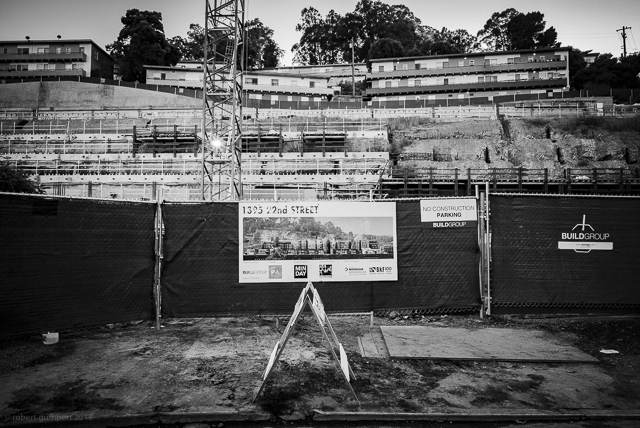
20 April 2018: San Francisco, CA. Development just below the Potrero Projects. Photo Robert Gumpert
The cost of housing is transforming – destroying – San Francisco and the Bay Area. The crisis is so bad that the even the ruling elite is forced to address it. True to form, all of their proposals are shaped by their self-interest. Ditto local governments responses. Some people – and sadly not just the wealthy – believe that we can lower or stabilize housing costs in SF by building more market rate housing. I don’t. The housing market hasn’t worked for most San Franciscans for decades. I have no faith in market-based solutions. The monthly rent for a typical unit is $4650. The lower-end price to buy a home in the entire Bay Area is over $500,000. In a city like SF, with an international housing market, market rate housing may make the cost of housing even higher, not lower. But most importantly, the debate over market rate housing, and new housing development in general, misses the most important solution – strong rent control, or vacancy control. Vacancy control is the only way to save SF as a mixed-income and multi-ethnic, diverse City. The housing development debate gets far more attention than it deserves. Development is part of the answer, but it is more and more beside the point, as is even the building of affordable housing. The only reform worthy of discussion is strong rent control/vacancy control.
Earlier this year, State Senator Scott Weiner introduced SB 827 – ‘planning and zoning – transit rich housing bonus’. His legislation embodies the corporate elite’s solution – more market rate housing. Weiner’s bill is a gift to for-profit market rate developers, with the false ‘common sense’ rationale that more/denser market rate development will lower housing costs in SF. People on the Left opposed it for my reasons. People on the West side of SF opposed it because they oppose any and all additional development in their neighborhoods. They would oppose affordable housing even more strongly. It stalled in the CA legislature in 2018. He will reintroduce it next year.
SF doesn’t have many remaining sites for development of any kind. We should reserve those that remain for affordable housing development. Prop I – the Mission moratorium – called for declaring a moratorium on market rate housing development in the Mission. It was an effort to preserve any remaining Mission sites for affordable housing development. Development of new housing, affordable or not, will play a relatively small part in the fight to preserve the City as mixed income and multi-ethnic. The only way to save SF is with strong rent control – vacancy control.
The Italian Marxist Antonio Gramsci’s concept of cultural hegemony is useful in understanding why the affordable housing debate is so skewed, and why both the corporate elite and local government refuse to pursue the only realistic solution. What serves the interests of the class in power is taken as common sense and a given, and what challenges it is viewed as irrational or blasphemy. That’s the best way to understand the politics of the market rate housing vs. strong rent control debate.
The belief that more market rate housing will lower the cost of housing is straight up supply side Reaganomics. How much housing of any kind gets built in SF every year? And even if folks built on every available site, how many units are we talking about? The City is 2/3s renters. We need changes that stabilize their rents and permanently lower the cost of rental housing. There’s only one solution – vacancy control.
With the passage of the Costa-Hawkins Act in 1995, landlords and developers got the California legislature to preempt a locality’s ability to institute vacancy control. (I wish there were a more people-friendly term than vacancy control. ‘Strong rent control’ isn’t sufficient, especially for areas where there is no form of even weak rent control). Berkeley and Santa Monica had passed strong rent control, and San Francisco came within one vote of over-riding then-Mayor Dianne Feinstein’s veto to pass it. The Costa-Hawkins Act limits local rent control to vacancy decontrol – controls only on occupied units. A landlord can raise the rent whenever a unit becomes vacant. Over time, the increase in rents remains the same, with periodic unit-by-unit stabilization. Vacancy decontrol also gives landlords a tremendous incentive to evict people, especially longer-term renters who have stabilized rents.
The good news is that a California Alliance of Californians for Community Empowerment (ACCE) led coalition has gathered enough signatures to place repeal of Costa-Hawkins on the November 2018 ballot. If passed, it would remove the Costa-Hawkins preemption and return authority to decide on rent control to the local level.
The only ‘market’ based solution I believe would work is universal Section 8 or deep rental subsidy.
California’s tenant organizations had assumed that folks around the state wouldn’t understand the need for vacancy control unless and until they had experienced vacancy decontrol, and realized its limitations. They have worked, with mixed success, in smaller cities and in the San Joaquin Valley, to win vacancy decontrol. Statewide tenant leaders have felt that it didn’t make sense to go to the ballot statewide until more cities had experienced vacancy decontrol, like SF, Oakland and LA. But – and it’s too long a story to relate here – the Executive Director of the SF AIDS Foundation bankrolled a statewide effort to place Costa-Hawkins repeal on the statewide ballot. He failed to confer with tenant organizations. He had the money to pay signature gatherers. The tenant groups joined in. So repeal has qualified for the November 2018 ballot. CA ACCE, which has a strong base of members in cities statewide, has stepped up to try to provide leadership for the campaign.
It does make sense for nonprofits to build 100% affordable housing anywhere they can. They view any ‘underutilized’ site as a potential development site – parking lots (like the one in front of your local Safeway, one story warehouses, etc. Yet most local governments, like San Francisco, fail to pursue the development of new affordable housing wherever possible. Why don’t they? And why does local government cling to the false notion that ‘inclusionary zoning’ is the solution?
Affordable housing development comes down to two factors – sites, and ‘subsidy’. The primary impediment to creating affordable housing isn’t lack of sites, or Not In My Back Yards resistance. It’s the enormous amount of subsidy required to develop – by new construction or acquisition of existing multiunit buildings – affordable rental housing. Subsidy is the term for the amount of money needed to close the gap between the cost of housing and what a poor, working or middle class person can afford to pay. Even with the federal low income housing tax credit, every unit of affordable housing requires from $3-400,000 in local cash subsidy. The federal government long ago abandoned funding new affordable housing. The State has never provided much support. The City has shied away from passing the enormous general operating bonds required to provide the necessary subsidy.
‘Inclusionary zoning’ is the term to describe when government forces a market rate developer to provide the internal or non-public subsidy to produce a percentage of affordable units. I believe inclusionary zoning is like getting to roast a marshmallow while you’re burning at the stake. Whatever the percentage of ‘inclusionary’ units per development – 15, 20, 25% – it’s still a very small drop in the bucket.
The only ‘market’ based solution I believe would work is universal Section 8 or deep rental subsidy. Section 8 provides a landlord a set ‘contract’ rent. The tenant pays 30% of their income toward that rent – NOT 30% of the rent. The federal government provides the difference. A state or city could provide deep rental subsidy to replace federal Section 8, but the cost would be even greater than providing the subsidy necessary to maximize affordable housing development.
Teachers revolt in the USA bodes well for the future of labor
By Peter Olney and Rand Wilson
The expected Supreme Court decision in the Janus vs AFSCME case will deny public service unions the ability to collect representation fees from workers the union is obligated to represent. Once “open shop” goes into effect, the billionaire class and their media sycophants are hoping it will cripple the power of the public unions they despise.(1) But even before the decision, signs of renaissance and insurrection from public employees are coming from unexpected places. Teachers in U.S. states where collective bargaining and strikes are illegal have risen up in mass strikes resulting in significant gains.
Surprisingly, these strikes have happened in so-called “red” states where Donald Trump easily won in the 2016 Presidential election. In the Trump era’s unpredictable political environment , this is not as inexplicable as it might seem. The strikes are all in states where the conservative anti-taxation agenda has resulted in deep cuts to education funding and poor pay and working conditions for teachers. Overcrowded classrooms and a shortage of basic teaching materials and textbooks are widespread. History teachers describe their textbooks still featuring George W. Bush as the incumbent president. In many cases, teachers expend their own funds to buy notebooks and other essential school supplies that their students need.(2)
The most dramatic and successful strike to date was launched by 22,000 teachers and support staff in all 55 counties of West Virginia on February 22. Before the strike, members participated in district-by-district, face-to-face meetings and voted democratically to walk out. Social media played an important role, but as with all effective labor actions, personal contact was the key to cementing a commitment to action.(3)
The West Virginia strike action was particularly strong because many teachers built effective alliances with approximately 9,000 other school employees and with parents and students. In many schools, teachers packed student backpacks with food to take home during the strike, knowing full well that students and their families relied on school lunches for daily nourishment in impoverished communities. In many cases, sympathetic school superintendents and administrators canceled school, effectively shielding teachers from the state’s ban on striking.
The striking teachers and educational support staff flooded the state capital and openly challenged West Virginia’s right-wing Republican Governor Jim Justice. It was a very successful tactic. When an initial brokered settlement by their statewide leadership that fell short of their demands, rank and file strikers openly defied their leaders and voted to continue their job action until their goals were met.
Gov. Justice eventually caved-in to their demands and granted a five percent increase to all state employees. Finally victorious, they returned to work on March 7th.
The West Virginia strikers inspired similar actions in Oklahoma, Colorado, Kentucky, Arizona and North Carolina, all states, except for Colorado, that Trump carried in the 2016 Presidential election. While many strikers undoubtedly voted for Trump, their class allegiances were significantly sharpened as the struggle for quality education, and better pay and benefits intensified.
Strike fever appears to be spreading. Inspired by the teachers, 22,000 University of California service workers engaged in a statewide strike for three days from April 30 to May 2.(4) Presently 228,000 Teamsters are in negotiations for a new contract with giant United Parcel Service. Their contract expires July 31 and a strike vote has already been taken.(5)
The American labor movement is learning lessons that are crucial to labor’s survival in an environment where union rights are increasingly being taken away by a hostile Trump administration and its Republican majority in both houses of Congress.(6)
Ellen David Friedman has been organizing teachers for decades and is working with some of the most innovative teacher unions in the country. In an excellent analysis of the political and economic dynamics of the teacher strikes, she observed, “When there is no effective access to meaningful channels for change, workers resort naturally to the only power no one can steal from them—the power to withhold their labor. This spontaneous chain of wildcat strikes may be the only recourse left for the teachers when the unions and the politicians fail them, but they are also facilitated by the very weakness of the union bureaucratic environment around them.”(7)
This historic strike wave has strategic implications in both the union movement’s approaches to industrial action and labor-backed political action. As the authors have previously observed, when union members engage in mass actions – especially strikes – workers’ class consciousness rises and politically they move to the left.
Notes
(1) The Crimson
(2) How Much Do Teachers Spend On Classroom Supplies? National Public Radio (NPR)
(3) “A Crowdsourced Look at the 2018 West Virginia Teacher Strike,” Charleston Gazette-Mail, Part 1; Part 2
(4) “University of California workers start 3-day strike,” The Mercury
News, May 7, 2018
(5) “Striking Big Brown,” by Joe Allen, Jacobin, May 17, 2018
(6) “The West Virginia Teachers Strike Shows That Winning Big Requires Creating a Crisis,” Jane McAlevey, The Nation, April 9, 2018
(7) “What’s Behind the Teachers’ Strikes, The Labor-Movement Dynamic of Teacher Insurgencies,” Ellen David Friedman, Dollars & Sense Magazine, May/June 2018
Also published in Italy Sinistra Sindicale
Heart in Place: Kwasi Boyd-Bouldin
By Roger May
Orignially posted 21 May 2018 on Walk Your Camera with permission of Roger May and Kwasi Boyd-Bouldin
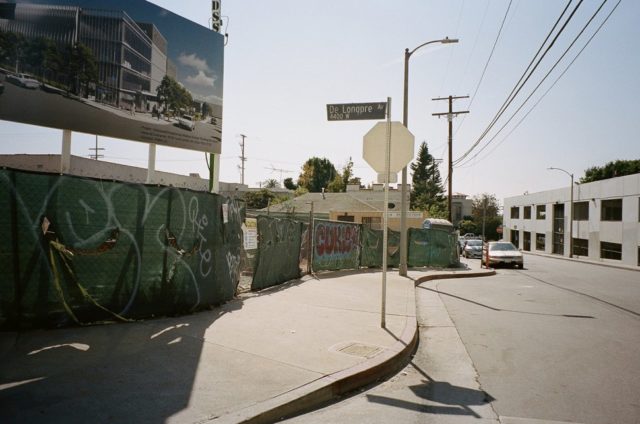
You might be wondering why you’re looking at pictures of Los Angeles on a blog that deal primarily with work from Appalachia. From my desk in Charleston, West Virginia, Los Angeles is more than 2,300 miles away, but there is a proximity of heart for place I find in Kwasi Boyd-Bouldin’s photographs that I’d like to share.
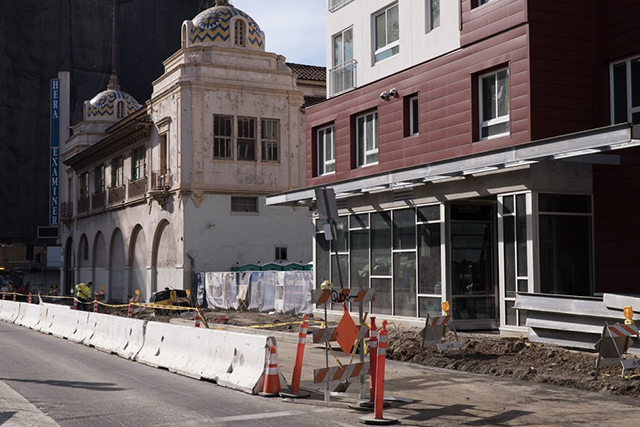
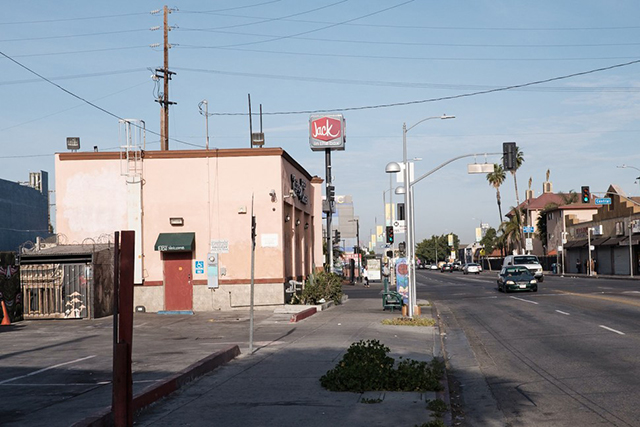
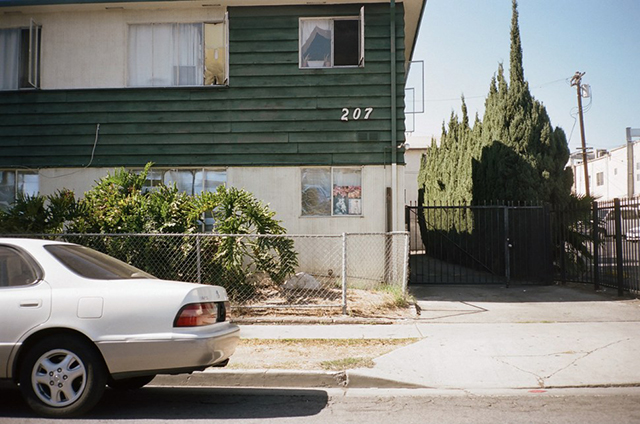
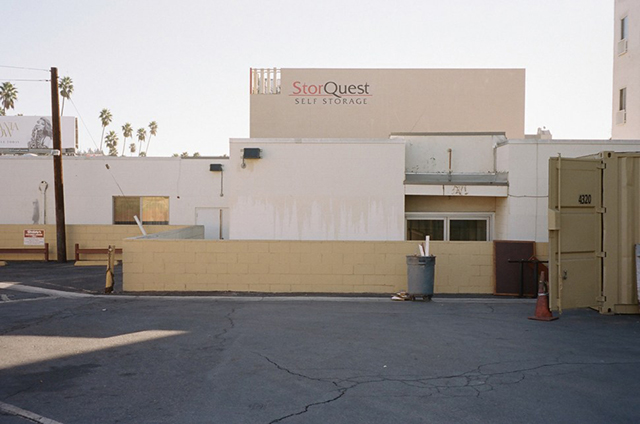
I first learned of Boyd-Bouldin’s work via Twitter, though I can’t remember exactly who shared it. I scrolled through some of his images online and was drawn in by his straightforward manner of looking. His compositions suggested an eye of someone looking beyond the surface and beyond the stereotype of place. This is not the Los Angeles you’ve often been shown.
After several months of following Boyd-Bouldin’s work on Twitter, and later Instagram, it occurred to me that he is looking at his corner of Los Angeles in a very similar way I’m making work in West Virginia and Appalachia. Despite the geographical differences, there is a common thread of love for place, a desire to show a more realistic portrayal of that place through critical looking and thinking, and to document the impact of the physical changes in the landscape of one’s home.
For all the things I detest about social media, every now and again, there are redeeming qualities. Had it not been for social media, I might have never known about Boyd-Bouldin’s work. I might have never had the chance to reach out to him to tell him how much I appreciate what he’s doing and why he’s doing it. I might never have had the chance to ask him about his work and to share some of that work here.
Boyd-Bouldin’s work is becoming more widely visible. In February of last year, he was included in TIME’s 12 African American Photographers You Should Follow Right Now and in November of last year, the New York Times LENS blog featured some of his photographs and a brief interview. One of the things he said in that piece illuminated a foundational element in the work he makes and made me think about the work I make: “In part, he says, the project is his intention to document a vanishing L.A. Few who live outside it even know it exists. He wants “to present a portrait of the city that reflects the lives of people who live in Los Angeles, as opposed to the glossy fictional version that dominates the mainstream narrative.” Just substitute Los Angeles with Appalachia or West Virginia or Kentucky.
In his series The Displacement Engine, in which he provides much needed critical thinking and viewing on the issue of gentrification, he writes, “The effort to push vulnerable populations to the margins may seem to be organic but it is often an organized campaign. Perpetual, neighborhood wide rent increases coupled with a total sustained lack of local infrastructure (grocery stores, good public schools, etc…) are the ingredients needed to initiate the desired effect.” In West Virginia it isn’t the same type of gentrification but it is systematic erasure. Apply this lens to look at the organized campaign of the coal industry to keep an already vulnerable population marginalized. In Mingo County, West Virginia, there isn’t a single grocery store in the entire county. Likewise, four of the county’s five high schools (Burch, Gilbert, Matewan, and Williamson) closed their doors in 2011 before consolidating into one school, Mingo Central, which is built on a reclaimed surface mine site.
I trust you’ll enjoy Boyd-Bouldin’s work and his thoughtful approach to place. Scroll through for our brief conversation, including a list of photographers he recommends following. You can see more of Boyd-Bouldin’s work at his website Kwasi Boyd-Bouldin and The Los Angeles Recordings. You can also follow him on Instagram and Twitter.
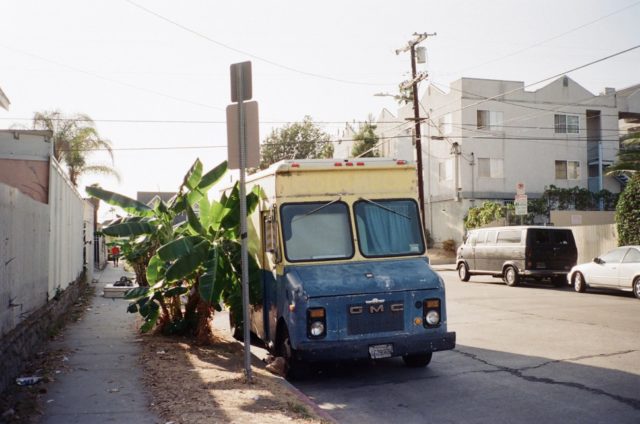
Roger May (RM): Can you talk about the importance of photographing the place you’re from and how that informs your pictures?
Kwasi Boyd-Bouldin (KBB): Most people’s idea of what life is like in LA (and Hollywood specifically) is completely based in fantasy. I didn’t feel that the city I grew up in was being accurately represented in the media so I started documenting things from my perspective. It’s always been my goal to depict what Los Angeles looks and feels like from the street level. I think everyone should photograph their neighborhood.
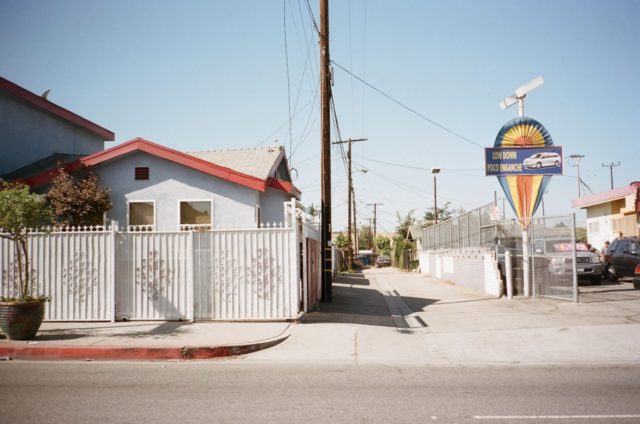
RM: How about the importance of film? How and when did you begin to incorporate film (and digital) into your work?
KBB: My relationship with film photography started out of necessity, it was the only affordable medium when I started to get serious about photography. Over the years I stuck with it because it became the easiest way to get consistent results. It forces me to incorporate the element of time into my workflow and that is something that I apply to all of my photography regardless of platform. I’ve gone back and forth over the years but recently I have shifted back to a digital workflow (Fuji X).
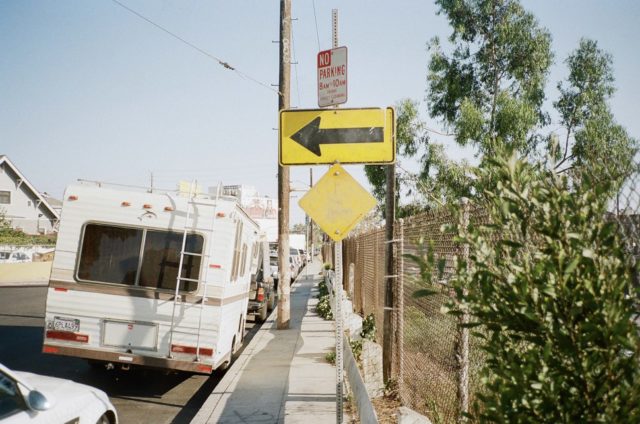
RM: Your work speaks to me on a number of levels, but I’m particularly interested in your relationship to place and how you work to show the human interaction or imprint on the landscape. What is it about the landscape you feel compelled to document?
KBB: I’m drawn to photographing the urban landscape because of an interest in depicting and navigating large systems. Los Angeles is a knot of interlocking cultures, neighborhoods, and influences and I’ve always been inspired by how everything intersects. And for me, the landscape is the universal element that connects all of these different components. Everyone leaves their mark in one way or another and by stepping back you can see how all of those marks look collectively. That perspective is what’s missing from mainstream depictions of L.A. (and most other places) so that’s what I have focused on with my work.
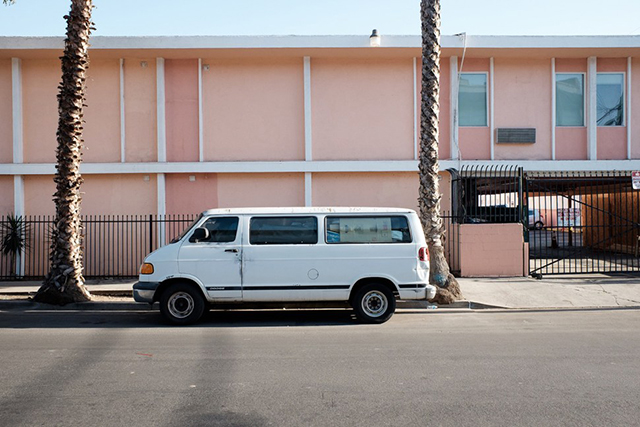
RM: Can you tell me a little bit about who and what inspires you? Do you care to share what you’re reading or listening to right now?
KBB: I have a wide range of creative influences ranging from a lifelong addiction to Anime and science fiction to random conversations to people I meet on the street. In the realm of photography I’m influenced by Jamel Shabazz, Gordon Parks, Stephen Shore, William Eggleston, Latoya Ruby Frazier, Thomas Struth, and far too many more to list.
My father played the flute and the xylophone and my two older brothers were in a semi-famous old school rap group called 7A3 so I have always been surrounded by music. As a result I listen to a bit of everything, my current rotation includes Kendrick Lamar, Thundercat, MF Doom, Kamasi Washington, Little Dragon, Flying Lotus, Jay Z, Dabrye, Prhyme, Madlib, and a ton of other artists I’ve forgotten.
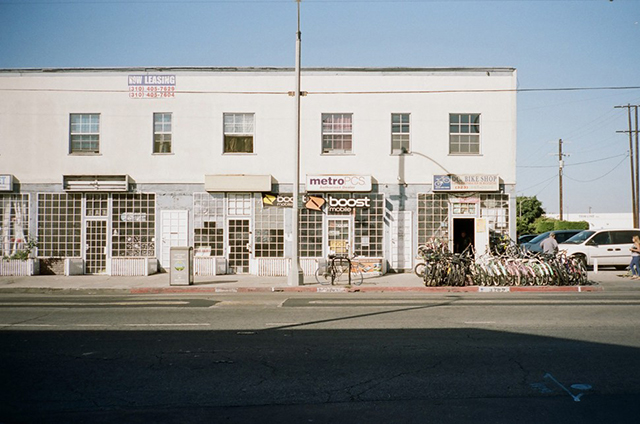
RM: The issue of gentrification is something many living in towns and cities are becoming more and more aware of. How do you see photography holding space for that conversation and the intersection of art/documentary and socioeconomics/politics?
KBB: I think that documenting neighborhoods as they exist currently and how they are being transformed is critical. Photography can be a vital part of that conversation but more people from the areas that are being gentrified need to be given the platform to share their stories. It really comes down to which perspectives are valued and why some interpretations are prioritized above others. Using photography to contextualize the lives and surroundings of the people affected is just the start, there needs to be a conversation about how neighborhoods can be revitalized without forcing people out of them.
RM: Who are other photographers folks should be paying attention to right now?
KBB: I think that we’re in the midst of a golden age in photography and thanks to platforms like Instagram you can come across a lot of incredible work you would miss otherwise. I think the following people are doing amazing things: Luis Torres, Erwin Recinos, Idris Solomon, Sean Maung, Michael Santiago, Scott Hurst, Aaron Turner, Gioncarlo Valentine, Jon Henry, Wendel White, and Nadia Huggins.
Kwasi Boyd-Bouldin (kwasi.b@gmail.com) (b. 1977) is a Los Angeles based photographer whose work focuses on the urban environment. His work explores the relationship between a neighborhood’s physical composition and the lives of it’s inhabitants. He is best known for The Los Angeles Recordings, an ongoing documentary project comprised of photo essays about the rapidly changing landscape of the places he grew up in. He has been featured in The New York Times, Slate France, and he is one of Time Magazine’s 12 African American Photographers to Follow.
“NOTICE TO VACATE”
By Kelley Cutler
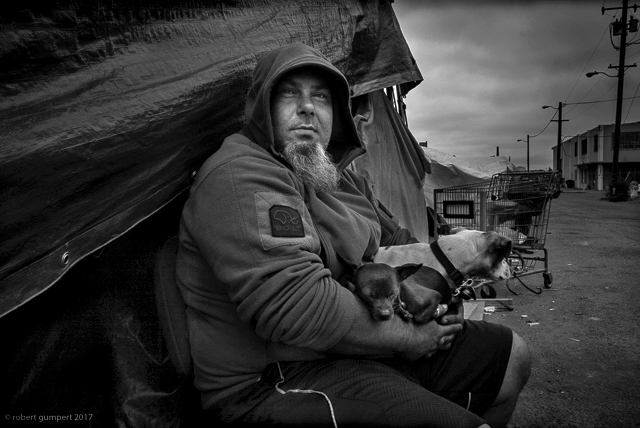
“King Kong” in an area south of Cesar Chavez. Photo: Robert Gumpert
San Francisco, California
The cold winter winds whipped under the freeway overpass and a piece of paper tied to a green tent with a rubber band flapped in the wind. In big bold lettering the message on the paper read: “RESOLUTION DAY: TUES. FEB. 27th, 2018” “NOTICE TO VACATE”… “Persons who refuse to vacate the area may be subject to citation and/or arrest.” The part right before that says the City will conduct a clean up of the area… “including the removal of all individuals”. Damn that’s rough… reminds me of the movie ‘Soylent Green’!
About a month ago this encampment tucked away under the freeway in an industrial area made it to the top of the City’s list to be “resolved”. City outreach workers have been getting folks into Navigation Centers, but more people have been showing up in need of shelter. Getting a bed is dependent on beds becoming available (mostly people being discharged back to the street to make beds available for this complaint driven system).
On the morning of this resolution a resident of the encampment was awoken by law enforcement at 7 am and told she needed to pack up and vacate. She went to wake up and inform her neighbors of the eviction that was upon them. When she returned to where she had slept the night before she found that her tent and all of her belongings were gone. City workers had tossed her possessions on the back of a flatbed truck to be disposed of. She got lucky and pulled her belongings off the truck before they were lost for good.
The day before the ‘resolution’ I spoke to a woman who was working with City outreach workers to get into the Navigation Center. I checked in with her during this mornings ‘resolution’ to make sure she was still getting a bed and she said she was waiting for the bed to become available, but that the HOT worker was helping her and she was hopeful. When I got back to the office I received a distressed call from her… DPW workers threw her wheelchair into the crusher truck and demolished it. She said “I need my wheelchair to get around!”
The Navigation Center is part of a complaint based system. People can’t just sign up on a list to get a bed there, hence the reason some might be drawn to an area getting resolved. There is a myth that people are “service resistant”, but the reality is that resources are extremely limited. The City has between 1,000 to 1,500 people waiting on the single adult shelter waitlist for a temporary bed. The ‘average’ wait for a family/child is 111 days.
In a recent SF Examiner story Jeff Kositsky, the director of the City’s homeless department explained, “He said that there are 21,000 homeless persons annually in San Francisco, of which 8,000 are newly homeless. Annually, he said The City is “only helping 2,000 people exit homelessness. That’s a big part of the challenge.” He added, “Even though we have 7,400 units of permanent supportive housing, only 800 units become available in any given year.””
How the system works is that when an encampment gets enough complaints the City will do a “resolution”. City outreach workers go out and work with folks to get them into shelter, connected to resources, treatment or a one way bus ticket out of town. Once a location has been “resolved” this location is now off limits. But let’s be honest and look at the whole picture. Nothing is resolved if the person is then discharged back to the street.
Once an area is “resolved” it then becomes a law enforcement issue to make sure people don’t go back there and “re-encamp. When they get discharged back to the street, they can’t go back to the “resolved” location. The question I repeatedly ask City officials is… “When the whole City is ‘resolved’ where are people supposed to go?”
On the national level there is movement away from using law enforcement to respond to street homelessness and encampments, however in San Francisco police have been playing a dominant role in responding to our housing crisis. The newly created Healthy Streets Operation Center (HSOC) (aka. Command Center) is a collaborative effort between city departments created to respond to and “resolve” homelessness related complaints. Key groups missing from this collaboration were non-profits, advocates and people experiencing homelessness.
Laura Guzman, former long time Director of the Mission Neighborhood Resource Center in San Francisco stated, “No housing exits, access based on complaints rather than vulnerability, and shorter stays than even traditional shelters do not address our communities needs, but only hide visible homelessness. Most importantly, there is no community oversight. SF has a Continuum of Care that is kept in the dark on its Board, the Local Homeless Coordinating Board is left without its authority on homeless policy.”
The United States Interagency Council on Homelessness (USICH) recommends “To end homelessness for everyone, we must link people experiencing unsheltered homelessness, including people sleeping and living in encampments, with permanent housing opportunities matched with the right level of services to ensure that those housing opportunities are stable and successful.” They stressed the importance of diverse collaboration to create effective strategies and approaches to ending homelessness.
Julie Leadbetter, former director of the Navigation Center stated, “Navigation Centers have become a way to “legalize” sweeps. That’s why they want short stays, so they can force people to leave the streets by following USICH guidance that shelter or services must be offered. So in order to sweep, they make shelters to sweep to, then put them back out, to sweep them again. This is a costly investment in homeless management.”
On June 29th, 2017 the City began their strategic effort of addressing encampments and placing the people living in encampments in the Mission district into Navigation Centers. They called this operation the Mission District Homeless Outreach Program (MDHOP). The goal was for SFPD, the Department of Homelessness and Supportive Housing, City outreach workers (SFHOT), Department of Public Health (DPH) and the Department of Public Works (DPW) to meet everyday at 8 am five days a week to strategize what location to focus their attention on to clear encampments. No non-profit homeless service providers, advocates or people experiencing homelessness were not included in this effort.
Since June the amount of tents in the Mission has gone from 256 down to about 60 tents. Based on the results of the MDHOP, Mayor Lee made the decision to replicate that model in Central Market and the Civic Center calling it “harm reduction” and having targeted mental health and drug addiction outreach since tents aren’t as prevalent of an issue in this location. They created a Unified Command System (UCS), which is a command system that’s a national model on staying organized for emergencies, for the City on homelessness. This command system is located at the Department of Emergency Management.
In January of 2018 the City created the Healthy Streets Operation Center (HSOC). This coordinated effort involves the police, public works, public health, the homeless department and the city’s 311 system, as well as the city controller, city administrator and the Mayor’s Office of Housing. Again, there is no non-profit homeless service providers, advocates or people experiencing homelessness part of this effort.
The command center is tasked with addressing the issue of dispatching appropriate responders to incidents related to homelessness. Up until now there have been two paths used for reporting incidents, 311 and SFPD’s non-emergency line, but the two paths have not been in communication with each other. Now all the homeless related calls will be routed to the command center and they are dispatching calls to the appropriate responder from that location.
Dispatch protocol needs restructuring so that police aren’t first responders to someone in need of help from a social service provider. It’s not the role of law enforcement to be tasked with these things, but they have been put in this role. We need to quit kidding ourselves into believing that we can arrest our way out of this housing crisis or that anything is resolved by telling people to “move along”.
There needs to be community involvement. There needs to be transparency. Law enforcement and City agencies cannot just do whatever the hell they want. The issue is not “visible homelessness”, the issue is that people are forced to sleep on the streets because our government has failed to provide the basic human right to housing.
Labor Notes – 3000 plus in Chicago with youth and enthusiasm
By Peter Olney and Rand Wilson
Every two years since 1981 the Labor Notes publication has held a national meeting. This year Labor Notes convened its conference in the heady wake of the West Virginia victorious teachers strike and during ongoing teacher labor disputes in Oklahoma, Kentucky and Arizona. Hundreds of rank and file teachers were gathered at the conference hosted by the Chicago Teachers Union, which had carried out a very successful citywide strike in 2012. What great irony that the locus of some of the sharpest struggle against the neo-liberal public service slashing agenda should take place in four “red” states that Donald Trump carried in the 2016 election with a double figure margin. But Labor Notes’ focus has always been on promoting bottom up rank and file unionism, and those four struggles certainly represent that focus aided and abetted by the new tools of social media outreach.
The conference was staged at the Hyatt Regency Hotel near O’Hare airport in Chicago. The building was crawling with over 3000 labor union leaders and newly minted activists. The demographics were favorable to a future American labor renaissance as over half the participants were under the age of 40 and the representation from communities of color was significant. Every sector of the economy was represented by unionized workers and workers struggling to organize into labor organizations. Attention was devoted to analyzing organizational approaches to the precariat, which now represents approximately 15% of the work force in the United States.
The US labor movement faces challenges in organization and politics in the coming months and they were addressed by the content of the workshops at Labor Notes. The Supreme Court is expected to rule in June on Janus vs. AFSCME (Here and Here) and they are expected to decide this case in favor of the most anti-union and reactionary forces in America. It is expected that they will rule that unions can no longer collect compulsory fees from members that they are bound by law to represent. This is a conscious attack on the ability of unions to function in bargaining and politics. A track of workshops at Labor Notes called “Organizing in Open Shop America” was developed purposefully to prepare attendees to deepen and develop their ties with their members so that regardless of judicial and political head winds their unions will survive and grow.
The other major challenge labor faces is what will be its political strategy in the coming crucial midterm Congressional elections? The unions that supported independent Vermont Socialist, Senator Bernie Sanders continue to meet and coalesce as “Labor for Our Revolution” (LFOR) advocating for electoral action in support of progressive non-corporate Democrats and independents up and down the ballot and crucially in the mid-term Congressional elections on November 6. A meeting of LFOR took place on Friday, April 6 before the opening of the Labor Notes convention off site at the District headquarters of the long time independent left union, the United Electrical Workers (UE). During the Labor Notes conference a large workshop was held for all delegates with over 100 in attendance and with many new union locals coming forward to sign up for LFOR.
The gathering had a true internationalist sprit as 200 guests represented 24 countries and 2 of the bi-annual Troublemakers Awards were give to workers in foreign labor movements. Han Sang-gyun and Lee Young-joo leaders of the Korean Federation of Trade Unions (KCTU) who have suffered arrests and persecution at the hands of the South Korean regime were honored for their labor activism. Organizers from the province of Ontario in Canada were honored with a Troublemakers Award for leading the “Fight for $15” and achieving the $15 per hour minimum for all workers in the Province.
The Italian labor movement was represented ably by Michele Bulgarelli of FIOM Bologna who participated in a workshop entitled “Organizing Across Europe”. Participants heard reports from FIOM, from Norway’s construction sector and from the resurgent British labor moment. SiCOBAS was represented by Aldo Milani, Roberto Luzzi and Alessandro Zadra who participated on a panel entitled, “Tackling Amazon and the Logistics Bosses: Reports from Around the Globe. Other panelists included Polish and British Amazon workers.
Rally for Life: High School Student Take the Lead
By Kurt Stand
Heartening and heartbreaking — those words sum up the March for Our Lives held March 24 in Washington DC, across the country, throughout the world. Further action took place on April 20, high school students nationwide walked out of school to mark the 19th anniversary of the Columbine massacre. Nineteen years is before any of today’s student leaders were born, yet during the intervening time the only action taken by public authorities has been inaction. Now, however, a change is in the wind.
Once the students at Parkland resolved that they would not let the shooting of their classmates turn them inward, that they would not live in fear, they initiated a protest that hit a chord of recognition throughout society. The reason: too many have suffered from our culture of violence – suffered from the industries that profit when that culture of violence is promoted — as witnessed in mass shootings in Orlando, Las Vegas, Newtown, and on and on including now at a Waffle House in Nashville in a list that has grown obscenely long. Or suffered as the victims of the random violence that afflicts impoverished black and Latino communities trapped by hopelessness through systemic discrimination in jobs and housing, education and health, marking communities from Washington DC to Oakland, from Baltimore to Chicago, coast to coast in another list that goes on too long. And behind all that is police violence and legalized vigilante actions in which the name Stephon Clark now joins Michael Brown, Sandra Bland, Eric Gardner, Tamir Rice, Trayvon Martin in a line of victims of sanctioned murder that can be traced back to our country’s origin.
But these are not just names — each was an individual with family and friends who carry the sense of loss that never goes away when a loved one is taken too early, when closure proves impossible because the reasons for the violence are left to fester. And like any wound left untreated, it only gets worse over time. The speeches at the rally were so heartbreaking because those doing the speaking opened themselves up so we could all hear the hurt in their voices. Usually at demonstrations speakers repeat themselves, they say what we expect them to say, and so most of us listen only sporadically (at least that is true of myself). But this was different for the speeches were without cliché, without histrionics, without false bravado. In this the youthfulness of the speakers (ranging in age from 11 to 18) shined through because the talks were without artifice, demonstrating a maturity many of their elders sorely lack. Which is precisely where the pain crept in. Absent the rhetoric of press releases and applause points alternating between bombast and buzz words, the usual distance between speaker and those spoken to dissolved. Listening one couldn’t (I couldn’t) keep thoughts away from the reality of injury and death contained within each word.
Yet when the speeches were over and the crowd began to disperse, we did not walk away feeling defeated and depressed. For the words were sharp and had a message beyond pious sentiment. They spoke of specific legislation that can be enacted now to at least begin to address our society’s pervasive gun violence rather than surrender to it. And they took that one step further — demanding to know whether office holders accept NRA money, calling on people to register and vote and asking that the vote be used to kick those politicians who do, out of office. That is a powerful message because it is clear in its demand that elected officials be responsible to the public they allegedly serve, rather than corporate lobbies with deep pockets that serve as a paymaster. As is true of the NRA which long ago turned from being a gun owners organization into becoming an industry front for those who make a financial killing out of the destruction of human lives. And in this, the gun lobby is no different than lobbies for private prisons or defense contractors.
And it does not take much of a leap from the students’ logic to conclude that Citizens United in its equation between money and speech has become a cancer in our society for it legalizes the kind of corruption and vote buying the NRA exemplifies. Corruption that, in turn, exemplifies the structural inequality in our society between corporate wealth and public power. By naming those feeding at the trough, students were striking at the core issue facing us: are we a country by of and for the powerful or by of and for the people? The fact that this issue came to the forefront as an outgrowth of civic engagement by newly engaged youth is why the rally was so heartening.
Emma Gonzalez concluded the rally by asking for a 6 minute 27 second moment of silence — the length of time of the Parkland shooting rampage. It was a silence that spoke volumes and posed the challenge for all who heard it to act. Act so that the heartbreaks so visibly on display upon the speakers platform and within the crowd cease being an everyday occurrence, act so that we reclaim freedom and democracy from the rich and powerful, from all who use words to coverup their own bloodied hands.
Note: This is an edited version of an article that first appeared in the Washington Socialist
A message to the future of Appalachia
By Elizabeth Catte
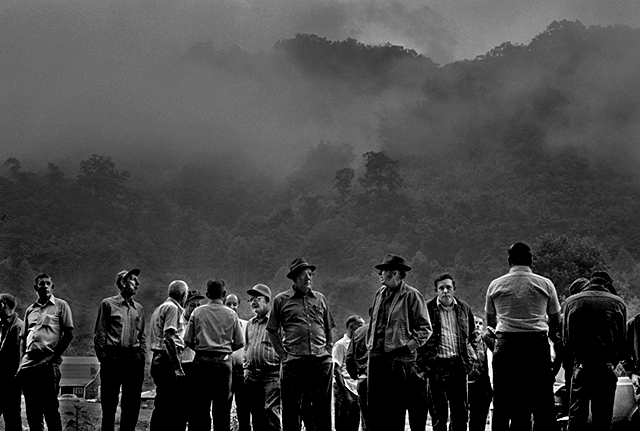
In late February, I gave a talk at West Virginia University. I was honored to be invited and felt that it was important to directly address young people for two specific reasons. The first is that JD Vance, who is known for many things that are the opposite of youth empowerment, spoke at the university a week before me. The second is that I came to West Virginia in the middle of its historic strike. Education and public workers cited many reasons for their collective action, but one that wasn’t receiving wider purchase in the national conversation about the strike at that time was the deep conviction teachers’ had for envisioning a better future for their students. I wanted them to know their solidarity was seen, and felt. Jessica Salfia, an English teacher, wrote from that perspective here.
As you may know, a small cohort within the Appalachian Studies Association invited JD Vance to speak at our most recent conference and participated in the abuse of young members who stood in dissent. There are many things I want to and will likely say about that, but for the moment, I am going share part of the remarks I made at West Virginia University. For them. For us. For the future.
My book is called What You Are Getting Wrong About Appalachia and people like to speculate who the “you” is in the title. Is it JD Vance, his fans and supporters? And they’re not wrong – that is definitely the direction in which the book started. But as it developed, I started to see that the “you” was me and that I was writing against an experience where people with more power tried to tell me what I should think and feel about my history and identity. They were happy to tell me what I was getting wrong about Appalachia, and usually the thing I was getting most wrong, according to them, was that there was any hope for the future.
“Coal is dead. Just move. I hate that you’re stuck there. If it wasn’t for welfare there wouldn’t be any signs of life in the mountains.” And so on. But I believe that within our history we have the tools to help us move forward. I see this when I look out at rallies of teachers and public employees wearing red bandanas, connecting their actions not only to the 1990 teachers’ strike but further back, to the mine wars. And what I hope to leave you with is a sense that the heritage we share isn’t some ridiculous ethnic component and it isn’t about how long your people have lived here, and it isn’t about how you make your cornbread, although now I fear assassination or at least a decline in book sales for saying that. Our heritage is the way we have shared and supported each other in struggle – in the past, in the present, and in the future, here at home and beyond our borders. If we did not have the power to create change, we would not be the heirs to a 150 year old propaganda industry designed to tell us and the world we are powerless.
You know, people ask me now, all the time, what it means to be Appalachian. If it’s not a mediocre memoir, if it’s not dependency narratives, if it’s not Scots-Irish heritage, if it’s not black and white poverty photos – what is it? And I like to decline to say because I think self-definition is power and if I tell you what or who you are I have taken some power from you and I do not want to do that. I want you to ask these hard questions of yourself and get more powerful for the work that must be done. But I can tell you what flashes through my mind when I’m asked that question.
There’s an old documentary called Harlan County USA, directed by Barbara Kopple, about the miners’ strike against Duke Energy in the 1970s. Many of you will know it. Barbara was a very young woman from New York when she started making this documentary but grew close to her subjects because they were all in danger – their fates became connected. A strikebreaker indiscriminately firing a gun into a crowd was just as likely to hit her or one of her crew as a miner. And there’s a very important scene in this documentary – a blink and you’ll miss it scene – where there’s a physical altercation on the picket line. And what you can hear but not so much see is a breathless Barbara Kopple running toward that altercation and throwing her big boom mic between the strike breakers and her crew and the miners. In other words, I think being Appalachian is running toward your friends when they need you. So here I am.
Image by Robert Gumpert via the Appalshop archive.
Reprinted from Elizabeth Catte, public historian and writer
Chuch McDew: An Appreciation 55 Years Later
By Mike Miller
He described himself as, “a Negro by birth, a Jew by choice, and a revolutionary by necessity.” He was one among many vital forces who were full-time SNCC “field secretaries” seeking to register and organize the potential black vote of the south.
We met when Chuck was the principal speaker at SLATE’s 1962 summer conference, “The Negro in America”. (SLATE was the campus political party at UC Berkeley.) He stayed at my place for three days. Intense, thoughtful, a great low-key sense of humor and irony, and a story-teller (The Moth) par excellence, Chuck asked me to be SNCC’s rep in the Bay Area. It was impossible to say “no;” I didn’t want to anyway.
He was arrested, jailed and beaten more times than I can remember, but never intimidated. At national staff meetings where the full-time staff gathered to take a break, assess where we were, and plan for the future, he was a calm voice in often-intense debates.
We remained friends over the years, seeing each other at SNCC reunions, and visiting when he was living in the Bay Area. Most recently, he taught college and was a guest speaker wherever there was an opportunity to pass the torch to a new generation of organizers.
Mike Miller, SNCC field secretary,
December, 1962-December, 1966
Organize Training Center
Freedom Now – the SNCC Story, by Charles McDew, with Mike Miller. “the liberal democrat”, December 1962. Charles McDew is SNCC chairman. [Note: during the 1950s and 1960s “the liberal democrat” was the liberal voice in the already-liberal California Democratic Party club movement.]
On February 1, 1960, in Greensboro, North Carolina, the first student sit-in took place. By March 31, over 50 student demonstrations had occurred in Alabama, Arkansas, Florida, Georgia, Louisiana, North and South Carolina, Tennessee, Texas and Virginia. Others were soon to follow in the rest of the South. I became involved in the first sit-in in Orangeburg, South Carolina. Out of these protest sit-ins grew the Student Non-Violent Coordinating Committee, SNCC. We were brought together for the first time in April 1960 at a conference sponsored by the Southern Christian Leadership Conference – the group led by Martin Luther King. At that conference, we decided to form an autonomous student organization, SNCC.
In its first year, SNCC concentrated on getting the news of what was happening in the South to the various student groups and other protest organizations. We were little more than a communication network trying to keep one another informed of our activities. Now, only two years later, we are an organization with 22 full-time staff workers operating a full program for civil rights in the Deep South. Our story is part of the story of the growth of a mass civil-rights movement in the South.
In 1961, we began to increase our activity. We saw a need to bring more sit-ins and other direct action into the South. We found areas untouched by the major civil-rights organizations. We decided to go into these areas, live with the citizens there, teach them the principles of social action, leadership training and non-violent techniques. We also began what was to become a major addition to our program: voter registration.
It was only after long and serious discussion within SNCC that we decided to embark on a program of voter registration. With our commitment to working in those rural areas where the vast majority of Southern Negroes are, we felt we could do the job, and do it effectively. We thought of what President Kennedy had said: We must be prepared to ask not what the country can do for us, but what we can do for the country. We had our answer. Rather than heed the calls of the Peace Corps, we felt that there was a job we could do here in this country.
It is in these areas, where hundreds of thousands of Negroes live, that we feel most deeply the sense of frustration in comparing the rhetoric of “progress” in civil rights with the reality of the situation.
In beginning a voter-registration project, we understood its potential for cracking the power of the Dixiecrat political machine. We saw our work in the South as having national implications for more than civil rights. It is not the politicians in California, Illinois, Iowa and New York who hold the most political power in this country. Rather, it is the gentlemen from Mississippi, Alabama, Georgia and South Carolina; the Eastlands, the Longs, the Talmadges, and the Russells. These men shape our national policies, voting against – or blocking in crucial committees – not only measures for civil rights, but foreign-aid bills, social welfare and civil liberties legislation, and other liberal measures. We felt, of course, that there was something we could do about this situation.
By late 1961, our voter-registration projects were underway. A good example of the problems faced is found in Mississippi. We went into McComb last year, and set up voter-registration schools in the Masonic Lodge and in a number of homes in the surrounding area. McComb is a small city of about 15,000 people, in southwestern Mississippi, some 90 miles south of Jackson. In McComb, we had trouble. The white power structure began to react to our work – and it reacted violently. Mr. John Hardy, one of our field secretaries, a 21-year-old lad from Nashville, Tennessee, was beaten by the Registrar of Voters. He accompanied two potential registrants to the Office of the Registrar. The Registrar said to Hardy, “Ain’t you that nigger that’s been stirring up trouble here? Well, get the hell out.” As John turned to leave, the Registrar struck him in the head twice with a pistol, opening up a large gash, and left him lying there. The people with John moved to help him down the street to the Sheriff’s office. The Sheriff, however, met them and arrested Hardy, charging him with breach of the peace and incitement to riot. The US Justice Department took action in this particular case (it hasn’t in many others) and sought an injunction to stop the prosecution of John Hardy, claiming it to be an act of intimidation to stop Negroes from registering to vote.
This is just one incident. There are many others. They go unheralded. In Amite County, Mississippi, Mr. Herbert Lee, a Negro farmer, father of 12, who had been working closely with SNCC in its voter-registration project, was shot and killed by his state representative, Mr. E.H. Hurst. The state ruled the shooting an act of self-defense, and Mr. Hurst was acquitted. No Negro was willing to testify against him for fear that he would meet the same fate as Mr. Lee. In this case, the Federal Government was of little help.
In Ruleville, Mississippi, this past September, two young Negro girls, Marylene Burks, 20, and Vivian Hillet, 18, were shot and wounded. Miss Burks critically. Also in Ruleville, economic reprisals were launched against Negroes active in voter registration. Ruleville is in Sunflower County, home of Senator James O. Eastland, Chairman of the Senate Judiciary Committee. The county has a Negro voting age population of 13,524 (out of 22,309 total) and has 161 Negroes registered to vote.
This is the environment that a SNCC field worker enters when he begins a voter-registration project. Yet this is where we have chosen to be. We live where we work because we don’t think you can get people registered in the South by sending down orders from New York or Atlanta. Those of us who work for SNCC believe that expression of moral and spiritual solidarity with Southern Negroes is not enough. We feel that the way to help is to be there, on the line – or, if that can’t be done, to help actively from the North. Our staff workers live with the people, and like the majority of Southern Negroes, the SNCC staff member lives at close to subsistence. Salary is $40 per week, $60 for married people. All too often, even this money isn’t available. The $40 goes to pay for food and gas, housing, and an occasional haircut.
Setting up a voter-registration school takes a lot of preliminary work. When a staff worker arrives in a new town, he is often viewed with suspicion by local Negroes. Many of them are so intimidated by the white power structure that they want nothing to do with the civil-rights movement. It is in these areas, where hundreds of thousands of Negroes live, that we feel most deeply the sense of frustration in comparing the rhetoric of “progress” in civil rights with the reality of the situation. When we go into an area, we begin by making ourselves known to the people of the town, meeting them in social settings where it is least dangerous for them to be seen talking to us, finding key Negro community figures who can take leadership in setting up the voting schools and locating a place for them to meet. When these things have been done, we work on setting up the school and recruiting people to come to it. Beside the threat of physical violence, we must deal with fears of economic sanctions, poll taxes, literacy tests administered by racist registrars, and other forms of harassment.
It is difficult to appreciate fully what is involved for a Negro, living in the heart of a racist culture, when he finally decides he will register to vote. He must risk everything that he has for a right constitutionally guaranteed him 100 years ago. Most Negro applicants are denied – even those with Harvard PhD’s. Here people do not refrain from voting because of a football game, a tea, or the weather, but because they don’t want their homes bombed, their sons castrated, their daughters whipped, themselves killed. Fear has been deeply ingrained in the Southern Negro; fear, in fact, is institutionalized in the South. Many Negroes will say that politics is white folks’ business. This attitude is the result of years of intimidation, violence, propagandizing and brainwashing for the purpose of creating subservience in the Negro. It is written and woven into the fine fabric of Southern culture.
We are not satisfied simply with registering Negro voters; we are not seeking to register Southern Negroes so that they may choose between two racist candidates. In Mississippi, for the first time in the 20th Century, two Negro candidates filed for office. In Georgia, the first Negro since Reconstruction days will sit in the state legislature. Throughout the South, candidates are emerging from within the Negro community, and our staff members are seeking out people who will take the risk to announce themselves as candidates for public office. These are not SNCC candidates, but SNCC workers are doing everything they can to see that candidates do emerge, that they are good candidates, and that a campaign organization is built to make them a political force in their district. We intend to have Negro candidates running for everything from US Senate to dogcatcher – and we will do it in the next few years.
SNCC’s work in voter registration has not meant an end of direct action as part of our program. We see the two as complementary programs, sometimes intimately involved with each other.
In our work in the South, we have come to have little faith in the Kennedy Administration. It is claimed by some that more was done for civil rights by President Kennedy in the first eight months of his Administration than had been done by President Eisenhower in his eight years. This is true; but it is true because Kennedy did more than Eisenhower had done merely by making two statements mentioning civil rights. Only once in the Eisenhower Administration did the President discuss civil rights, and then only in a vague and nebulous manner. But Eisenhower is not what the Kennedy record must be compared to. It must be examined in the light of the problem as it exists today in the South. And here we have direct experience with what the Administration is doing.
Almost everyone of our staff members has spent time in jail. Yet in these situations, which we face time and again, the Department of Justice has been of no help. Not only is being in jail an obstacle to our work, taking away valuable time and causing us great expense, but Southern jails are no bed of roses. For someone like Bob Zellner, one of our white staff members, jail is a certain beating. Southern jailers take delight in throwing Zellner into the white “tank” along with the remark, “Here’s a nigger lover.” The white prisoners take care of the rest, while the guards walk away or watch. Robert Kennedy will make fine statements about what the Justice Department can and intends to do. But the proof of the Kennedy Administration is in its action – in the enforcement of the existing laws of the United States. Robert Kennedy has said a number of times that we have enough laws, that it’s a question of enforcement. However, from our experience, we don’t believe that the Justice Department is moving fast or decisively enough in the area of civil rights in the South. The Department has initiated suits and has made statements, but no Federal marshals appear to guarantee the right of citizens to register and vote.
SNCC’s work in voter registration has not meant an end of direct action as part of our program. We see the two as complementary programs, sometimes intimately involved with each other. Albany, Georgia is an example. We started working in Albany in June 1961. We sent a number of field organizers down there – Charles Jones, Charles Sherrod, Cordell Reagen – to begin voting programs. These staff workers began working with direct-action projects, not only because these are effective means of protest, but because they involve the people of the community in the civil-rights movement, and make them think in terms of using their political strength as voters to win their rights.
Direct-action projects are also dramatic in character, and are pointed to by our staff members working in outlying areas as a symbol of what must be done everywhere by the Negro to win his rights. The Albany Movement has had this effect; it was followed by local protest movements all over Terrell and Lee Counties, Georgia. In direct action, the individual is confronted with the decision: do I continue to acquiesce to an immoral and unconstitutional situation, or do I confront it with my person?
We do not ask of every civil-rights supporter that he come to the South and do what we are doing. But we do ask that supporters of the civil-rights movement become friends of SNCC, that they spread the word of its activities, that they donate money and urge their friends to do so. The problem of money is the biggest one that we face. This is where people in the North can help us. We can get the people, the workers for our staff, the willingness to sacrifice. Many young people have agreed to do this. The shame, the pity, and the very painful thing to us is that we don’t always have the money which would enable us to accept those who are willing and competent to do our work. We are selective, of course, in who we take, not because we are elitist, but because we recognize that not everybody can work everywhere. In some areas of the South, a white wouldn’t last 15 minutes. However, we have chosen people who are dedicated to action, able to deal quickly with a rapidly moving situation, tough, stable, and extremely willing to sacrifice. Our success depends upon others in this nation who see and accept their social and moral responsibility. This is why we call for help.
We don’t know what lies ahead. We hope a better society, a better America, a better world. Behind the dark curtain that separates today’s America from tomorrow’s, no human eye can see. We know that the hand of fate weaves back and forth, tossing the shuttle to and fro, fashioning tomorrow’s world. It poses a grand challenge to us who are part of this world. I would hope that we would choose, all of us, to accept the challenge, to meet it with fortitude, determination and a willingness to overcome, for “we shall overcome.”