Tamales
By Jazmine Parra
We pull up to Palace Food Depot, lets say, around noon on a Sunday. My family walks towards the entrance, my Dad walks ahead of my Mom, my brothers and I. We walk down the crowded, noisy, parking lot. That’s when we notice, that La Señora de Los Tamales approaches my Dad and asks the routine “Compra Tamales?”
My Dad, quickly looks over at her, almost alarmed, and responds with the routine “Mañana señora, mañana.”
As the rest of us reach La Señora, she pauses. Looks at us, and hesitantly says, “Would you like to buy Tamales?”
She receives a unanimous “no gracias, para la otra.”
As we walk past her, we all can’t help but laugh. Laugh at the fact that she very specifically spoke to my dad in Spanish and the rest of us in English assuming we were white.
This to me has always been a situation I look back and laugh at. Not necessarily at the woman, but more so at her assumption.
My dad, wearing his cowboy hat, cowboy boots and his sunburnt skin is unmistakably Mexican. Pero los chiquillos, güeros, y la señora igual de güera, quien no se confunde.
As funny as I may find it, this situation has always brought up some critical points for me.
A part of me has always taken pride in the fact that my identity is somewhat of a mystery to others. I’m a light skinned Mexican. So most of the time I’m assumed to be white. Which is something I have fun with. For example, listening in on Spanish conversations and not looking like a metiche. Or, the surprise most Spanish speakers experience when I speak my very fluent Spanish. But this recently led to a realization that has been hard for me to accept…
I have white privilege.
“Que? Cómo cres eso tú, mensa, si todos saben que somos Mexicanos.” Was my mom’s response to my accusation.
But it’s true. It was hard for me to come to accept this realization simply because there’s a clear complication. The struggle between my outward appearance and my very, Mexican identity.
I grew up in a working class, immigrant home. One that was filled with only “español en la casa.” With traditional, Mexican values. And by that I mean the, “vas a misa todos los Domingos,” and “ni creas que va a salir de la casa sin suéter.”
Y que no se me olvide to include the machista complex that overtook my household. O, y tambien all of the Tamales consumed during almost every holiday. Homemade, not purchased from La Señora de los Tamales.
I digress, but the point is, my Mexican values and perspectives simply do not align with those of the White, middle class Woman most of my peers seem to perceive.
Soy Mexicana. Me-ji-cana. No, Mexi- cana. There’s a difference. Y solamente si hablas español entiendes lo que quiero decir.
No tengo el nopal en la frente, but is that the only way to communicate to the public that I am indeed Mexican?
I suppose not. But, acknowledging that I have white privilege is something that brings the responsibility of awareness and action. With that being said, this awareness has brought forth a desire to actively look for avenues in which I can be a source of change. I think its important to be a voice for those that may be afraid to speak out and demand that their own voices be heard, or even fight for their basic rights. I think empowerment is something that should be advocated for in our communities. The harsh reality is that this country favors the white, Caucasian population. Because of this, a sense of inferiority has affected a lot of the Mexican population. In these cases, I think its important to remind this community that we, as immigrants and inhabitants of this country deserve respect, and appreciation as much as any other population.
Furthermore, as a Mexican community, we should strive to be unapologetically daring and persist in the fight that actively seeks to oppress us. As a member of this community, my goal is to use my “white passing” appearance to voice my community’s concerns and needs.
“Here is what I told the students on the day of the walk out in solidarity with Parkland students.”, Professor Santiago
By Myrna Santiago
March 14, 2018
Today is a good day because it’s raining and it is always a good day when it rains in California, but most importantly, today is a good day because you are all here to remember the victims of the Parkland shooting.
One factor that often goes overlooked is that mass shootings are a reassertion of patriarchy, an expression of the most toxic masculinity possible. They arise because we live in a culture where boys and men are taught that violence is the way to resolve problems, at many levels. Internationally, when the government has a problem with another country, what is the solution? Torture them! Bomb them! Use violence. Nationally, the police’s first line of action is violence: shoot first, particularly if there is a man of color involved. Heroes are always violent in all forms of pop culture, from movies to video games. Is it any wonder, then, that mass shooters have histories of domestic violence too?
We know domestic violence is a way for men to enforce patriarchy in the home; mass murder is the way for these men and boys to seek power, to find notoriety, fame, heroism—
But who benefits from this? The weapons industry. Every time a man shoots dozens of people, their stock goes up. The NRA gets a lot of criticism and that is justified, but they are only a mouthpiece for corporate power. Their money does not come from the dues of Americans who believe they have the right to own assault weapons. The real money comes from the weapons industry—we mustn’t leave them off the hook! They fuel violence abroad (selling weapons to multiple countries and groups worldwide) and they fuel violence at home.
We know for a fact that in households where there are weapons, those guns will not be used against intruders. Those guns will be used by men to kill the women and children in the family and often kill themselves. And meanwhile, the weapons industry benefits from every single death.
Corporate power controls the US government and also hurts what’s left of our formal democracy. Every poll tells us most Americans want gun control, and yet, massacre after massacre; the Congress and the White House do nothing. The weapons industry dominates their actions on these matters. The government represents their interests, not the interests and welfare of the American people. That is not democracy.
So there is our work: true democracy, an end to corporate power, and the elimination of patriarchal domination. Go big or go home!
Today is a good day. It is raining and thousands of young people across the country are saying enough is enough! We’re mad as hell and we’re not going to take it anymore! The road is long but you don’t walk alone. Together we can and will create the world we want to see, without domination, and without violence. So let’s start teaching our boys and our men that violence has nothing to do with manhood. There is no place—no place—for any kind of weapons in the household, in our schools, or in civil society.
The Easter Crisis of Italian Politics
By Calogero Bellavia
The film “Young Karl Marx”, by the Haitian director Raoul Peck, is arriving in Italian cinemas during the week of Passion and the Easter of Christian resurrection and amidst the difficulty of setting up a new Italian government after national elections.
The collapse of the Soviet Union was only the beginning of the crisis of movements inspired by the author of the Communist Manifesto of 1848 and of Das Capital. After the collapse of the USSR, the social democratic parties of the Western European Union and even the Italian Communist Party, which had a strong popular presence, entered into crisis.
In Italy as in the rest of the West, there has not been any ability to counter credibly and scientifically the triumph of neoliberalism and international capitalism. In fact, the leaders of the P.C.I. tried to cope with the crisis by changing the name of the surviving party several times (from PDS to DS to PD). The leadership of Matteo Renzi turned it into a centrist party, rendering it harmless and moving it away from the left wing of the movement.
However, all of this was rejected on March 4th by the voters, who gave first place with more than 32% of the vote to the party Movimento 5 Stelle (5 Star Movement) led by the comedian Bepe Grillo. M5S highlights the fight against corruption and the privileges of the political class.
About 17% per cent of the vote went to the La Lega (formerly Lega del Nord), an ally party of the former Prime Minister Berlusconi – who remained in the minority with about 15% for his Forza Italia. Only 18% of the vote went to the Partito Democratico (PD) of Renzi. Finally the results for LEU (Liberi e Uguali) were very disappointing at 3.4%. LEU was the left split from the PD. The leadership of Renzi has more than halved the party, from 40% in a European parliamentary vote in 2014 to 18% today and for this reason the Secretary resigned. However he maintains strong control over the parliamentary groups, composed almost entirely of men nominated by him and considered faithful to him.
Despite their excellent electoral results, neither Grillo nor La Lega have sufficient numbers to form a government majority.
The Democratic Party is determined to remain in opposition, albeit with some internal disagreements. There is evidence of dialogue taking place between 5Stelle (Grillo) and Lega, which together have elected the presidents of the Chamber of Deputies and the Senate. However, it will not be so easy to form a majority by coalescing these two formations: their electoral programs and their electors are in fact very different. The electors of La Lega are on the right, and most of the electors of 5Stelle are center-left.
Unraveling this complicated tangle will be up to the President of the Republic, Sergio Mattarella, who has the power to appoint a political personality, or a person from so-called civil society to set up a government capable of obtaining the majority of the two branches of Parliament. To this end, the President will begin ritual consultations with the political groups on Wednesday, April 4th.
The young Karl Marx, who wrote the Manifesto of the Communist Party, developing the theories of the utopian socialists and Prudhon based on scientific materialism, would never have imagined such a profound crisis of the working class and that his motto “Proletarians of the whole world unite” would become “Capitalists of the whole world unite”.
Eventually death touches all of us
By Robert Gumpert
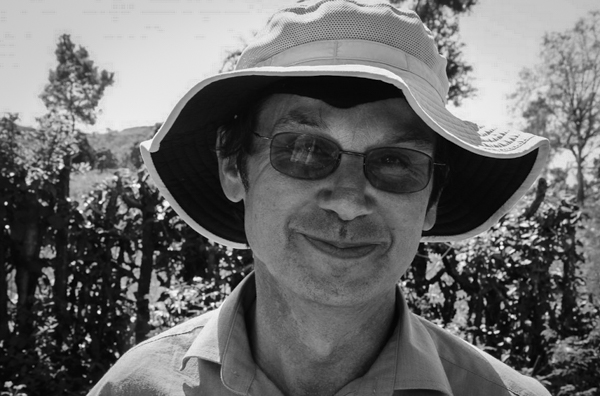
A few weeks ago an email came to me via the Stansbury Forum from Sam looking for Phillip Wearne. The Forum had reposted Phillip’s very moving obit for his mom, a tireless social activist and traveler. Sam wondered if I had a way to contact Phillip as there was a project he wanted to collaborate on.
Having forwarded the note from Sam I sat back and waited. I didn’t expect that quick a response but then a new message came from Sam. He had managed to get a hold of someone else in Phillip’s sphere and the news was not good, Phillip had died the day before from a heart attack. He was 60 years old.
Phillip was British and a freelance journalist. I’m an American and was a freelance photojournalist and as sometimes happens we both pitched the Sunday Times of London stories in Haiti to do at the same time. The Sunday Times paired us up. As it it turned out Phillip was without doubt one of the best journalists I have ever been associated with. He was smart, fearless, curious, opened minded tenacious. And he cared about people. He never became jaded. He went where the story took him. He talked a mile a minute. He died in the hospital on 14 March from a heart attack in Devon where he had been fighting for to protect NHS.
He was my friend.
Because Phillip and I met in Haiti and because Haiti meant so much to Phillip, the Stansbury Forum is running this tribute from the Haitian Support Committee.
Phillip Wearne – A Tribute
“The people has spoken – the bastards!”, muttered a US Embassy official at the count of the Haitian Presidential elections of 16 December 1990. This was overheard by Phillip Wearne, an investigative journalist, who stood next to him. The anger of the official was understandable. Through these elections, which for the first time in the history of Haiti deserved the label “free and fair”, the powerless brought to power Jean-Bertrand Aristide (https://haitisupportgroup.org/jean-bertrand-aristide/), a liberation theologian, who was the product of the people’s long struggle against dictatorship.
Phillip, like so many friends of Haiti, was appalled when the results of these elections were overturned in a coup d’etat at the end of September 1991 with the assistance of the U.S.
When, as a result of this outrage, the Haiti Support Group was launched in the House of Commons on 7 June 1992, Phillip was there to add his considerable drive and intellect to the efforts of a group of dedicated activists, launching a campaign to support the restoration of democracy to Haiti. He was a man of the first hour – and he remained committed to the cause until his last hour, which tragically came much too early on 14 March 2018 at the age of just 60.
The HSG mourns the passing of one of its greatest advocates and activists. “Driven” is a fitting adjective for Phillip, whose journalistic and campaigning work was prolific in many countries and in many fields. His work as an investigative journalist was outstanding – from print, to radio and TV documentaries. He was an intellectual giant in his field and could have gone into the top echelons of any major media organization but he was at heart an investigative journalist who thrived working on the ground and he was a highly skilled political campaigner. He found it hard not to get involved with any cause to which he felt he could usefully contribute. These campaigns all had one thing in common – the struggle for social, economic and political justice for those excluded by those in power. To this he devoted more and more of his life as he became increasingly disenchanted with the deteriorating investigative standards in much of the mainstream media.
When the catastrophic earthquake of 12 January 2010 struck Haiti with an estimated 300,000 people losing their lives, Phillip was in the right place at the right time. Haiti, familiar with political and natural disasters throughout its history was dealth its worst blow yet. The HSG re-doubled its efforts to amplify the voices of the civil society organizations as Haitians sought to make a new start and to create a better society from the rubble of the earthquake.
Just the sort of challenge Phillip thrived on! – Bringing the bear his extensive experience from Nicaragua and the political campaigns he had been deeply involved in.
Haiti, or the “Republic of NGOs” as it was referred to at the time, hosted upwards of 10,000 such organizations set to take over the reconstruction of the country, often ignoring the real needs of the poor majority. It was a true David and Goliath situation. Phillip provided much of the analysis and output of the Group at the time and within three months he was on the ground, linking up with civil society organizations the HSG had been working alongside for many years, listening and getting the analysis from the ground and turning it into persuasive political arguments which we could take to Whitehall, Brussels – from where most of the aid money flowed to Haiti – and Washington. He was instrumental in linking the HSG with the US-based HAWG (Haiti Advocacy Working Group) and ensur3ed that activists in Europe and the US collaborated to speak with one voice.
He was instrumental in all our campaigns during those post-earthquake years and he was the main author of our Haiti Briefing between 2010 and 2015. After UN peacekeepers introduced cholera into Haiti in October 2010, unleashing a lethal epidemic, Phillip threw himself into the campaign in support of victims and their families. He was relentless in gathering the evidence to support policy arguments, which he took into corridors of power of screening peacekeepers so that no other country would suffer as Haiti had suffered as a result of UN negligence. Shamefully, these protocols have still not been revised – but the UN and the world cannot say they have not been told.
It is impossible to do Phillip justice in this short tribute. He is such a massive loss – and above all to his family as well as the many people whose lives he touched directly. He epitomized the best in what a human being can be: determined but caring, intelligent but not arrogant, generous in giving to others, a true team player, always looking to foster new talent and on the lookout for those who would continue to carry the torch. We, who continue the work in the HSG, are therefore a small part of the wonderful and encouraging legacy he leaves behind. He lives on in us and in hundreds of other campaigners around the globe.
And therefore, as Phillip often signed off:
“Keep going”
Or in Kreyòl:
Kenbe èm, pa lage!
Not Just Red vs Blue: What the Teacher Strike May Reveal About W.Va.’s Political Landscape
By Roxy Todd - 100 Days in Appalachia

Teachers hold a rally outside the Senate Chambers in the West Virginia Capitol Monday, March. 5, 2018 in Charleston, W.V. Hundreds of teachers from 55 counties are on strike for pay raises and better health benefits. Photo by Tyler Evert, the Associated Press.
The nine-day teachers’ strike in West Virginia made headlines across the country, and some are wondering what the events mean for state’s political landscape. How did a widespread labor strike, a practice normally associated with Democrats, happen in a state that voted so heavily for Donald Trump?
We wanted to take a step back to explore how politics have been changing here over the past generation. West Virginia has been dubbed the heart of Trump Country, but politics here are anything but straightforward.
The strike wasn’t organized solely by Democrats or Republicans, or even union bosses. But some, like Angela Nottingham, a seventh-grade social studies teacher from Cabell County, said the action changed how they plan to vote this year. Nottingham said she switched from Independent to Democrat after watching some Senate Republicans fight against the pay increase teachers were demanding.
“I know there are a lot of people out there that are Republican and kind of vote with their party. I think a lot of people are gonna look back at who supported them. And I really do think they, and the people around them, and the people they influence, will vote for the people who helped us out,” Nottingham said.
In 2016, President Trump received nearly 70 percent of votes cast in West Virginia.

Woman attending protests at state capitol on March 6 to rally for teacher raises in W.Va.
CREDIT KARA LOFTON/ WVPB
West Virginia has a Republican governor, and Republicans control both houses of the state Legislature.
And yet, more voters in the state are registered as Democrats than Republicans. In Wyoming County, for example, President Trump won 83 percent of votes, even though more than twice as many voters in this county are registered as Democrats, compared with Republicans.
Could Democrats gain back some ground in the Mountain State?

With the midterm election around the corner, we wanted to get a sense of where we’re headed, so West Virginia Public Broadcasting polled more than 900 teachers and school personnel in an anonymous, online survey. This was not a scientific poll designed by statisticians, but it did give us some interesting insights.
About half of the teachers we surveyed said they identify as Democrats, while nearly 30 percent said they are Republicans. A majority said they voted for Vermont Sen. Bernie Sanders as their first choice for president in 2016.
A majority (36 percent) said they plan to re-elect U.S. Senator Joe Manchin. An overwhelming majority (97 percent) of those who live in the state’s Third Congressional District in southern West Virginia — the seat currently held by U.S. Rep. Evan Jenkins, a Republican — said they plan to vote for Richard Ojeda.
Both Ojeda, who’s currently serving in the state Senate, and Manchin are Democrats. That is, West Virginia’s version of a Democrat.
A Different Kind of Democrat
Democrats in West Virginia held the majority in the state Legislature for more than 80 years. More than half of our governors have been Democrats. But, as political science professor Rob Rupp explained, the Democrats in the Mountain State have traditionally been a populist party, pro-labor and socially conservative.
Rupp, a professor at West Virginia Wesleyan College in Buckhannon, posited that three are three political parties in America: Republican, Democrat and West Virginia Democrat.
“And by that I mean you have kind of a hybrid party, a big tent where conservatives, moderates and liberals all joined,” unique to West Virginia.
Rupp has spent most of his career studying what he called “West Virginia’s slow-motion realignment towards the red” in this state, and he said that shift has been happening for a long time. But, he argued, it rose to the surface about 15 years ago. President Bill Clinton was fairly popular here, but Democrats on the national stage since have failed to resonate with voters in this pro-coal state.
“And now [Democrats] are realizing that to many West Virginia voters, the national Democratic Party is out of touch with the state voters,” Rupp said.
This shift didn’t happen overnight. Rupp and other political scientists said one reason for the change is the declining power of unions. Labor has had a strong influence on politics here since the 1930s, and labor unions have typically sided with Democrats.
But in West Virginia, Democrats are far more conservative than the national party: They’re pro-coal, and they usually side with conservatives on social issues, like gay rights, abortion and immigration.
Rupp said now we’re seeing the breakup of that hybrid, West Virginia-style Democrat, a change that could have national implications. West Virginia may be a bellwether for rural America, and for the national Democratic party.
“And now with the loss of power was seeing a struggle between, should the Democratic Party turn left or should it turn right, now that it suddenly finds himself in minority.”
But with the recent teachers’ strike, some people are wondering if the Democrats, could stand a chance of regaining power in West Virginia. And what kind of Democrats could get elected? Ones that lean progressive? Or will they need to look more like the West Virginia Democrats of the past?
One example of the traditional-style West Virginia Democrat is state Senator Richard Ojeda. He’s running for Congress in southern West Virginia and he says he voted for Trump, but he’s been disappointed by the President’s performance. He strongly supports labor unions, and was one of the teachers’ loudest supporters during the recent strike.
But if Democrats like Ojeda want to take back power in West Virginia and across Appalachia, they’ll have to figure out one big question: how to bring back jobs to coal country.
Former coal miner Nick Mullins, who blogs at The Thoughtful Coal Miner, said liberals haven’t done enough during the past decade to appeal to working class voters in Appalachia.
“To be frank and honest [Democrats] need to come off of their moral high horses and come back down to the level of the working class,” said Mullins, a registered Independent from southwest Virginia, who said he didn’t vote in the November 2016 election.
“The working class needs help. We’re facing longer hours or stagnant wages. People aren’t enjoying life right now because they’re having to work so hard and long to just have a little bit of happiness in their lives.”
This story was originally published on West Virginia Public Broadcasting. The Forum wishes to thank the folks at 100 Days in Appalachia for allowing us to reprint.
TRUE COLORS
By Robert J.S. Ross, PhD

I want my Red back.
Television graphics have annihilated a big piece of our social and political heritage, and though political colors are only symbols, the loss of their meaning is a loss to our common culture.
Red: in the words of the British Labour Party’s anthem, The Red Flag:
“The People’s Flag is deepest red/ It shrouded oft our martyred dead.”
Red was the color of the working class movement, and later its socialist and labor parties for more than 150 years before NBC, CBS, ABC and CNN all used Red to project Republican states on their election night maps 2000. The association between Red and egalitarian movements of common people dated from the French Revolution in 1789-90 and then the turmoil of 1848. In the decades following, Red flags came to symbolize both the sacrifices working people made in their struggles for dignity and respect, but also their hopes for a world more equal, more just, more democratic. At its founding in 1900 the British Labour party adopted the Jim Connell 1889 song as its own.
While red flags were increasingly associated with the Communist movement in the 20th Century, they were never its exclusive possession. In the course of the 20th century, the democratic socialist movement adopted a red rose as its symbol. Red has, then, been the color of the parties of equality – until the 21st century.
For much of the history of election coverage of Presidential races, television was only black and white. However, in the era of color television there was no consistent identification of one party with a given color. The pivot appears to have been in the hotly contested Gore-Bush election of 2000 and its Electoral College drama.
Using the colors red and blue, which compose good contrast on television, NBC, CBS, CNN, and ABC all used Red Republican, Blue Democrat to project their electoral maps. Previously these two colors had something of a rotation between the parties, but after 2000, the current color-coding has stuck.
Television imagery has such a hold over our collective imagination; it has all but erased the three-century span of Red as the color of movements for equality and worker respect. I experienced this in a sharp encounter a few years ago.
At a centennial symposium for the great Lawrence strike of textile workers (1912), often called the Bread and Roses Strike I found myself sipping coffee with a foundation staffer who was interested in supporting work on American social history. Our conversation was cordial; we were in the company of the great troubadour Charlie King, and then she noted my necktie. “Why”, she asked, “would you wear a Republican red tie?” Gulp. Now I had to instruct someone who controlled a lot of money about the culture of a movement about which she was apparently ignorant (which is different from dumb or hostile). So I said that since the middle of the 19th century, or so, Red has been the color of the working class and labor movements and by extension of advocates for equality.
I might have mentioned all the pop-culture associations – Warren Beatty’s film, “Reds” where John Reed recounts his experience in Revolutionary Russia; or the idea of a Red diaper baby; or even the McCarthyite attacks on “Reds.” But what is really galling is the contemporary Republican Party – the party committed to destroying unions, which is giving away trillions of tax dollars to the very richest among us, that is using voter suppression to turn back the civil rights revolution – that this party should get the color red. It’s too much.
I want my Red back.
The Tragedy, the Drama…and the Hope. An alternative take on the 2018 Italian Election
By Anonymous
Sunday March 4th 2018 was a tragic day for Italy. The political election had no more than a little part in it.
An unexpected loss shook the hearts of the Italians when Soccer Player Davide Astori, captain of Fiorentina Football Team, passed away in the night between Saturday and Sunday due to an alleged heart attack.
The departure of a paradigmatic example of sportsmanship and loyalty on and off the field, a beloved father of a 2-year-old daughter could remarkably tear the attention off the election in both newspapers and (Social) Media.
We might be wondering how this could happen, considering the economic struggles, the still high unemployment rates, the emergency of migrants, and all the other issues and challenges that Italy was and still is to going to face in the next future.
We might discuss at length how was it possible for Renzi’s PD to squander in a few years the trust of the electorate, passing from almost 40% majority in the European Election of 2014 to just over 20% of the voters of National election in 2018.
We could argue that PD suffered from its inability to find a channel of communication between voters (i.e. citizens) and the political establishment.
We might sight underestimated signs of their staggering consensus in the popular music (e.g. in the song “Comunisti col rolex”, very popular among youngsters, liberal artist J-Ax was clearly blaming the hypocricy of – at least a part of – the left-winged Intelligencija) and in the newspapers, sliding comfortably and progressively from appraisal to criticism.
We could debate whom the “winner” of the election was, either the Right-Winged Matteo Salvini, in his role of leader of the coalition recording the relative majority of the votes (together with a steeply declining Silvio Berlusconi), or Luigi Di Maio, in his role of leader of the party which individually recorded most preferences, the populist Five-Stars Movement.
We could raise concerns on their feasibility of both their electoral promises, respectively, an extensive Trump-akin fight against illegal immigration (with no walls, but only because most migrants come to Italy with ships…), and the introduction of a universal basic income that no struggling Country could ever afford.
Conclusively, we could question the promises that few could reasonably believe in and we could even doubt that the PD was the ultimate loser, since its representatives in Parliament are now enticed by the “official” winners looking for “external” supporters.
We could, but it would be pointless.
In fact, in the wake of the election, no party was expected to rise up to 40% of votes and thus to “manage” or “control” the relative majority of the seats in the Parliament, which is the condition to be able to autonomously set a Government.
Indeed, one may even argue that the overall results were largely foreseeable from the beginning.
This let us guess that, if new election took place, the outcome would not be radically different.
Therefore, it is likely that a coalition government is appointed and the position of the parties that today play their role as counterparts will have to be mingled and settled.
Notably, a few days after the Election, the prominent Manager Sergio Marchionne and the President of Confindustria (the main Italian Employers’ Association) Vincenzo Boccia reckoned that the Country had faced worse times in the past and they both expressed their faith in the future.
Their statement immediately reminded me of President Obama’s speech following President Trump elections: “no matter what happens, the sun will shine in the morning”.
The past of our beautiful Country shows that we when it comes down to safeguard the future of our children we can still find the necessary unity, as our political class – which is nothing but our image – is expected to do.
We constantly fall out and bicker over seats, offices or even football games, but we hear that a two-year old girl will not be able to be kissed goodnight by her daddy anymore, we can still find our unity in solidarity, like the thousands gathering in Florence from everywhere to give their tribute to Davide Astori and to his family.
At the very end,
“It is all settled beneath the chitter chatter and the noise, silence and sentiment, emotion and fear, the haggard, inconstant flashes of beauty, and then the wretched squalor and miserable humanity, all buried under the cover of the embarrassment of being in the world, blah, blah, blah, blah. Beyond there is what lies beyond. I don’t deal with what lies beyond. Then, let this Novel begin. After all, it is just a trick.
Yes, it is just a trick”.
From “The Great Beauty”, Final Monologue
The San Frediano People’s Tour – Avanti Popolo! – Lonely Planet be Damned!
By Peter Olney
Flash – In 2017 Lonely Planet designated Borgo San Frediano first on the list of the Ten Coolest Neighborhoods in the world. Most of that content is dedicated to describing fancy bars and eating spots. We can do better than that……. Here is a 4-hour tour that ends in a satisfying lunch or “pranzo”.
For convenience sake the Avanti Popolo tour begins at Piazza Tasso and ends there! Besides being our residence, the Piazza is a very historic part of the neighborhood or “rione” that is called San Frediano. San Frediano is in the “Oltrarno – o “al di la del Arno” as the Florentines say. We are away from the madding crowd of tourists near the Ponte Vecchio and the Duomo and most of the other heavy touristy areas on the north side of the river. San Frediano is a smaller part of one of the 4 traditional “quartiere” of Florence: Santo Spirito. These four sections of the city: San Lorenzo, Santa Croce, Santo Spirito and Santa Maria Novella constitute the core of medieval Florence and to this day are represented by area “football” teams in the Calcio in Costume”, a brutal game that has evolved into a cross between rugby and bare fisted boxing. Santo Spirito’s team is called “I Bianchi” and many of the players come from the San Frediano “rione” and frequent the Giglio Bar on Viale Petrarca south of Tasso. Simone and Luigi are the proprietors and both are hefty competitors in both rugby and Calcio in Costume.
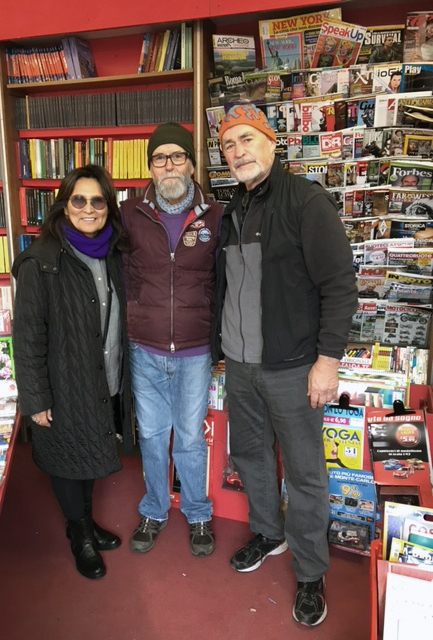
Have a morning coffee at Bar Tabacchi Giglio (Viale Petrarca #2 Red) and then pick up your morning “Giornale” (NY Times if you like!) da Andrea in the storefront with La Nazione written above the entrance. This “Edicola” or newsstand doubles as a bookstore and Andrea is a knowledgeable historian of the neighborhood and also sells bus tickets for the ATAF, the city’s bus system. The tickets are 1.20 Euros or you can buy 10 rides for 10 Euros. BTW if you want to ride rather than walk and do the city panorama from Piazzale Michelangelo, the #12 Bus ATAF leaves from in front of Andrea’s and takes you there. To get back to Tasso you take the #13. But that is a diversion from the Avanti Popolo tour of San Frediano.
Much of San Frediano grew up around the Monastery of the Camoldesi Monks (Thus the name Via de Camoldoli on the west side of Tasso). This handsome building which houses the City branch library named Pietro Thouar, has served many functions over the years including that of a leper colony in the 16th century.
Visit the Pietro Thouar library and go up to the Terzo Piano (our 4th floor) for a spectacular view of the city skyline and also the use of a clean well-lighted bathroom.
Communities grew up around churches, monasteries and convents. San Frediano was home to a huge concentration of artisans and industry.
Walk down Via del Leone and across from the Catholic Thrift Shop at 27 Red, which supports the immigrant and people’s assistance project, Arco Balena, and there is a shop at 28 Red that makes violins and cellos for musicians all over the world. You may have to knock on the door to get access, but go inside and check out the amazing craftsmanship.
San Frediano was once home to much more large-scale industry. Let’s walk to two locations that highlight that industry. Proceed north to the corner of Via del Leone and Via Del Orto and turn left and continue on to Piazza de Nerli where you will turn right and head straight towards the Ponte Vespucci that crosses the Arno. However before you reach Vespucci you will find Il Tripaio Fiorentino at the northern edge of Nerli.
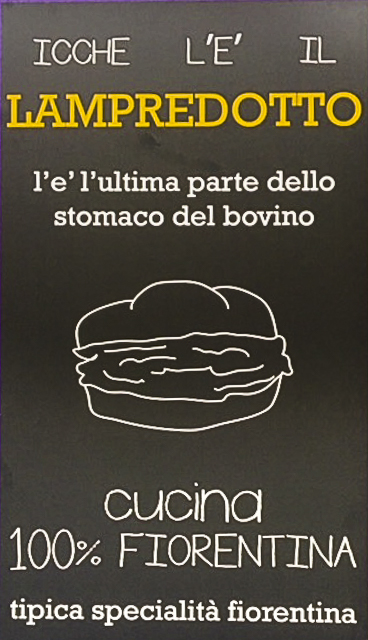
Stop at the Tripaio for lunch and have a tripe sandwich (cow stomach on a bun with seasoning) or if you are really daring try a Lampredotto sandwich made from the last stretch of stomach of the cow or as the Italians say the place “prima che esce l’aire” (before the passage reaches the open air). Lampredotto is like pastrami but a little softer but well seasoned and a Florentine working class lunch.
After you have finished savoring what Florentines consider the third dish in their gastronomical trinity, the other two being a peasant stew made from leftover bread and re-boiled vegetables called “ribollita” and the hearty Bistecca alla Fiorentina, we are heading to the Vespucci Bridge on Via San Onofrio after crossing the street named Borgo San Frediano. On our left we turn to head down Via L. Bartolini which leads to the Poste Italiane but
Before arriving at Le Poste look on your right for the Setificio Fiorentino, a silk factory still in operation. Heading back east on Via Bartolini you will arrive at Piazza Del Tiratoio (Place of the Hanging) not the gallows but a place where silk and other fabrics were hung to dry after production and dying. If you have time you also might want to visit Piazza Piattellina where copper was fabricated to be used on leather goods.
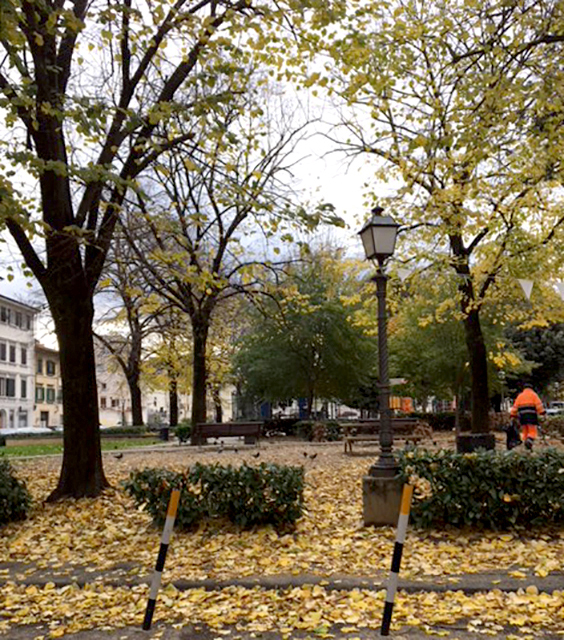
The final leg of the Avanti Popolo tour takes us back to Piazza Tasso. The Plaza gets its name from the 16th century writer who in 1512 penned the masterpiece Gerusalemme liberata that creates a fanciful story of the conflicts between Christians and Muslims. But it is the Piazza’s more recent history that interests us today. San Frediano according to historian Stefano Gallerini, “Was the beating heart of Florentine popular anti-fascism.” In 1944, the allies were moving up the Italian peninsula and the Nazi/Fascists were in retreat. On July 17, 1944 fascists machine-gunned a mass gathering in Piazza Tasso brutally slaying 5 locals including Ivo Poli an 8-year-old boy. 2 days later a massive funeral cortege marched through the streets and Piazzas of the neighborhood: Piazza Tasso, Via del Leone, Piazza Piattelini, Via del Orto, Via di Camaldoli . The crowd chanted: “Morte al Fascismo”!!!
Opposite the Pietro Thouar library there is monument to the 5 victims of the Nazi-fascists and the well-used children’s playground in the park is named for Ivo Poli. Notice that the monument has fresh flowers and there is a commemoration of the event every year carried out by the Associazione Nazionale di Partigiani Italiani (ANPI) whose main office and social club in Toscana is in the same building as the library. Needless to say most of the actual partisans are dead, but the Association continues the work of spreading the anti-fascist gospel. .
You will notice if you look due south from the anti-fascist monument that the Viale is named Viale Vasco Pratolini. Pratolini is famous for his participation in the resistance but also for his writings that chronicled the neighborhood of San Frediano. His most famous book is called The Girls of San Frediano (Le Ragazze di San Frediano). It was published in 1947 post WW II and tells of the amorous exploits of a San Frediano named Aldo whose good looks earn him the nickname “Bob” after the American movie star Robert Montgomery. “Bob” is stringing along five women all at the same time. Each is abused and heartbroken by him until they finally decide to unite and end up giving him a public physical thrashing. The book was made into a movie in Italy in 1954 and a RAI television series in 2007.
Let’s end our tour with a modern miracle. On the northeast corner of the Tasso Square where Via del Leone empties into the Piazza there is the “publiacqua” dispensary. This is a free water dispensary where you can fill all your bottles up at any time with fresh spring water or sparking mineral water or as the Italians call it “frizzante”. This eliminates the need to buy bottled water, and every morning Italians tote big crates of bottles to be filled in the public square. Some say this water system(which is in other squares throughout Florence) has its origins under the mayoral term of ex Premier Matteo Renzi. My friends assure me that it was the term of Leonardo Domenici, an ex Partito Communista Italiano (PCI) militant who originated the idea and its implementation. So be it, but can the Nestles of the world be happy about this? .
That ends our Avanti Popolo tour unless you are hungry in which case you have many choices in the neighborhood. A block north on Via del Leone is l’Brindellone (Piazza Piattelina 10) which serves its customers a fine and economical lunch or dinner at big wooden tables. Tratoria Sabatino is a family style restaurant with great prices near the Porta San Frediano(Via Pisana 2/Red). A little further west on Via Piasan at 140/R is Bar Pegaso. This is a winner for an inexpensive but tasty lunch. You will share it with the local artisans and working class.
But if you want to stay close to Tasso then try the Trattoria BBQ joint at the northeast corner of Tasso 9/10 Red across from PublicAcqua. The food is great, but be careful if you try as our friend Noli did, to cut your taglietelle pasta with a knife. Simone the waiter will surely come out with a meat cleaver and grab your arm and attempt to chop it off. Only “bambini” have their pasta cut with a knife! Oh and gelato? Go next door to Tasso 11/Red and try La Sorbetteria.
Avanti Popolo alla riscossa, Bandiera Rossa la Trionfera'” ENJOY!
So Wakes the Black Panther
By Gary Phillips
“Nobody gives a shit about any of the other Marvel characters. Go back and make a deal for Spider-Man only.” A directive from a Sony executive in 1998 according to Ben Fritz in his recent book, The Big Picture: The Fight for the Future of Movies.
Marvel at the time was exiting bankruptcy and had offered the film rights to a whole slew of their characters for a fast $25 million. Sony passed. Flash forward…post Disney buying the comics company for $4 billion. A slew of those characters from Deadpool, Guardians of the Galaxy, Thor, Iron Man, Captain America and even the C-lister Ant-Man made big box office. Though it is notable Daredevil, Elektra and the Ghost Rider flicks didn’t exactly set any movie going records.
Now comes the Black Panther. He’s a character first introduced fifty-two years ago in the pages of Fantastic Four #52, July 1966, in the wake of Malcolm X’s assassination and the Watts uprising. Depending on which Marvel lore you believe, either Stan Lee as writer and Jack Kirby as artist together came up with the character, Stan Lee by himself as he claims in the documentary With Great Power because he thought the time was right for more black comics characters, or Kirby alone, more or less for the same reason.
For the geek fanboys out there keeping score, I’m in the Kirby camp. Nonetheless, the Panther made the scene, does in fact grace the cover of that FF issue. Though again, like so much of inside comics that is analogous to race relations at any given time period, the initial version of the cover by Kirby had BP in a half mask making it clear he’s a black man. The one that ran, his mask fully covers his face as supposedly the higher-ups at Marvel were worried a brother prominent on the front of the book would hurt sales.
While Black Panther wasn’t a runaway hit, he did make an impression on kids like me growing up in South Central, happy to see the arrival of a black superhero. It took some time for him to get an eponymous title. His first feature run was in Jungle Action, a title Marvel had maintained since the ‘50s. The company was then known as Atlas, and the book featured all sorts of white b’wanna jungle lords in the Tarzan mold.
Yet this is a character who as often as he’s had his own title, has had those titles cut out from beneath his agile feet time and again because of poor sales. The adage in comics like movies that the majority white readership won’t support a black lead. But as of this writing, the 2018 movie bearing his name has earned upwards of $897.7 million worldwide. What is it then about this moment in the United States in particular that the Black Panther, T’Challa, son of T’Chaka, brainy warrior king of the scientifically advanced hidden African kingdom of Wakanda, has struck this kind of chord, invoking pride and optimism like Roots did back when? Folks coming out to the theaters in their African finery, celebs and community organizations buying out screenings for young people, Afrofuturists heralding Black Panther as an agent of a change of perception and some seeing the movie three or four times because they want to inculcate all of its nuances and meaning.
Overall I dug the movie. My wife, a veteran community organizer and director of community action organizations, also enjoyed the picture, and she is no fan of Marvel movies or action-adventure movies in general. For it isn’t like the script didn’t lift from the Panther comics storylines and characters written by the likes of Don McGregor, Christopher Priest and Reginald Hudlin (producer on Django Unchained and Marshall) among several others. All Marvel and DC Comics movies and TV shows have taken from the source material. Certainly the film too owes a good portion of its visual style to that endless phantasmagoric imagery Kirby: populated his comics with over all his years of toil.
This cathartic cinematic super black experience has been building. When streaming service Netflix premiered Luke Cage (created as a response by Marvel to the influence of blaxploitation films in 1972 by Archie Goodwin, writer and George Tuska, artist) in 2016, the site crashed there was so much pent-up demand for a “bulletproof brother” in a time of Black Lives Matter. And the new network show Black Lightning (from DC who got on the bandwagon a little later in 1977, the character created by writer Tony Isabella and artist Trevor Von Eden) has garnered some residual BPness. Witness a recent episode echoing Charlottesville where white supremacists linked arms to encircle a Confederate statue chanting, “You will not replace us,” as multi-racial protestors encircled them.
Nor is Black Panther the first black super hero movie. In 1993 Wesley Snipes had an interest in playing the Black Panther and approached Marvel. For various reasons as Snipes recounts in a recent Hollywood Reporter piece, the movie couldn’t get made. But his dealings with the House of Ideas led him in 1998 to play Eric Brooks, aka Blade, an angst driven, half-vampire, half-human vampire killer created by writer Marv Wolfman and artist Gene Colon in the pages of the Tomb of Dracula comic. The Blade movie made money. That and its two sequels helped pave the way for where we are now – a mix of the hyper ideal and the real.
These black superheroes might face down super villains like Doctor Doom and Lex Luthor, but in civilian clothes driving their car to the next Justice League meeting, they could be stopped by the cops because they “fit the profile.” Reality has even intruded in Metropolis. In Action Comics #987, Superman zooms between a pissed-off white guy wearing an American flag bandana who is distraught at losing his job, and some undocumented workers he was trying to gun down.
Is Black Panther’s appeal then as Jamil Smith observed in his Time cover story, “The Revolutionary Power of Black Panther,” such that “After the Obama era, perhaps none of this should feel groundbreaking. But it does. In the midst of a regressive cultural and political moment fueled in part by the white-nativist movement, the very existence of Black Panther feels like resistance.”
Had Clinton been victorious, and the status quo remained “normal,” would Black Panther have the same widespread resonance? I think to an extent it would have, but there’s no denying Smith’s point. The Wonder Woman movie of last year was viewed through a similar lens, an answer to the misogynism of Trump and his ilk. Added to the mix is the subtext of horror film Get Out (writer-director Jordan Peele won the Oscar for best original screenplay), a metaphor for being woke. Is this then a sign of an awakening of those who stayed home for various reasons in November 2016, answering the theme of standing up issued from the silver screen? Activism is on the move and on the voting front, the dems have been racking up wins for statehouse seats. Some in places where Trump won handily.
If a more reflective pop cultural story can inspire us to stay in or get in the struggle be it organizing or the electoral arena or creating more fictions that like vibranium, the space metal upon which Wakanda was built, absorbs then can redirect hostile energy, then maybe the words of the Black Panther from his first appearance those five plus decades ago still have meaning. “A victory too easily won is too soon forgotten!”
Italian National Elections – Sunday, March 4: An Analysis from Florence, Italy
By Nicola Benvenuti
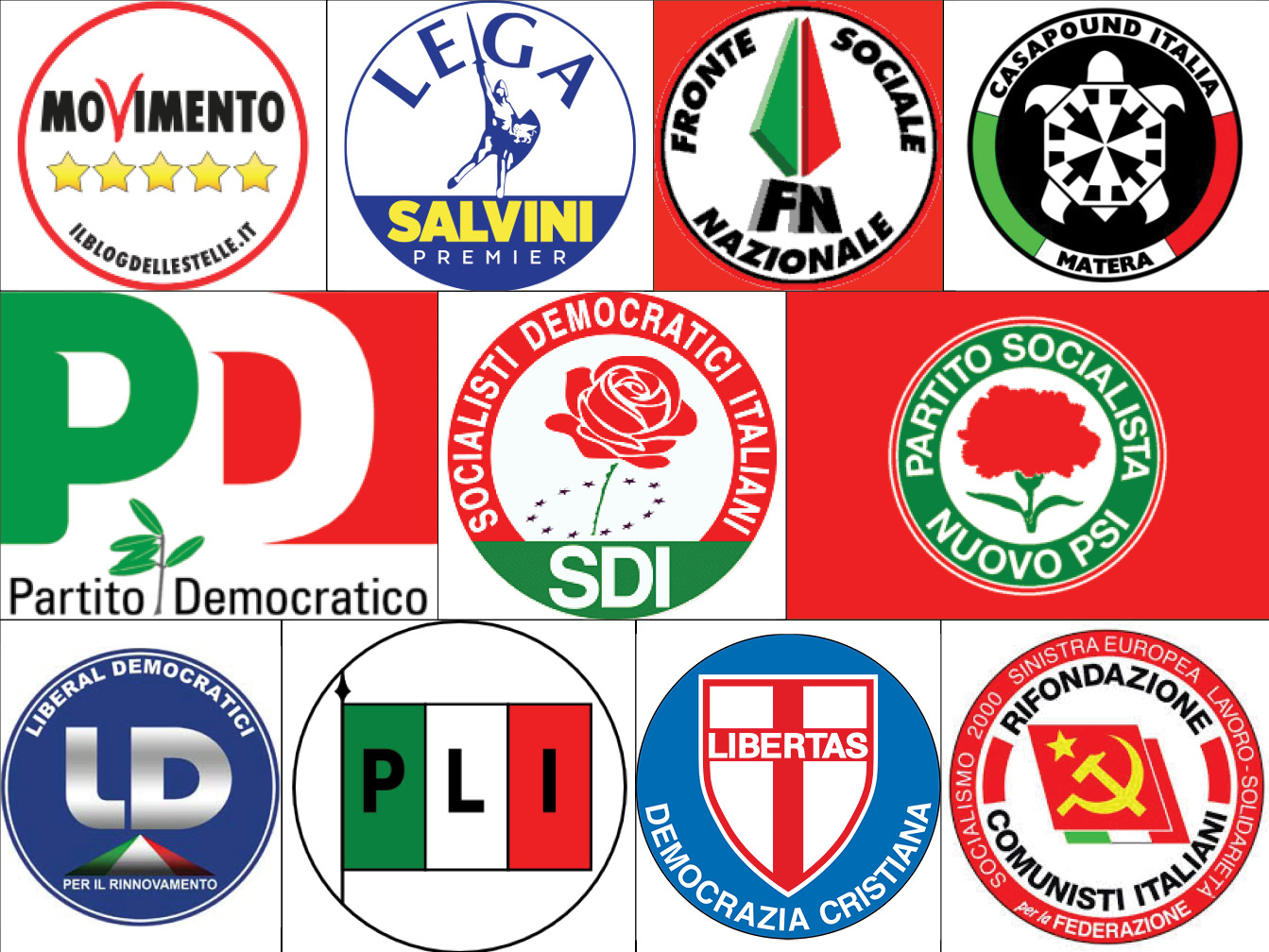
The Italian elections of March 4, 2018 are novel and important in that they will mark the end of political bipolarism (Partito Democratico vs. Forza Italia) because of the role that two populist parties, Movimento 5 Stelle (Movement 5 Stars) and La Lega (no longer Lega Nord) will play, as well as for the effects they will have more generally both on Italian politics and on European politics.
Sunday is both the day of Italian parliamentary elections and the day of the referendum count in the SPD (German Social Democratic Party) on whether to approve or reject the Schulz-Merkel agreement. This conincidence emphasizes the centrality of the European theme. In Germany approval of the referendum in support of the Grosse Koalition between CDU and SPD could relaunch the European economy after years of financial rigor (just think of the ceding of the Ministry of Finance to a Social Democrat). But a failure will prolong German internal uncertainty and accelerate the disintegration of the EU. To consolidate the shaky agreements on monetary policy and restore popular vigor to the idea of Europe by blocking the development of populism fascistoids, as well as to address the most important issues that can no longer be solved strictly on a national level, a political and democratic architecture must be completed for the European Union and there must be regulatory unification – particularly fiscal.
In the European Union (EU) the agreement Merkel/Macron can open a new phase in the development of the EU and Italy has all the cards to play among the leading countries on this new course, provided that a reliable majority that is pro European prevails in the national elections.
Unfortunately, it seems that in Sunday’s Italian elections for the first time in thirty years we will not see the left and its allies contend for the government. Though the present party of the government, the Partito Democratico (PD), presents, in comparison with the demagogic programs of Berlusconi, Salvini and M5S, a more reliable program, it is in great difficulty, while LEU (Liberi e Uguali), which collects the exiles of the PD and the former Sinistra Italiana (Italian Left), does not seem able to be able to gain ground and collect all the dissatifaction from and disaffection with the Ex Premier and present PD party secretary, Mateo Renzi.
For its part, the PD is suffering from the unpopularity and rejection of Renzi himself aroused by the numerous errors committed by his government (the first of which is having lost the constitutional refendum in December 2016 which seemed on the merits to be winnable), his presumptuous attitudes and his failure to prevent the rift in the party (to the dismay of all the “noble fathers” of the PD, Napolitano, Prodi, Veltroni …). It is no accident that the PD prefers to identify today with Prime Minister Gentiloni and not the “rottamatore” (“Scrapper” of the political establishment) Renzi, the Party Secretary.
At the moment therefore the 2 movements that are contending for first place are the coalition of the Right and the M5S, but it is unclear whether either bloc can arrive at 40% of the vote, the share necessary to trigger the award of additional deputies in order to create a parliamentary majority and a government. The Camera dei Diputati has 630 members so a majority is 316.
The right is thought to be the prevailing alliance (Forza Italia, Lega, Fratelli d’Italia and other small groups belong to it). But this is a fake alliance. The parties that make it up have radically different positions. Let’s take the two main ones: the Lega di Matteo Salvini wants to abolish the Fornero law that brought high health care spending under control. Forza Italia is against the abolishment of Fornero. Forza Italia proposes a flat tax at 25%, which Salvini instead would like to see at 15% (“I’ll give you more” says an old Italian song that summarizes the faulty logic of so much Italian politics, often also on the left). The conflict on the right is clearly about which of the two, Salvini or ex premier Silvio Berlusconi, will lead the coalition (Brothers of Italy (Fratelli d’Italia), Giorgia Meloni’s party takes second seat). And above all, the Lega is anti European (but Salvini is mitigating a bit of his hostility), while Berlusconi has represented himself as of the EPP (European People’s Party), a group of which Forza Italia is part of in the European Parliament, as though FI is the guarantor of Europeanism in Italy. As much as the Italo Right transformation reminds us that even to get money and power you can give up everything and say anything, it seems that especially on Europe the break will be difficult to overcome when the EU has to impose austerity on the easy spending of a right-wing government.
There remain allegations and illusions about the possibility that Renzi and Berlusconi can agree on a sort of big coalition in the name of the EU: after all, it will be remembered that the Renzi government was blessed by the Nazarene pact (Aggrement between Renzi and Berlusconi to mutually support consitutional reform of the Senate and electoral reform) – January 18, 2014 – with Berlusconi! The electoral projections at the moment make this perspective problematic: the PD is at 21.5%; FI at 18%. The PD will hope that its allies do not reach 3%(the threshold for seats in parliament) and then, as the electoral law just approved mandates, give their votes to the PD. Salvini is rising in the polls, and FI will rely on a fringe in the League led by the former President of the Lombardy Region, Maroni.
It is more difficult to evaluate the M5S, polling in the last surveys at around 29%. The fact that the right-wing coalition led by FI and La Lega is the main competitor means that M5S tends to turn to the left to attract votes. On paper it could turn out to be the top vote getter, and the President of the Republic could grant it the exploratory task of the formation of a government, but the M5S refuses to make alliances, in order to enhance its image as an antisystem force, and perhaps it hopes to find agreement in parliament on individual issues. The premier candidate, 32 year old Luigi Di Maio, has started to make public the names of the prospective members of his government, proposing the General of the Carabinieri Sergio Costa, the mover of the investigations on the Land of Fires (the story of toxic waste buried in the agricultural fields of Campania by organizations related to the Camorra ), for the Minister of the Environment. Other names will be made public in the coming days. The program has been refined and made more specific in contrast to the very demagogic initial buzzwords, but the weakness of the M5S remains the unreliability of its precarious process of selection of political personnel through the online network and under the control of the Casaleggio company (Casaleggio Sr. was a computer whiz and the founder of M5S with comedian Beppe Grillo).
Among the many other parties in the running, it is important to highlight above all LEU (Liberi and Uguali) led by Pietro Grasso, President of the Senate, and by the President of the Chamber of Deputies Laura Boldrini. The backbone of this formation is however made up of by exiles from the PD, first and foremost Bersani and D’Alema , and cadres from Sinistra Italiana (Italian Left). The latest polls (after the 17th of February opinion polls can no longer be disclosed) gave them 5.4%. It is difficult to hypothesize their political role after the elections, except in the case of the impossibility of forming a new majority, and therefore in external support of the current Gentiloni government if it were extended by the President of the Republic with the task of making a new (again!) electoral law with which to hold new elections (this was a point D’Alema made in a recent interview).
Another new party that has aroused some interest on the left is Potere al Popolo (Power to the People), a formation born of a lively movement from below to redefine leftist politics and initially led by two civil society personalities, Anna Falcone and Tommaso Montanari: the former then joined the lists of LEU, while the latter is mentioned by some press as a possible Minister of the M5S. Potere al Popolo is polling at 0.8%
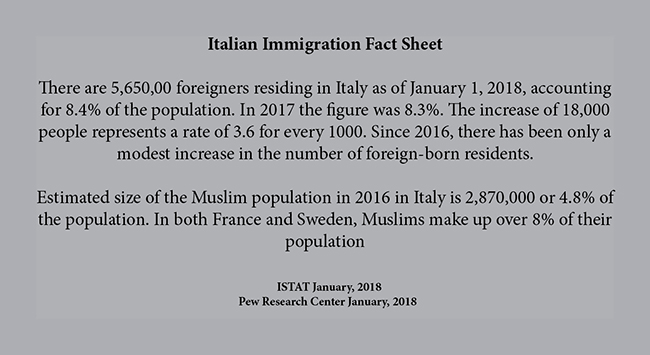
The most attentive readers will note the absence in this piece of mine of the immigration theme that also inflames all the “apolitical” transmissions of Berlusconi’s networks and the actions of the League and feeds the aggressive climate enabling the reappearance of fascist violence (see city of Macerata massacre carried out by an ex Lega party candidate against African immigrants earlier this year)). This is a very serious issue, but unfortunately it has been used mainly for political propaganda, although most of the parties, especially those who protest most vehemently, do not have viable positions (only the watchwords: “let’s send them all home, block them at sea”, etc.) . This time the PD, thanks to the Minister of the Interior Minniti, can show the results of the initiation of a policy of departure control from Libya that, although implemented late in the game, nevertheless is the basis for an immigration policy on which the EU also agrees, as evidenced by the recent informal meeting on EU immigration policy in Brussels between Gentiloni, Macron and Merkel.
Now, as is obvious in a predominantly proportional system, all evaluations are postponed until the numbers come out of the March 4 elections. We shall see……