Finding and Embracing St. Francis in the Labor Movement Today
By Victor Narro
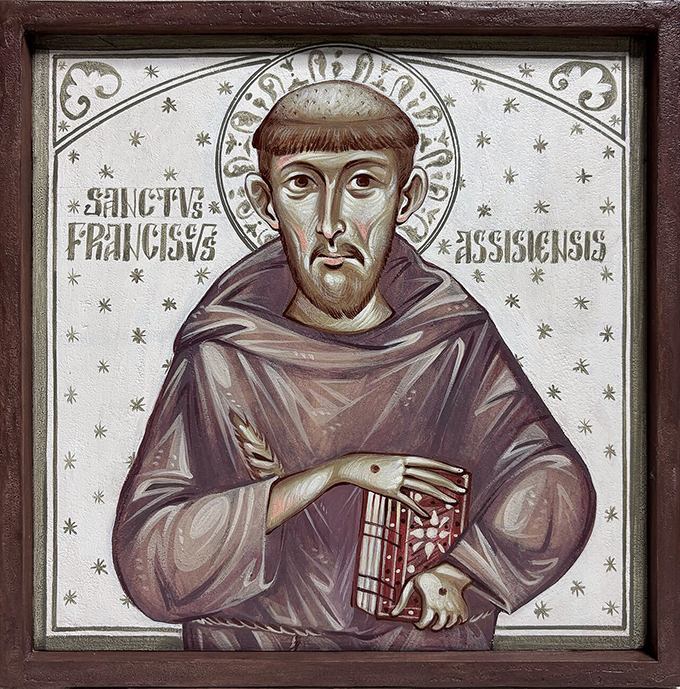
Every year on October 4, Catholics and non-Catholics around the world celebrate the life of St. Francis of Assisi (1181-1226). This year’s celebration will be a special one, however, as it will be a commemoration of St. Francis passing away 800 years ago on October 3, 1226. The life and teachings of Francis of Assisi have shaped my work for justice, teaching me the way of peace, love, humility, and service.
In my recent book, The Activist Spirit – Toward a Radical Solidarity, I argue that there is a spiritual core in the work for justice from which we can deepen our solidarity through our interconnectedness, our creativity, and our depth of compassion and love for one another. My work with union campaigns over the past decades has convinced me that the labor movement can be a space for this spiritual core to make the struggle for worker justice more compassionate, fulfilling, caring, and sustainable. Like he did for me, Francis of Assisi can show us the way.
Francis of Assisi was a peacemaker and activist who lived a life of evangelical poverty, humility and peace making during the most violent years of the Middle Ages. This humble person transformed his world and renewed the Catholic Church by simple but revolutionary acts of practicing his faith as it had never been practiced before. Francis was a man of peace who was known for building bridges of communication, understanding, and cooperation between warring people, groups, and nations. A brief look at Francis’ life story will help us better understand his embrace of a life of contemplation, compassionate living, and service to others.
Francis was born about 1181 into an affluent family during a period of incredible violence and warfare. Francis dreamed of knighthood and he fought in battles against other towns and cities. Many historians believe that Francis participated in the killing and slaughter of other soldiers during battle. Italy during that time period was filled with daily violence on a large scale. During Francis’ lifetime, the once dominant feudal system was breaking apart, and Italy’s provinces and cities were engaged in ongoing strife that led to continuing military conflicts. During his youth, Francis developed a reputation for self-indulgence and playfulness that made him a hero and leader of his town’s young people. He watched as his own town of Assisi was wracked by a civil war and a long-running conflict with the nearby town of Perugia. When Francis was 20, the conflict with Perugia erupted into an all-out war. Inspired by patriotism and deep pride, Francis enlisted and went off to battle. He was captured and put in prison for nearly a year.
Two years later, Francis set out for war again, this time as a young knight of a papal army bound for the Crusades. On his way to battle, Francis had a vision that caused him to become weak and very ill. He returned to Assisi, unwilling to take up where he left off. He was ill for almost a year and he struggled with dreams and voices telling him to repair the Church that had fallen. These dreams and visions led him to turn his back on his father’s wealthy business and the military heroics of his youth.
Instead, Francis chose a radical life of caring for the poor through his acts of love and humility where he lived among lepers, homeless and others that were neglected by society. Francis was a tough and demanding revolutionary voyager of the human spirit. Francis had a relentless emphasis on poverty of the spirit and its necessary companion, humility. Francis was someone who lived his vision. His life (rather than his words) teaches us what it is like to live with deep joy in the service of others.
As union organizers and labor advocates, Francis can show us the way to deepen our solidarity in our daily work. We can achieve a radical solidarity through 1) our interconnectedness, understanding and compassion with each other, and 2) our embrace of humility in our daily work.
Finding Interconnectedness, Compassion, and Understanding in the Labor Movement
The interconnectedness between all of us in the labor movement should become an important part of our work. This is so especially where we find ourselves dispersed in so many different strategies and campaigns, often disconnected from one another. Francis would spend long hours with every member that formed the first band of followers of his teachings. He lived and practiced a daily heart-to-heart connection with them. Similarly in the labor movement, we are all interwoven – ourselves, our lives, the workers we represent, and the communities impacted by our organizing and policy campaigns. As labor activists, we have the potential to connect through our hearts and let that connection be the driving force that enables us to fight together, struggle together, strategize together, and win together. This is radical solidarity in action – our interconnectedness, the spiritual force of love and compassion for one another, much in the same way of the unconditional love that Francis had for all of creation.
Active listening is an important and necessary step to help us develop interconnectedness. We must learn to engage in active listening with our heart, which will then enable us to speak through compassion, and not anger, frustration or fear. Active listening is a gift that we can give to each other to enhance our work in the labor movement. When we are really heard, and the other understands our meaning and emotions, we feel valued and respected, a condition necessary for radical solidarity. There is a no more precious gift, to give or receive, than to listen deeply to the words of another.
The historical encounter between Francis of Assisi and the Sultan of Egypt, Malik al-Kamil (Sultan al-Kamil) beautifully illustrates the concept of interconnectedness, understanding, and compassion. It is the story of meeting and embracing a stranger or perceived enemy and saying there is a better way than resentment, suspicion and warfare. The story of this historic encounter, which resurfaced during the 20th century, provides a powerful example for the labor movement today. We must revitalize its significance to let it guide us.
Meeting between Francis of Assisi and the Sultan of Egypt, Malik al-Kamil (Sultan al-Kamil)
In the political turmoil of the 13th Century “Holy Roman Empire,” people were locked in a culture of war as the empire united in a series of Crusades against Muslims, Jews and others labeled as “heretics.” The Western portrait of Sultan al-Kamil was skewed by Crusader propaganda and lack of basic knowledge about Muslim society and faith by Christian writers. In Egypt, however, the Sultan was known for his tolerance toward the Christian minority. He was a cultured man who loved learned conversation with scholars in his court. Sultan al-Kamil was rooted in the spiritual belief of peace and compassion. His beliefs eventually led him to broker a peace with the Crusaders by ceding Jerusalem to the Christians to save the lives of the people in the city.
The story of the meeting between Francis and Sultan al-Kamil opened a door to respect, trust and peace. Francis followed his prophetic nonviolent resistance to the violence of the Crusades by embarking on a journey to meet with Sultan al-Kamil and bring him his message of peace. He embarked on dangerous journeys three times, but strong storms prevented him from successfully crossing theMediterranean Sea to get to Egypt.
His moment finally arrived during the summer of 1219, amid a Crusade that was killing thousands of people in the sweltering heat on the banks of the Nile. The leaders of the Christian army warned Francis not to cross the bloody battlefield between the two armies to seek out the Sultan. Francis did not accept the Pope’s call to war. Instead, he continued with his goal of meeting with Sultan al-Kamil and embrace the Muslims, knowing full well the risk of his undertaking.
Crossing the treacherous battlefield, Francis and his traveling companion, Friar Illuminato, set foot on the outskirts of the Muslim camp. The Muslim soldiers seized them and took these two barefoot monks dressed in worn out patched brown tunics to appear before Sultan al-Kamil. No one knows what was said, since Francis did not speak Arabic and Sultan al-Kamil didn’t speak the French Italian dialect Francis used. It was their way of being together, the attitude of mutual respect and understanding, as well as their belief in one God, prayer, charity, and peace that appealed to both men.
Sultan al-Kamil had his circle of Sufi holy men with him to help him with translation. When Francis made it clear he was not there on behalf of the Pope’s army, but as an ambassador of his God, this intrigued the Sultan even more. When Sultan al-Kamil saw Francis’ enthusiasm and courage, he listened to him willingly and pressed him to stay with him. They spent four days together in mutual respect and understanding.
Francis’ desire to share his spirituality and message of peace with the Sultan, without insulting Islam or refuting Mohammed, was unique and disarming. During that moment in history, their dialogue turned into an embrace of each other as human beings driven by their religious belief for a higher good. According to many accounts, they both shared meals together. The image of Francis peacefully breaking bread at a banquet with Sultan al-Kamil demonstrates the appreciation that they had for each other and respect for their differences.
Francis was changed by the experience and came away deeply impressed with Islamic spirituality. His yearning for peace with Islam was especially apparent in his suggestion that his brothers and sisters live quietly among Muslims and “be subject” to them rather than engage in disputes, a provision that appears in an early version of the code of conduct, or Rule, for his order. When Francis was ready to leave and return to Italy, Sultan al-Kamil showered him with many gifts and treasures. Because he had no interest in worldly wealth, Francis refused them all, except one special gift: an ivory horn used by the muezzin to call the faithful to prayer. Francis used it to call people to prayer or for preaching.
Francis and Sultan al-Kamil teach us today about compassion and understanding in how we accept one another and embrace our differences. When political beliefs, government institutions and cultural differences divide us, we must seek solidarity with our sisters and brothers, ever mindful that we seek the eventual unity of all people whenever the opportunity presents itself.
Francis and Sultan al-Kamil engaged in active listening with their hearts, which enabled them to speak through compassion and loving speech, and not anger, frustration or fear. Striving to be listen deeply, in a nonjudgmental way, is a gift that we can give to one another to enhance all our lives. Francis and Sultan al-Kamil teach us that when we are really heard and the other understands us, we feel valued and respected.
Approaching our Daily Work Grounded in Humility
The second principle we should strive to embrace is grounding our daily work rooted in humility. Like the principles of non-violence, humility in social justice work is not submission or a state of passiveness; rather, it is a powerful force for change. Francis understood that the biggest threat to humility was the power of our ego.
Just as Francis preached a way of life through the principle of humility, we too must approach our work in the same way. We should exercise humility through acts of compassion as we carry out our tasks in our everyday work in the labor movement – in a campaign, in a picket line, a protest, giving a presentation or workshop, house visits, worker assemblies, visiting policy makers, etc. In whatever activity we engage in as part of our work as labor activists, we should strive to do it through the principle of humility that Francis teaches us. Acting through humility and compassion becomes especially important during the difficult or challenging moments or our work. After all, Francis tells us in his own words: ”We can never know how patient or humble we are when everything is going well with us. But when those who should cooperate with us do exactly the opposite, then we can know. A person has as much patience and humility as he or she has then, and no more.” The story of St. Francis and the wolf of Gubbio is one that embraces humility.
The Story of St. Francis and the Wolf of Gubbio
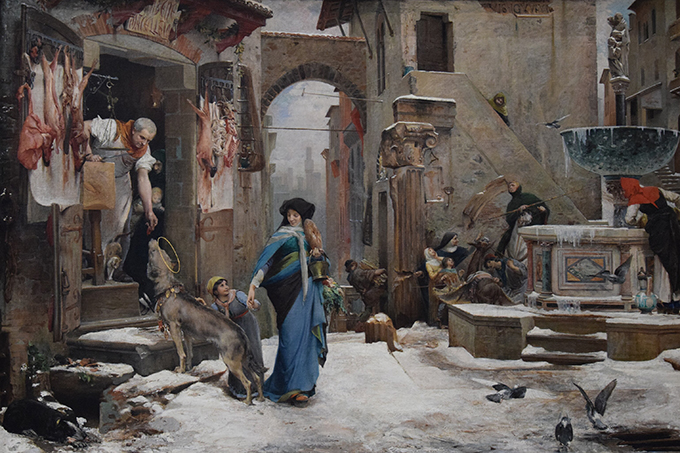
One day, a large lone wolf began to appear around the town of Gubbio, and he terrified the residents with his physical size and ferocious with rabid hunger. This wolf not only destroyed other animals, but many of the citizens believed that he captured and devoured many of the children. This wolf kept all the citizens in such danger and terror that when they went outside the town, they went armed and guarded as if they were heading into a deadly battle. The mayor of the town sent for Francis, having heard that Francis had a special way of connecting and communicating with animals. When word reached Francis about this wolf, he immediately set out to the town of Gubbio.
As soon as Francis entered the city, he heard the buzzing of all kinds of rumors about the wolf. What Francis heard was enough to anger most creatures. He was glad that the wolf could not understand human speech, because he remembered how desolate and depressed he felt when he first changed his way of life and his fellow Assisians had mocked and jeered him. He immediately felt a deeper solidarity and connection to this wolf than to the terrified citizens of Gubbio. Francis understood the virtue of being non-judgmental. He understood that in a conflict, every side has a narrative, every side has erred and been harmed, and both sides want the hope and possibility of peace. For fear of his safety, the townspeople pleaded with Francis not to go outside the gate to confront the wolf. Francis felt that he had to go into the forest to communicate in some way with the starving and desperate wolf.
With the townspeople behind him, Francis walked outside of the city’s gate into the forest. He called out to the wolf to come and meet in peace. Francis’ call was a call to begin the process of healing in the moment, of listening to the other, and of wanting to understand why there was such aggressive and brazen behavior.
Francis saw the wolf, who was baring its teeth and growling. The crowd stood motionless and silent. Francis stared at the wolf. Anger flashed in the wolf’s eyes, and he was working his jaws. Francis dared not move, but he said in a simple, low, quiet voice, “Brother Wolf.” The wolf quieted down in an apparent response. Francis felt the loneliness of the wolf and his suffering. He realized that the wolf was starving, and when it sought food among the flocks, the wolf encountered shepherds seeking to protect the flock. From there, tension and aggression escalated on both sides, with fear and hunger dictating the next steps.
Then Francis talked with the wolf, referring to him as “Brother Wolf.” He presented the wolf with a peace pact between him and the townspeople where he agreed not to harm them anymore and in exchange, they would give him food every day as long as he lived, so that he would never suffer from hunger. Then all the people who were assembled there promised in a loud voice to feed the wolf regularly. Francis stretched out his hand. The wolf seemed calm, but he remained immobile, scanning the crowd with his large, bloodshot eyes. Then slowly he walked to Francis and lifted his paw into Francis’ warm, steady hand. The two remained in that position for a long time, and what Francis said to the wolf, he never told anyone. Finally, Francis leaned over and put his arms about the wolf’s neck.
From that day, the wolf and the people kept the pact that Francis made between them. The wolf lived two years more, and he went from door to door for food. The people welcomed him as a beloved citizen. He hurt no one, and no one hurt him. The people fed him courteously. Then the wolf grew old and died. According to tradition, the people of Gubbio gave the wolf an honorable burial and later built the Church of Saint Francis of the Peace at the site. During the renovation of the church in 1872, the skeleton of a large wolf, apparently several centuries old, was found under a slab near the church wall and then reburied inside.
When we meet our fears this way, we develop the ability to become allies instead of enemies, like the wolf and the villagers. It is not a magical snap of the fingers, but a work of love, which can risk all for the sake of the vulnerable. At the heart of this story is the willingness and capacity to enter, with humility, into the heart of conflict to create a place that is sacred, hospitable, and healing, and where hope can grow and take root in the lives of all people.
Walking into and addressing conflict in this nonviolent way does not mean that we must stop the work of dismantling oppressive systems and institutions that exploit, abuse and degrade working families. As activists we fight against these unjust systems every day. But at the same time, we must offer those who perpetuate these systems the opportunity to give up their unjust and cruel acts, be it in business, political positions, organizations or family settings. We can invite them to treat all others with the respect and dignity that they would ask for themselves. Even for the ones that refuse to change their ways, we must treat them with kindness and compassion, as we rigorously challenge their unjust system and the culture that supports it.
Finally, Francis teaches us that we must bring love into our daily work. Francis’ way of peacemaking is love in action. Love should be fluid throughout our work. We always need awareness of love, especially during moments of chaos and crisis. Love “re-members” us as one. Love is endless, it is not finite; you can never give or receive more than enough of it. In the labor movement, our love for one another is the deepest form of solidarity. It brings us back together, acknowledges and nurtures us. As Francis teaches us, when you love for the act of loving itself, peace will fill your heart, and this will be the same for the other person. Francis found love in the present moment. For Francis, love was in his body and in whatever surrounded him at any moment. As labor activists, if we can give and receive love, we will be love in action and be loved.
…