Patricia Hills: Museum Curator, Feminist, Marxist
By Kurt Stand
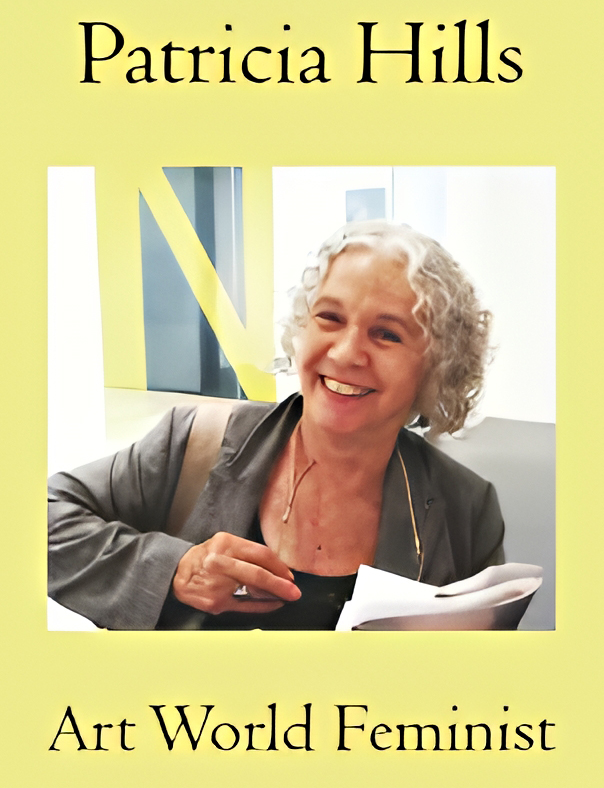
Appreciating equally the work of a Gilded Age portrait painter such as John Singer Sargeant and an artistic chronicler of the Great Migration and daily life in Harlem such as Jacob Lawrence, the realist painter and photographer Thomas Eakins and the innovative feminist artist May Stevens might seem poles apart, but Patricia Hills, in her discursive memoir Art World Feminist, connects the dots. Fine arts, popular culture, museum culture, university politics, radical politics, all intersect at countless junctures over the course of her life’s work. Hills taught at City College of New York, Boston University, Columbia University, and New York University; she served as the associate curator at the Whitney Museum in New York, Director of the Boston University Art Gallery, and held numerous other positions at the center of the art world. While doing so Hills took part in anti-Vietnam War protests, participated in Black Panther defense solidarity, supported workers rights – embracing feminism, Marxism, Leninism along the way.
Art World Feminist takes us from the repressive atmosphere of the 1950s in which the boundaries of women’s lives were, for the most part, narrowly proscribed, through the explosions of the 1960s and 70s and on up to our present. The implications of that era in personal life, in our society’s politics, and in culture, were and remain profound as her memoir allows us to see.
How to Look
Hills’ memoir also enables readers to grasp changes in aesthetics over time providing an overview of trends in painting and sculpture, art criticism and museum/gallery exhibition policies from the post-World War II period up to the present. Doing so, she links conflicts of perspective, decisions over inclusion and exclusion, to the wider world in which works of art are created. Hills recounts the theories of Clement Greenberg and Hilton Kramer, Cold War era thinkers whose perspective was still dominant in the late 1950s and early 60s when she began her forays into the world of art. They each believed that art appreciation was about style alone – line and color – i.e. pure art. This was a rejection of the social realism of many 1930s artists; it was advocated as the embodiment of American exceptionalism in which abstraction stood for freedom and democracy against the alleged totalitarianism of the Soviet Union.
The swirling changes in the 1960s broke out of the confines of such thinking and influenced Hills whose outlook is rooted in the belief that “all artwork is about something. Its content has its origin in an idea, an experience, a feeling, or a formal relationship between colors, three-dimensionality, two-dimensionality, and or time.” By the 1970s, she notes, artists – including abstract expressionist artists –were increasingly exploring the figure as the vehicle for ideas challenging the narrow boundaries that guardians of the established order such as Greenberg and Kramer had established.
This trend also manifested itself in the recognition that museums, galleries, university programs embodied and reinforced existing structures of domination and subordination. Hills was part of the broad movement to challenge the sexism, racism and elitism of museum culture. Art World Feminist provides a behind the scenes retelling of the protests and boycott of the Whitney Museum in New York in 1976 when its planned Bicentennial Exhibit had only one painting by a woman artist and none by a Black artist. She quotes from a leaflet handed out to museum goers that concludes: “[The] myth of America … presents the views of the ruling class as the only correct ones. We protest the fact that museums are being used to exclude all but the ruling class from active participation in the development of culture. The museum removes art from its social context thereby forcing a separation between people and their history.”
As old guard theories gave way, a new response to the demands for more inclusive art gave rise to “deconstruction” theories – which basically denied any meaning to artistic creation which had the effect of trivializing artists who expressed through their work experiences and convictions that sought to give voice to those whose voices had been suppressed or marginalized. Noting the influence of DuBois concept of “double consciousness,’ of Lura Mulvey’s critique of the “male gaze, of Frederic Jameson’s admonition to historicize, Gayatri Spivak’s recognition that that “the subaltern” has a voice, Hills advocated a conception of art that challenges people to see painting and sculpture through a lens that views the contemporary world critically. Her view sees possibilities as open ended, what is and can be form an inextricably connected totality. Quoting from a presentation she made at a conference in 1991, Hills writes,
“Deconstruction as a developed theory is first associated with the subordination, or even denial, of historical reference and, secondly, also associated with the elevation of the view that all interpretation is … a form of play – and, at base arbitrary.” Hills critiques that outlook, postulating that we need to think of the power of a picture “not just in aesthetic terms but also in terms of instrumentality, that is, its social and political potency. We cannot help but see many of these pictures as part of the arsenal of dominant cultures to sustain a view of society useful to themselves.” She concludes by upholding the contrasting objective to “view the pictural choices of the artist as strategies intimately connected to cultural agencies in the process of formation, culmination, or dissolution and which, consciously or not, service old ideologies struggling to maintain their cultural hegemony or newer ones attempting to subvert and/or gain dominance.”
The initiatives and protests that Hills and many others organized had an impact as a visit to almost any major museum today reveals. As she notes, that is all under attack today by the Trump Administration with its particularly vicious opposition to DEI, but those who have pushed for change in the past are continuing to organize to protect and expand diversity, equity, inclusion in the arts, in society.
Museum Curator
One of the most intriguing aspects of Art World Feminist lies in getting a glimpse of the work of a curator, enabling readers to look behind the curtain and grasp the labor entailed in the exhibits those of us who go to the Whitney or Museum of Modern Art in New York, or the Phillips in Washington DC, or exhibits in Boston or Los Angeles or elsewhere might see. Determining what works of art will be displayed, how they will be displayed, creating the overall aesthetic look or feel of a given exhibition are all parts of an integrated process. Beyond that, an exhibit entails the physical labor of transporting paintings and sculpture, research into an artist’s work and times, promoting the showing, educating students and the wider public – and on and on. All tasks that need to be collaborative and coordinated, that is to say, curated.
Describing the process, Hill reveals a simple truth that never occurs to most museum goers: “a curator makes art out of artists’ artwork. Every artwork should be memorable not only in what it shows, but in its context within a room or space.” Doing so can expose the contradictions in the process – art appreciation can be combined with an elitism that sees so much and no more, prejudices that reveal themselves in choices of what is put on a museum’s walls and what is left out.
Her memoir, which takes us from the late 1950s to the near present, points out the trend toward corporatization of museums (and universities), pure and simple greed supplanting the old elitism. And she writes of the fight back against that within the art world and by museum staff whose unacknowledged work is essential. Hill writes of unionization initiatives by workers at the Museum of Modern Art in the 1960s and continuing unionization efforts through the present.
Understanding that it “takes a village to make an exhibition,” is as much a part of DEI as the displays, as is the information provided that give context to each work. Another part of DEI, Hills notes is access – accessibility for people who are disabled, outdoor exhibits that brings art to the people, low or free admission to encourage attendance (free admission to the Metropolitan Museum of Art benefitted me greatly when a teenager in New York City, so too, later when I had children, did the free admission to the Smithsonian museums in Washington DC).
This view of how art should be curated, how works should be displayed, whose labor allows an exhibit to take place, who should see, experience, learn is based on the mixture of Hills aesthetic and political understanding which is encapsulated in the following;
“I believe that museums can better serve the public when they behave like beacons in the night. When museums reach out to all ages, genders, classes, and ethnic groups and involve those groups in decision-making, those visitors learn that art can be both pleasurable and educational. Compositional designs, color, and illusions of space in representational and abstract art can be visually thrilling as well as be tools to remind those viewers of the cultural and political history that forged them.”
Radical Politics
What is striking in her outlook is that each embrace of the new does not take her away from her outlook of old but rather builds upon it. Hills’ feminism is at the root of her ability to connect the personal to the political and within that framework to always seek and find where the levers for progressive change are located.
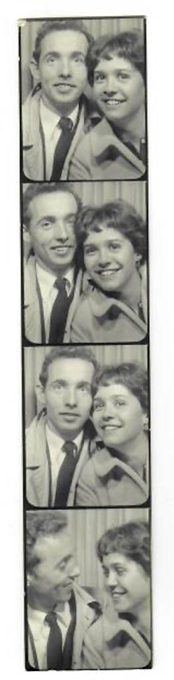
Her memoir starts by describing the confines that limited women in the 1950s. Coming from a somewhat traditional middle class family, taking advantage of the relative prosperity of the 1950s, Hills entered college in California without expectation of a professional career – marriage at a young age and children, would have been the path set before her – as it was for so many women of that generation. Yet her own curiosity, restlessness and drive led her to look for more professionally and from life. That, in turn, opened her up to the radical impulses convulsing society at the time, which she well describes:
“The late 1960s saw a tidal wave of movements that affected my friends and me; the counterculture movement, the Civil Rights movement to end racial segregation, feminism and equal rights/opportunities for women, the student movement to reform the universities, the anti-war movement, and unionization of museum workers. As Sam Cooke sang, ‘A Change is gonna come.’ We saw people from various movements flooding the streets – marching, protesting, and demanding new solutions. Whatever a grad student like me might think of the evolving trajectory of art history, we saw the protestors from all those movements on the streets.”
Those upheavals led Hills to join a woman’s consciousness raising group and to embrace the women’s liberation movement and that in turn led her to Marxism and a firm commitment to put theory into practice. That in turn led her to work with Moe Foner, Executive Secretary of 1199 – a hospital workers union – to put on the Bread and Roses exhibit at the union’s headquarters in New York in 1981 (I still recall it from a visit to the union for a meeting all those years ago). That exhibit enabled Hills to bring class politics to the Boston University Art Gallery with the Social Concern and Urban Realism: American Painting of the 1930s exhibition. That is simply one example of many of how her work continually grew and expanded to embrace new possibilities – a true example of combining theory and practice.
Re-presentation
Art World Feminist is a memoir – and Hills is quite generous in acknowledging people who influenced her, with whom she worked, with whom she developed a life; biography as history. A separate chapter on Alice Neel, May Stevens, Jacob Lawrence provides an intimate portrait of three complex, socially engaged artists –– whose creativity combined with commitment and individual perseverance; she then concludes with the last years with her husband whose passing was the impetus to write.
Ultimately Hills’ feminism, radicalism, immersion in the world of arts reflects her appreciation of artistic quality, her sense of history and belief in the importance of contextualization – which, put in other words, means understanding a work of art in and of itself, the biography of the particular artist who produced it, the world in which he or she lived, the world in which contemporary viewers see and understand what is before them when they enter a gallery.
It is within the conjunction of these elements that the contribution of women and black artists, as well as others neglected by the “canon” come to the fore, that the perspective of the working class is included, that the value of artists who refuse to see the nexus of gender, race and class can still be appreciated for what any particular work says or doesn’t say. Her outlook on art and society connect in a manner best summarized as,
“… I wanted to explore the so-called everyday life of America’s Black and white inhabitants in the East and Middle West. I wanted to burrow into issues of gender, race, and class – subjects that I knew would be controversial – and push toward a radical interpretation – a re-presentation – of the classes, races, and genders of 19th century America.
“’Re-presentation’ rather than ‘representation’ became an important concept for me: ‘To present again an image.” It meant addressing what purports to be real people and then visualizing them – which could be condescending and racist, or empathetic and heroizing – but never neutral. Artists of re-presentations might parade them as objective, but we realize that the vantage point of the artist, their subjectivity and positionality, often determine the final image. The image can then be harnessed by opinionated writers and critics to ‘illustrate’ the fictions passing as history.”
Art World Feminist was published by Hard Ball Press
…
The author thanks you for your thoughtful response.
You nailed what I was attempting to say about my experiences and my critique of the art world. Pat Hills