Review of Three Roads: Labor, Music, Ecology, by Joe Uehlein
By Steve Early
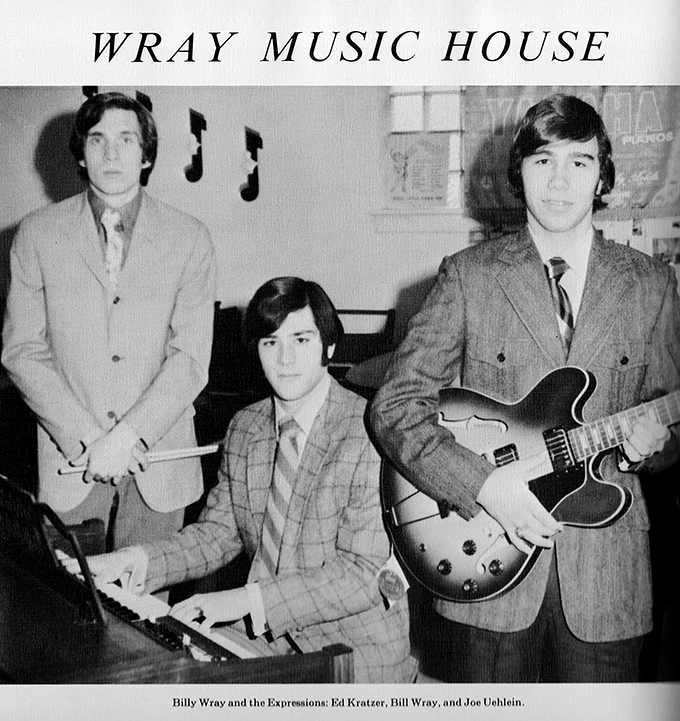
Any book bearing blurbs by Billy Bragg, Steve Earle, and Tom Morello, with a foreword by Si Kahn, is pretty solid evidence that the author has music world friends of the right sort! According to Bragg, a rock poet from Britain, Joe Uehlein “has been doing Woody Guthrie’s work for fifty years.”
The author of Three Roads: Labor, Music, and Ecology (PM Press) may not have sold as many records as Woody, Billy, Steve, or Tom before writing his first book. But none of them ever sang and played guitar while serving as secretary-treasurer of the AFL-CIO’s Industrial Union Department (IUD) or, later, director of its Center for Strategic Campaigns, work experience which informs this lively and engaging new memoir.
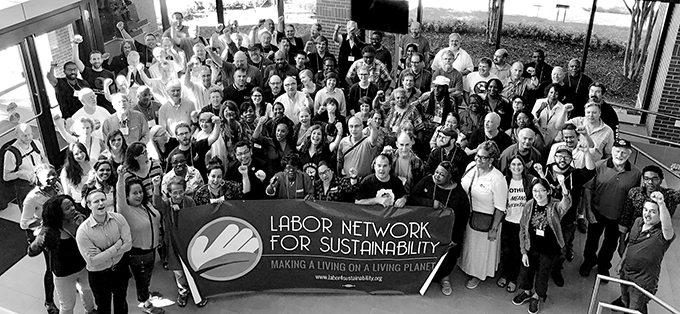
Uehlein redeployed from the labor officialdom (inside-the-Beltway division) in 2005. But he has remained a singer/songwriter and labor troubadour in the folk tradition of Joe Glazer. Glazer served as United Rubber Workers (URW) education director, then went to work for the U.S. Information Agency and served as a State Department labor advisor in the Vietnam era. In 1984, Glazer helped found the Labor Heritage Foundation, which promotes labor history, culture, and the arts. Uehlein’s own “third act” took the form of creating the Labor Network for Sustainability, a foundation-funded vehicle for “blue-green alliance” building.
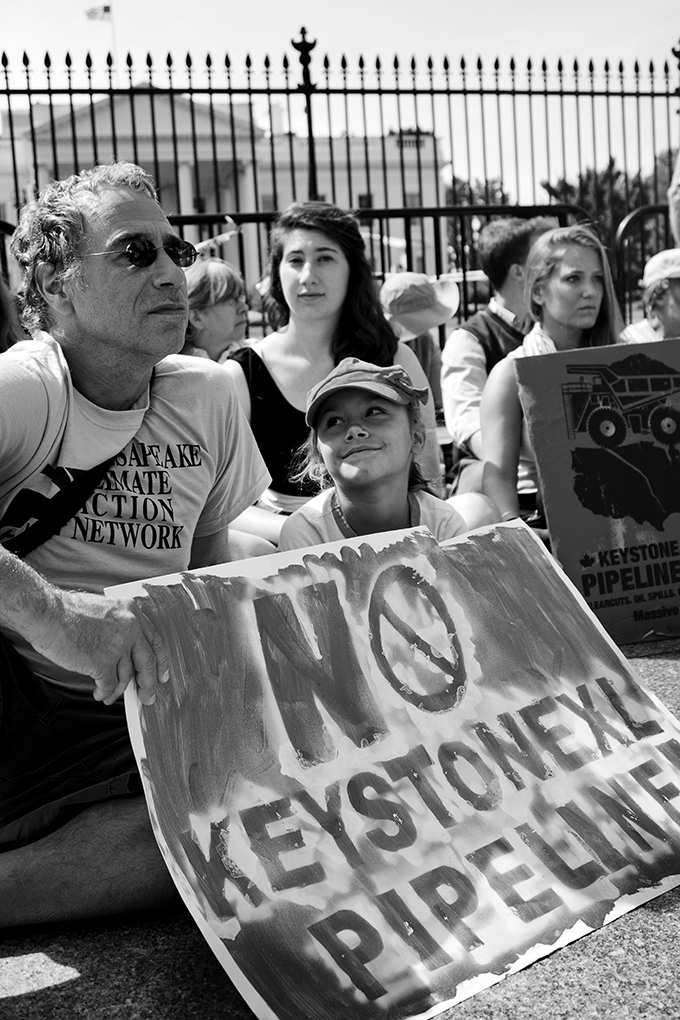
Uehlein’s unusual career trajectory contains useful lessons for the “next gen” in labor. Three Roads describes the author’s involvement in anti-war, labor, and environmental justice organizing over five decades–from a late 60s demonstration in Harrisburg, Pa, against the prosecution of Vietnam era draft resisters to the 1999 “Battle in Seattle” over the World Trade Organization and more recent “civil disobedience at the White House to block the Keystone XL pipeline” in the Dakotas. Readers will also learn about his 17-year association with a group called the U-LINERS, whose “eclectic repertoire for dancing and listening includes country, rock, folk, bluegrass, swing, rhythm & blues, and soul.”
Blue Collar Roots
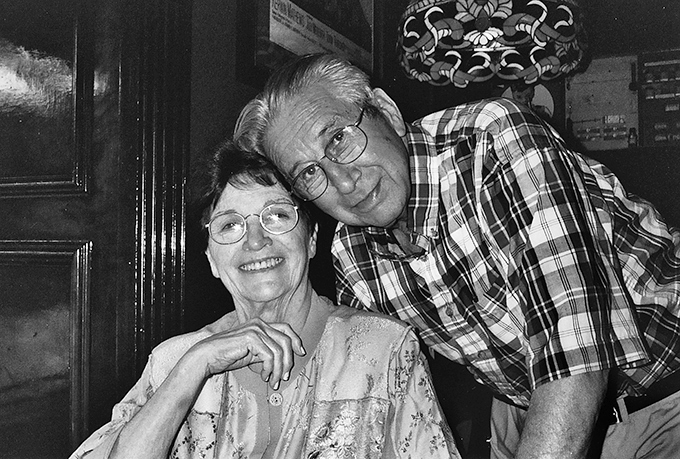
Uehlein’s parents were a working-class power couple from Lorain, Ohio in the heyday of the Congress of Industrial Organizations (CIO). His father, Julius, was a mill worker in the late 1930s and founding member of the Steel Workers Organizing Committee (SWOC); he later became a Steel Workers International Union representative and president of the Pennsylvania AFL-CIO. Mary Lou Uehlein edited a CIO newspaper in Ohio and helped organize clothing makers and electrical workers.
While some 60s radicals took blue collar factory jobs, to embed themselves in the working class, Uehlein was already in it. Even before college, he toiled in an aluminum mill and did highway and pipeline construction; he also poured concrete for the ill-fated Three Mile Island nuclear facility. When anti-nuke activists picketed the site, Uehlein’s own Laborer’s Union urged its members to display a bumper sticker on their cars which read: “Hungry and out of work? Eat an environmentalist.” It got the author thinking about the “jobs vs environment” debate early in his career.
Unlike some “juniors”–who became full-time union officials based on their family tree (and don’t do much heavy lifting thereafter)–Uehlein became a hardworking and respected field organizer. His co-workers at AFL-CIO headquarters, in the 1980s and early 90s, included too many people more interested in general strikes in Poland than aiding anti-concession fights against strike breaking employers here at home.
The Industrial Union Department was led by Elmer Chatak, whose father was also a veteran of the SWOC in the 1930s. Chatak was a frequent White House supplicant, even when Democrats like Jimmy Carter and Bill Clinton failed to strengthen the right to organize and bargain at private firms. Uehlein’s then boss once ordered his reluctant underling to perform at a Labor Day picnic thrown by Carter right after “that guy just screwed us on labor law reform,” as the author recalls.
Industrial Union Paralysis
A decade later, some unions (like Communications Workers of America) were so fed up with the AFL-CIO’S failure to support key workplace struggles that they launched Jobs with Justice. JWJ became a network of local community-labor coalitions, that supported strikes and organizing campaigns, in cities where central labor councils were MIA, due their top-down, overly bureaucratic functioning and narrow focus on electoral politics. (For a detailed account of JWJ’s development, as a grassroots alternative to moribund AFL-CIO bodies, see an earlier PM Press book called: Jobs With Justice: 25 Years, 25 Voices.)
As Uehlein reveals now, he too felt thwarted by the stifling “political culture” and “overbearing bureaucracy” at AFL-CIO headquarters, which reflected an overly “cautious and conservative” U.S. labor movement. Nevertheless, he did sometimes find local or national unions willing to wage more militant and creative struggles against anti-union employers.
One of his best chapters adds much personal insight to a well-known academic case study called Ravenswood:The Steelworkers Victory and the Revival of American Labor, by labor educators Kate Bronfenbrenner and Tom Juravich. Uehlein recounts how 1,700 West Virginia aluminum workers took on a multi-billionaire owner named Marc Rich. Rich was a Switzerland-based international fugitive later pardoned, in very Trumpian-fashion, by Bill Clinton on his last day in office). To find the right pressure points against Rich, Uehlein and other “corporate campaign” strategists spent two years recruiting labor and political allies “in twenty-two countries on five continents,” at a cost of five million dollars.
This sustained “once in a lifetime” effort resulted in all locked out workers getting their jobs back, plus “wage and pension increase” and forced overtime protections. But, as the author notes, the Ravenswood victory, by itself, “did little to turn around the decline of the labor movement.” When and “if labor does get turned around, change has to come from the workers as well as the leadership…from the top down and bottom up at the same time.”
Labor’s New Voices
According to Uehlein things improved for him personally—and the federation programmatically– when the AFL-CIO leadership changed ten years before he retired. In 1995, John Sweeney became AFL-CIO president after the first contested election for that position in 100 years, which led to the hiring of other younger and more energetic headquarters personnel.
Uehlein’s memoir explores the legacy of Sweeney’s running-mate and eventual successor, Rich Trumka. The latter’s death five years ago left the AFL-CIO in the hands of Liz Shuler, a former lobbyist for the International Brotherhood of Electrical Workers (IBEW), who has never led a national union or a major strike, as Trumka did while serving as United Mine Workers (UMW) president in the 1980s.
According to Uehlein, the former coal miner and lawyer (and long ago UMW co-worker of mine) once told him that “environmental issues were important, but he wasn’t interested in hearing about them.” In 1998, Trumka left Joe “feeling very disappointed” after he flew to Japan and personally lobbied against the Kyoto Protocol that set carbon emission reduction targets. This made things “all very difficult and even embarrassing” for Uehlein—because he was still representing the AFL-CIO on an Intergovernmental Panel on Climate Change (IPCC) trying to rescue the world from “the brink of climate destruction!”
The response of other union luminaries to the threat of global warming ranged from polite disinterest to active hostility. In one conversation with the author, Donald Taylor– John Wilhelm’s anointed successor as president of UNITE-HERE—“expressed no interest in global warming or environmental issues,” despite ever higher Las Vegas temperatures for casino workers and their families.
Poorly Considered Tactics?
Damon Silvers, who still serves as AFL-CIO special counsel and policy director, complained to Uehlein that “the strategy and tactics of the climate movement,” as deployed during the Keystone pipeline fight, “were poorly considered.” Uehlein told his friend (and then Takoma Park, Maryland neighbor) that no one in the modern climate movement—just helpfully “jump started by the Keystone fight”—would take such advice “from someone representing an organization that included fossil fuel unions and that remained asleep in the backseat when it comes to climate.”
Three Roads contains even harsher criticism of construction union officials, who are very much awake and in the driver’s seat on AFL-CIO policy related to jobs and the environment. As the author notes, “the National Association of Building Trades Unions are very proud of their relationship with the American Petroleum Institute. If you attend NASBTU’s spring gala and legislation conference in Washington, D.C., the API is all over it as sponsor and host of dinners and receptions.”
The labor-management partnering of energy unions and their building trades allies has, Uehlein argues, created a “deceptive and dishonest” united front against “ending the extraction and burning of fossil fuels” in order to avert “climate catastrophe.” Nevertheless, the author believes that his Labor Network for Sustainability has “developed a complex and subtle strategy to bring together” millions of other workers and community members who recognize the “existential threat” facing us all.
LNS’s own path has been rocky at times, due to the kind of internal labor-management disputes that turns toxic very quickly in the non-profit industrial complex, when funding gets cut and staff jobs become precarious. Uehlein remains optimistic that the emerging popular backlash against planet destroying AI data centers, even in red states, will be far more powerful than the industry boosterism of unions like the IBEW, which spawned Liz Shuler.
Uehlein recently joined a line-up of 26 other authors of labor-related books at the biennial conference of Labor Notes, a true long-distance runner in the field of labor education and agitation. He is probably the only former AFL-CIO official to ever win a Labor Notes Troublemaker award (bestowed since 1981); he is now embarked on 15 to 20 city book/concert tour, where his talents as a memoirist and musician will be on simultaneous display.
..
Bay Area activists seeking some hot licks related to labor and environmental causes can catch his act at 518 Valencia in San Francisco on Monday, July 6th from 7-9PM
On July 8th at Pegasus Books at 2349 Shattuck Avenue in Berkeley from 7- 9 PM as well.
For Three Roads ordering information click the link below
https://pmpress.org/index.php?l=product_detail&p=1951
…