China’s Accidental Green Revolution — and What Europe Should Learn From It
By Anonymous
“The transition that western governments insist will take decades, that the auto industry calls impractical, and that most right-wing politicians treat as utopian fantasy — China has already mostly done it.”
The first thing you notice stepping into a taxi in Beijing is the silence. Eight lanes of traffic, millions of people moving through one of the most densely populated cities on earth — and almost no engine noise. Of the cars I saw on the streets of Beijing, ninety percent were electric: elegant, swift, Chinese-branded models that most Westerners have never heard of. The transition that western governments insist will take decades, that the auto industry calls impractical, and that most right-wing politicians treat as utopian fantasy — China has already mostly done it.
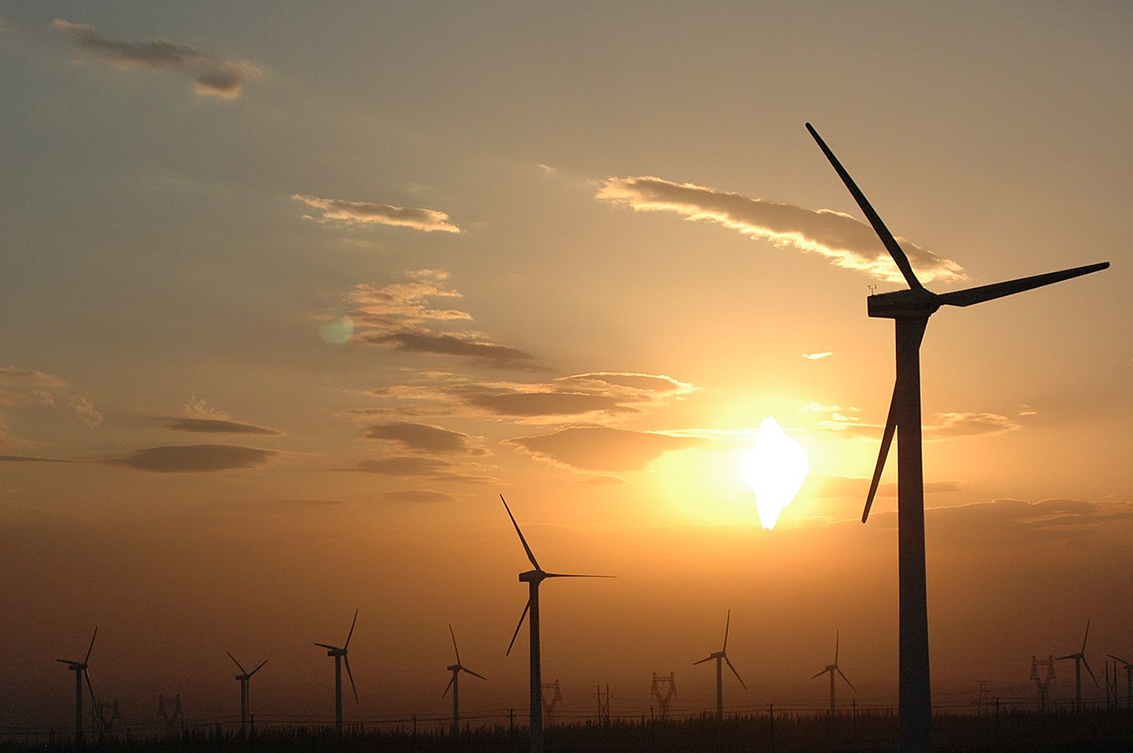
I came to that taxi having just crossed the Gobi Desert, staring down from an Air China window at a landscape I had expected to find empty and desolate. Instead, stretching as far as I could see, were wind turbines. The difference from my first trip to the country, 15 year before, was impressive.
I spent twelve days in April traveling through northern China with a friend — Beijing, Jinan, and Shanghai. But what struck me most was not the glittering infrastructure, the spotless subway stations, or the scale of the cities. What struck me was the implication of all of it: that the most consequential green transition in human history was not driven by environmentalism. It was driven by defense.
The Real Reason China Went Green
China’s leadership is not, by most accounts, a group of committed environmentalists. The country still burns enormous quantities of coal. Its record on air quality in industrial regions remains troubled. And yet China now leads the world in electric vehicles, solar panel manufacturing, battery technology, and wind energy deployment.
How?
The answer has less to do with climate treaties than with the logic of geopolitical survival. China imports a significant share of its oil from suppliers — Iran, Venezuela, and others — that are not aligned with the United States, and ships it through sea lanes that run through chokepoints the US Navy could interdict in any serious conflict. This is not paranoia on Beijing’s part. In January 2026, the United States launched a military raid on Caracas, captured President Nicolás Maduro, and installed effective control over Venezuela, almost eliminating at a stroke one of China’s primary oil suppliers. A month later, a joint US-Israeli attack killed Iran’s Supreme Leader Ali Khamenei and most of the country’s senior military leadership, threatening China’s other major non-aligned energy partner. These were not abstract threats. They were executed.
American strategists have been candid about the logic: cutting off China’s energy imports would be among their first moves in any serious conflict — particularly because they fear China’s superior industrial capacity. In a sustained war, China could outproduce the United States in conventional weapons. Starving its economy of energy is the rational counter-strategy. Beijing has understood this for years. What changed in 2026 is that the scenario stopped being hypothetical.
For Chinese military and economic planners, then, dependence on imported fossil fuels is not an environmental concern. It is an existential vulnerability, one that adversaries are actively working to exploit. Every electric car is a small act of energy sovereignty. Every solar panel on a factory roof reduces the leverage that a distant navy could exercise over a distant strait. The wind farms I saw above the Gobi are not expressions of ecological idealism — they are infrastructure for strategic survival.
The Lesson for Europe
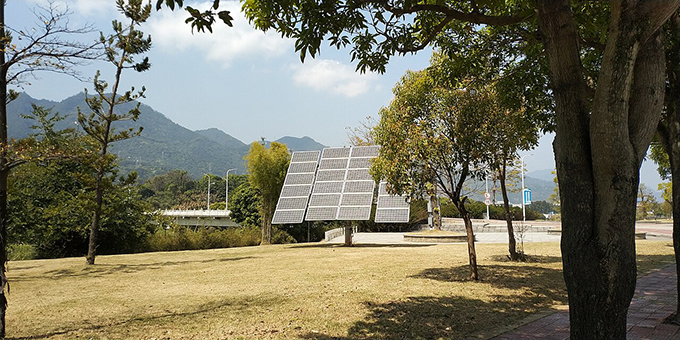
On the train from Beijing to Jinan, a high-speed line that covers five hundred kilometers in under three hours, I watched the landscape change from the dense urban sprawl of the capital to the flat agricultural plains of Shandong province, dotted occasionally with what looked, from the window, like small industrial towns. On factory roofs, on hillsides, along road embankments: solar panels. Not in the dramatic concentrations you see in the Gobi, but everywhere, as ordinary and unremarked as road signs.
I kept thinking about Europe. About the debate happening there right now — the urgent, slightly panicked debate about rearmament, about defense spending, about what it means for a continent to provide for its own security in a world where its American patron is turning sulky and unpredictable.
“It is partly a structural feature of Europe’s position within the American-led global order. The United States is itself a major oil and gas exporter; its financial system is deeply intertwined with petrodollar flows”
The conventional framing of that debate is almost entirely about hardware: fighter jets, artillery shells, troop readiness. But there is another way to think about European security, one that China makes suddenly legible. Energy dependence is a strategic vulnerability. A Europe that imports its gas through pipelines it does not control, or its oil through sea lanes policed by a fickle ally, cannot act freely. Its foreign policy is permanently mortgaged to its energy infrastructure.
If some fraction of the new defense spending were directed not toward conventional military hardware but toward renewable energy deployment — the solar capacity, wind infrastructure, battery storage, and grid modernization that would make Europe genuinely energy independent
— the security benefit would be real, lasting, and ours. The technology is ready. The economics, driven down by Chinese manufacturing over two decades, are compelling. The real barrier is not technical or economic. It is political.
One reason that barrier exists — and this is an uncomfortable thought — is that European energy dependence on fossil fuels is not merely a market outcome or a failure of planning. It is partly a structural feature of Europe’s position within the American-led global order. The United States is itself a major oil and gas exporter; its financial system is deeply intertwined with petrodollar flows; its arms industry profits from the instability that fossil fuel competition generates. Being Washington’s close ally has not historically encouraged bold moves toward energy autonomy. The geopolitical incentives ran the other way.
Whether that calculus is now changing — whether the Trump administration’s erratic, coercive approach to its own allies has, paradoxically, opened political space for a more genuinely autonomous European policy — is the open question. There is a version of European rearmament that amounts to a subsidy to American defense contractors and a deepening of fossil fuel dependence. And there is another version, harder to achieve but more genuinely sovereign, that treats energy infrastructure as the foundation of security rather than an afterthought to it.
War as an Unlikely Engine
History is full of examples where catastrophe produces progress that rational planning could never have achieved. The mobilization economies of both World Wars generated technological advances that peacetime markets had no incentive to fund. The space race produced satellite communications, GPS, and weather forecasting as byproducts of superpower competition. The US interstate highway system was sold to Congress as a defense project.
The green transition may follow the same logic. Not because governments became wise, but because the geopolitical pressures of this particular moment have made fossil fuel dependence a liability that even the most cynical actors have reasons to reduce.
China showed this first and most dramatically. The electric cars on Beijing’s streets, the wind farms above the Gobi, the solar panels across the Shandong plain — these are not the fruits of enlightenment. They are the products of strategic calculation by a government that looked at its energy supply map and did not like what it saw. And yet their effect on emissions, on air quality, on the long-term trajectory of the planet’s climate, may prove more consequential than any international agreement signed by delegates who flew in on private jets.
Europe, standing at a genuine inflection point in its security arrangements, has a narrow window to make a similar calculation. The money for rearmament is coming. The question is whether any of it will be spent on the kind of infrastructure that makes a country genuinely hard to coerce — not by building more tanks, but by making its energy supply impossible to blockade.
I came back from China impressed, troubled, and more convinced than before that the most important political battles of the coming decades will be fought not over ideology, but over
infrastructure.
..
Why I Am Not Signing This
Given the Orwellian situation in the United States, I do not feel comfortable signing even a modest and uncontroversial piece like this one. I do not want any mark of criticism attached to my name.
People are turned back on their flights from the EU to the US because border officers check their WhatsApp chats and find jokes about the president. Palantir and OpenAI have built infrastructures to profile everything anyone says, and in a political climate like this you always have to fear retaliation.
We always criticize China for its control over its population. But are our societies really any better? Or are we simply not noticing — because of the propaganda we are so deeply immersed in?
…
The author is a researcher
Energy sources in China, 2025
Proportion of Raw Coal (%) 61.4
Proportion of Crude Oil (%) 6.0
Proportion of Natural Gas (%) 6.4
Proportion of Primary Electricity and Other Energy (%) 26.2
Source: National Bureau of Statistics
Here’s my response to your essay that implies that China’s environmental drive is an “accidental” Green Revolution: https://www.dropbox.com/scl/fi/rkn3alcpyoaenn84u89ut/The-Chinese-Communist-Party-s-position-on-alternative-energy.pdf?rlkey=tlh258fkcldybqfir24wi562e&dl=0