“Thought Crime in the Land of the Free”
By John Hayakawa Torok
Lecture, April 6, 2026, for: Asian Americans and the Cold War, 1945-1965, UC Berkeley.
Professor Harvey Dong, Asian American Studies 23, Asian American History, 50 Birge Hall
Guest Speakers: John Hayakawa Torok, Joyce Xi, L. Ling-chi Wang.
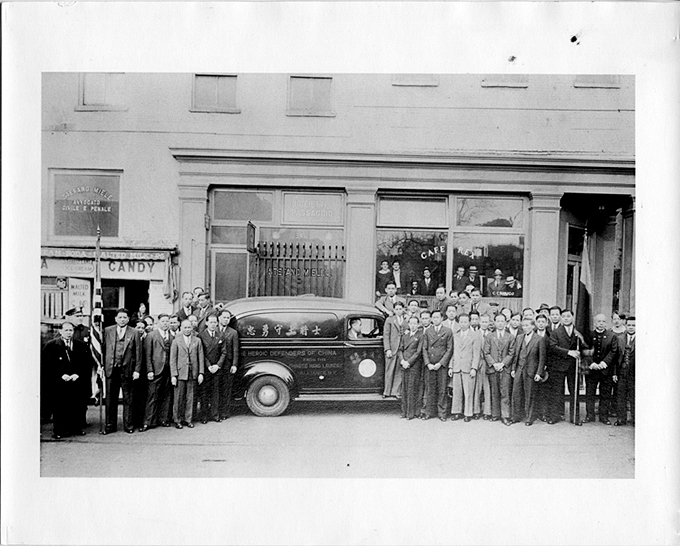
“Not so long ago, China was deemed an inferior civilization, unfit for Western-style democracy and modernity. Then with the bombing of Pearl Harbor, China became represented as a faithful ally, only to be demonized as ‘Red China’ during the Cold War era …” Jack Tchen, Foreword, Him Mark Lai, Autobiography of a Chinese American Historian.
In a 1947 address to Congress, President Harry Truman requested $400 million for military and economic assistance to Turkey and Greece against, respectively, Soviet influence in Turkey, and a communist insurgency against the Greek monarchy. This after Britain withdrew its aid. Truman said: “The free peoples of the world look to us for support in maintaining their freedoms.” Truman further said: “It must be the policy of the United States to support free peoples who are resisting subjugation by armed minorities and outside pressures.” The postwar United States government feared a domino effect.
The foreign policy strategy of containment was a coordinated diplomatic, military, and foreign aid effort to prevent territorial expansion by the international communist alliance. At the president’s invitation in 1946 Winston Churchill prefigured the policy in his “The Sinews of Peace” statement at Fulton, Missouri. This talk was Churchill’s famous “Iron Curtain” speech. Churchill argued that “English-speaking peoples” must show up to contain Soviet expansionism in Europe and the Middle East. The “Truman Doctrine” was the touchstone of U.S. foreign policy for the next forty-five years. In Asia the US applied the containment policy in Vietnam, Iran, and Korea and beyond. After the Berlin Wall fell and the Union of Soviet Socialist Republics (USSR) dissolved the policy was superseded.
The binary at the core of the Cold War was a “freedom” versus “slavery” rhetoric. “Communist” countries – the East – were seen as totalitarian police states with their peoples lacking freedom and enslaved by a bogus ideology. “Free world” allied countries, even those with poor records on civil liberties, by contrast, were called authoritarian. In their foreign relations posture, Eastern socialist countries advanced international peace as a counterpoint to the “freedom” narratives of the West.
While it may have been a “Cold War” in Europe and with Russia, in Asia it was anything but “cold.” After 35 years of imperialist Japanese occupation, the end of World War Two saw the division of Korea into two at the 53rd parallel. The Soviet and American occupiers proceeded to establish client states respectively in North and South Korea.
On June 25, 1950 the North’s Korean People’s Army invaded the South. Truman ordered US forces to aid South Korea and then secured United Nations support. He stated it was a “police action.” Ninety percent (90%) of military participants on the allied side were American. In October “volunteers” from the People’s Republic of China entered the fray. By the time of the 1953 armistice some one million military personnel and three million civilians had died. A peace agreement has yet to be concluded on the Korean peninsula.
We turn now to a U.S. domestic application of the strategy of containment. In American Chinatowns the context for the 1950s Chinese immigration policy enforcement and ideological regulation prosecutions was: (1) the Chinese revolution, the Korean War, and their aftermath; and (2) countersubversion and counterinsurgency against perceived communists throughout Asia, Africa, Europe, and the Americas.
From the 1940s the U.S. created administrative and legislative structures to eliminate “communism” from American life. This domestic crusade was named McCarthyism. However, the anti-subversive McCarthy congressional hearings were just the tip of the iceberg of what may be denominated the domestic strategy of containment.
Spearheaded by the FBI’s J. Edgar Hoover and his political allies, this domestic containment overtook federal and state legislatures and agencies. The Eisenhower administration from 1953 saw the State Department’s Security and Passport offices promoting a “Chinese Communist Infiltration” crisis. These anti-communist bureaucrats secured increased funding for, then collaborated with the INS on, their investigative activities at Hong Kong. A post-war and revolution refugee crisis emerged there after 1949.
The rhetoric used included “Who Lost China?” “Chinese Passport Fraud” “Red China” “Red Ransom Racket” “Sino-Soviet Bloc” and “Immigration Family Racket.” Eugene Moy, editor of the China Daily News (“CDN”) was called the “Number Two Chinese Communist” by media in New York. A Kuomintang (Chinese Nationalist Party) Chinese language newspaper based in the U.S. called the Chinese language CDN the “Russian Daily News.”
During the Chinese Exclusion era, Chinese migrants developed a “paper son” migration system to circumvent the racist law. After Eisenhower’s election, however, the US government feared potential Chinese communist infiltration through paper family migration. They therefore began investigating the “loyalty” of illegal Chinese migrants and Chinese Americans through what became the Chinese Confession Program.
In World War Two the United States government racially associated Japanese Americans with Imperial Japan. In the 1950s Chinese investigations, Chinese American were racially associated by that same government with “Red China.” Japanese Americans received no individualized determinations before en masse incarceration in the wartime inland U.S. concentration camps. In the 1950s Chinese Americans feared the same might happen to them. “To Save China, To Save Ourselves” was a byword among New York’s Chinese laundry workers who favored resistance to Japan from the 1930s. The US government’s emphasis was loyalty to America. By the mid-1950s Chinese investigations to expose and deport “subversives” was the program.
My dissertation argues that the 1955 Chinese Investigations and the Chinese Confession Program were both (1) anti-Chinese racist and (2) ideological policing. In New York the prosecutorial approach against Chinese paper family migration yielded criminal convictions of several Chinese immigration brokers, notable among them Lau Sing Kee and Arthur Lem. The China Daily News (“CDN”) was founded in 1940 by the Chinese Hand Laundry Alliance (“CHLA”). The Chinese language newspaper CDN and its editor Eugene Moy were criminally prosecuted under the Trading With the Enemy Act.
Ironically, by contrast to these two federal criminal prosecutions in New York, the San Francisco INS “Oriental Fraud Unit” secured national adoption of the legalization approach of the Chinese Confession Program they started. The original San Francisco federal prosecutorial approach was a mass subpoena to Chinatown organizations for all membership records. A Chinese community mobilization followed, and then a San Francisco federal district court quashed the subpoena as overbroad on constitutional grounds. The legalization approach of “Chinese Confession” emerged then evolved, from the small San Francisco INS “Oriental Fraud Unit” beginnings, into a transnational loyalty-security investigation of Chinese Americans as a group.
Chinese migrants thus received individualized loyalty determinations that Japanese Americans as a group had not received when they were incarcerated en masse during World War Two. This despite the fact that under a 1950 McCarran Act provision race-based mass incarceration of Chinese Americans was authorized as a matter of formal law.
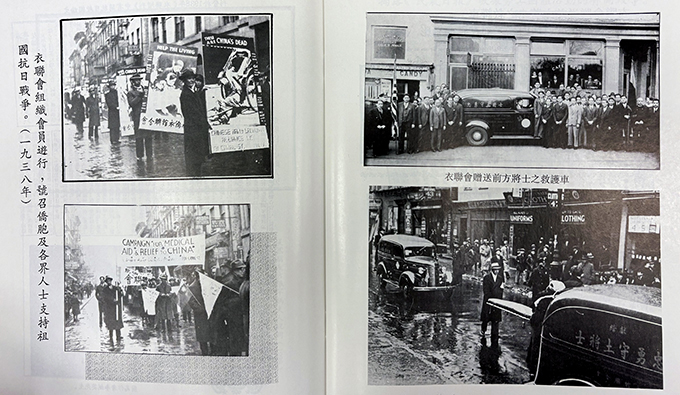
The Chinese Confession Program was not benign. Ideological enforcement against China Daily News subscribers and New York CHLA members, and against the progressive Chinese American Democratic Youth League (“CADYL”) in San Francisco, illustrates this.
The Chinese language daily CDN was founded by New York’s laundrymen on July 7, 1940, the anniversary of the July 7, 1937 Marco Polo Bridge incident, a battle which marked the start of the Sino-Japanese war. This date reflected the laundry workers’ mass support for Chinese resistance to Japanese imperialism. The Chinese Nationalist Party (Kuomintang) under Chiang Kai-shek was by contrast often more interested in battling “reds” than resisting Japan. They called that “bandit suppression.”
The China Daily News case in New York, while a criminal case under the US Treasury’s foreign assets control regulations, was about ideology. The government’s prosecutorial approach showed this. The state introduced in evidence English translations of articles originally written and published in Chinese that it considered subversive. Defense lawyers argued this violated the First Amendment press freedoms. After the CDN’s conviction several New York CHLA members were deported for false claims of citizenship. Some fought to remain. Others were under FBI surveillance for some twenty years.
At sentencing the CDN’s Eugene Moy took the stand and testified:
“I am an editor, a journalist, not a businessperson. … I started in this country unlearned in both Chinese and English. I was a laundry worker and a restaurant worker. By self-denial and perseverance I educated myself in the classics of Chinese and English languages. It was then I was called to edit the China Daily News.”
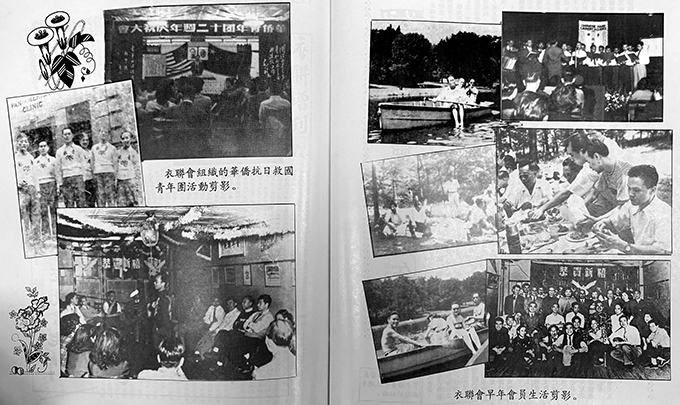
In San Francisco in 1949, Him Mark Lai (1925 -2009) joined the Chinese American Democratic Youth League, or Mun Ching, a progressive youth group. He became President in 1950. He was thus in office when the Korean War broke out. Like New York’s CHLA workers, Mun Ching had previously focused on Chinese national salvation including support for Chinese resistance to Japanese imperialism. In the San Francisco Chinese community some perceived Mun Ching as communist aligned. In 1954 to shift away from politics towards educational, cultural, and social activities like tutoring Chinese immigrant students, the group changed its name to Chinese American Youth Club. In 1959 the Club closed.
Him Mark Lai studied mechanical engineering at the San Francisco Junior College, then transferred and graduated with that degree in 1947 from U.C. Berkeley. While an aspiring Historian he could see no career path for himself in that field in America then. But in 1960 he attended Instructor Stanford Lyman’s “The Oriental in America” class in U.C. Extension.
In 1953 Him Mark Lai started working for Bechtel as an engineer. He also married a Mun Ching comrade, Laura (Yuk Ying) Jung. His interest in history led him, with Laura’s support, to write and publish articles on Chinese American history starting in 1967. He went on to adjunct teach Chinese American history, and to community radio broadcasting. After 31 years at Bechtel he retired in 1984 to work full-time on researching and writing bilingual Chinese American history.
This self-taught community-based researcher and journalist is the Dean of Chinese American historians. He deposited his written and audio content, and collected Chinese American archival material, at the U.C. Berkeley Ethnic Studies Library Asian American Studies Collection. Him Mark Lai published ten books and one hundred articles on Chinese American history. Like the CDN’s Eugene Moy, Him Mark Lai was self-taught in the Chinese classics.
By the early 1960s Laura Lai, Him Mark’s spouse, got caught up in the INS Chinese paper family investigations. Almost all Mun Ching members, other than the few American-born, were investigated and stripped of their citizenship. But they were not deported. The investigation of Chinese migrants was a “pretext to harass leftists in the community.” Laura Lai was stripped of her U.S. citizenship in 1966. The government’s posture was that the original grant of citizenship to her was based on fraud. But she was granted permanent residence in 1970. Emigrants from the mainland often waited twenty years to secure their permanent status. Laura Lai was granted American citizenship again in 1974.
In sum, the Chinese investigations and Chinese confession program (1) reflected continued anti-Chinese racism in American law, and (2) functioned as ideological policing of Chinese America. With the 1965 Immigration Act a brave new world of immigration regulation and enforcement was born.
Him Mark Lai’s conception of history was materialist, an approach that the engineer found congenial. He wrote:
“It is the circumstances and the times that enable the deeds. I just happened to be at the right place at the right time to meet the demand for more information on Chinese American history.”
SOURCES:
Rachel I. Buff, “The Deportation Terror,” American Quarterly 60:3 (2008), 523-51.
Sucheng Chan, Asian Americans: An Interpretive History (Boston, 1991).
____, ed. Entry Denied: Exclusion and the Chinese Community in America, 1882-1943 (Philadelphia, 1991).
Lucie Cheng & Edna Bonacich, eds. Labor Immigration Under Capitalism: Asian Workers in the United States Before World War Two (Berkeley, 1984).
Roger Daniels, The Decision to Relocate Japanese Americans (Malabar, 1990).
Blanch L. Freedman, “The Loyalty-Security Program – Its Effect in Immigration and Deportation,” Lawyers Guild Review 15:4 (1955), 135-13.
Richard M. Freeland, The Truman Doctrine and the Origins of McCarthyism: Foreign Policy, Domestic Politics and Internal Security, 1946-1948 (New York, 1985) (1970).
Ann Fagan Ginger, “Political Deportations in the United States: A Study in the Enforcement Procedures, 1919- 1952,” Lawyers Guild Review 14:3 (1954), 93-127.
____, “Political Deportations, 1944-1954,” Science & Society 19:2 (1955), 134- 166.
____ & David Christiano, The Cold War Against Labor (Berkeley, MCLI Studies in Law and Social Change, No. 3, 1987) (2 vols.).
Madeline Y. Hsu, Dreaming of Gold, Dreaming of Home: Transnationalism and Migration Between the United States and South China, 1882-1943 (Palo Alto, 2000).
____, “Gold Mountain Dreams and Paper Son Schemes: Chinese Immigration Under Exclusion,” Chinese America: History and Perspectives (1997), 40-60.
Carol Weiss King & Ann Fagan Ginger, “The McCarran Act and Immigration Laws,” Lawyer’s Guild Review 11:3 (1951), 128-141.
John Lone, dir. Paper Angels by Genny Lim (San Francisco, Kearny Street Workshop, 1982).
Stanley I. Kutler, The American Inquisition: Justice and Injustice in the Cold War (New York, 1982).
Peter Kwong. Chinatown, N.Y.: Labor and Politics, 1930-1950 (New York, 1979).
Him Mark Lai, Autobiography of a Chinese American Historian (San Francisco, 2011).
____, “To Bring Forth a New China, To Build a Better America: The Chinese Marxist Left in America to the 1960s,” Chinese America: History and Perspectives (1992), 3-82.
____, “Unfinished Business: The Chinese Confession Program,” in, The Repeal and its Legacy (CHSA 1994 Conference Proceedings).
____, Becoming Chinese American: A History of Communities and Institutions (Walnut Creek, 2004).
____, Genny Lim, & Judy Yung. Island: Poetry and History of Chinese Immigrants on Angel Island, 1910-1940 (Chinese Culture Foundation, History of Chinese Detained on Island Project) (San Francisco, 1980).
Estelle T. Lau, Paper Families: Identity, Immigration Administration, and Chinese Exclusion (Durham, 2006).
Erika Lee, At America’s Gates: Chinese Immigration During the Exclusion Era, 1882-1943 (Chapel Hill, 2003).
Richard Longaker, “Emergency Detention: The Generation Gap, 1950-1971,” Western Political Quarterly 27:3 (Sept. 1974), 395-408.
Alfred W. McCoy, Cold War on Five Continents: A Global History of Empire and Espionage (Chicago, 2026).
Mae M. Ngai, “Legacies of Exclusion: Illegal Chinese Immigration During the Cold War Years,” Journal of American Ethnic History 18:1 (Fall 1998), 3-35.
Lucy Salyer, Laws Harsh as Tigers: Chinese Immigrants and the Shaping of Modern Immigration Law (Chapel Hill, 1995).
Ellen Schrecker, Many Are The Crimes: McCarthyism in America (Boston, 1998).
____, “Immigration and Internal Security: Political Deportations During the McCarthy Era,” 60:4 Science & Society (1996-1997), 393-417
Betty Lee Sung, Mountain of Gold: The Story of the Chinese in America (New York, 1967).
Edward P. Thompson, Beyond the Cold War: A New Approach to the Arms Race and Nuclear Annihilation (New York, 1982).
John Hayakawa Torok, “‘Chinese Investigations’: Immigration Policy Enforcement in Cold War New York Chinatown, 1946-65” (Unpublished Ph.D. dissertation, Berkeley, CA. 2008).
____, “‘Interest Convergence’ and the Liberalization of Discriminatory Immigration and Naturalization Laws Affecting Asians, 1943-1965,” Chinese America: History and Perspectives (1995), 1-28.
Leti Volpp, “‘Obnoxious to Their Very Nature’: Asian Americans and Constitutional Citizenship,” Citizenship Studies 5:1 (2001), 57-71.
Renqui Yu, To Save China, To Save Ourselves: The Chinese Hand Laundry Alliance of New York (Philadelphia, 1992).
____, “Little Heard Voices: The Chinese Hand Laundry Alliance and the China Daily News’ Appeal for the Repeal of Chinese Exclusion in 1943,” Chinese America: History and Perspectives (1990), 21-35.
…