Tony Mazzocchi inspired me to organize
By Rand Wilson
This year is the centennial of Tony Mazzocchi birth — and friends, allies, and former co-workers of his are coming together at the Rutgers University Labor Center on June 4-5, for an in-depth discussion of his life and legacy. An article about Tony and the upcoming conference by Steve Early and me is posted HERE.
Tony had a powerful influence on my life in the labor movement. He eventually became a mentor and close family friend. Below is my recollection of when I first met him, and how that inspired me to want to build power for workers.
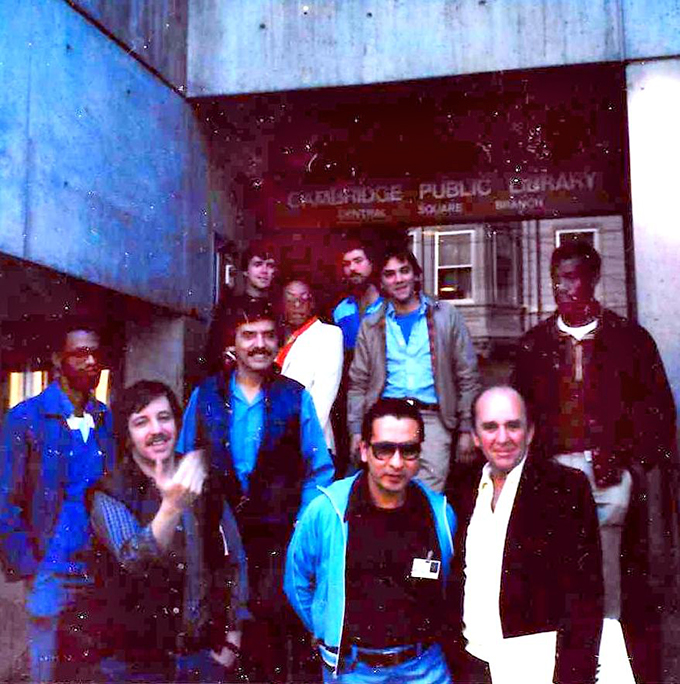
After I graduated from college, I was working as an intern at the Center for the Study of Public Policy in Cambridge, Massachusetts. The Center also published a magazine, Working Papers for New Society, that was a forum for exploring institutional alternatives and positive policy proposals in the wake of the 1960s New Left.
One day in 1978, one of the editors, Nancy Lyons, suggested that I attend a lecture at the Harvard School of Public Health by Tony Mazzocchi, a leader of the Oil, Chemical & Atomic Workers Union (OCAW) and a nationally acclaimed workers’ health and safety pioneer. Sounded interesting, so I went.
Tony gave a blistering labor speech: A no holds barred critique of capitalism and the political neoliberalism emerging at that time. It was nothing that I hadn’t heard before — but never with such a sharp class analysis and specifically orientated to labor.
What got me really inspired was Tony’s appraisal of how by organizing and building the labor movement, workers could “change the nature of the debate.” (I later grew to understand that what I was hearing was classic Tony.) I was hooked. That evening’s lecture inspired me to dedicate my life to building the labor movement.
Around that time, I was in a “study group” reading books on labor-related topics. One night David Nobel, a professor from MIT, attended our meeting and announced that there was a new group forming and looking for volunteer labor organizers. You can only imagine how overjoyed I was to learn it was an opportunity to organize with the OCAW. It felt like destiny, a miracle! (By the way, no one else in the study group was interested. I never went back to that group.)
I signed up with Noble, was given the address for the next meeting. It was convened by a wonderful local activist, Carolyn Mugar, who was spearheading a volunteer core of organizers in Massachusetts for OCAW. I began attending the group’s weekly meetings. We informally called it the Boston Organizing Project. Our organizing work was guided by weekly visits from Richard “Mac” McManus, a past president of OCAW Local 8-149, an organizer for the OCAW District 8 Council, and Tony’s righthand man. In addition to Carolyn and David Noble, some of the activists involved included Janet Corpus, Tim Griffin, Alex Keyssar, Kathy Moore, Michael Musuraca, Sid Peck and John O’Connor.
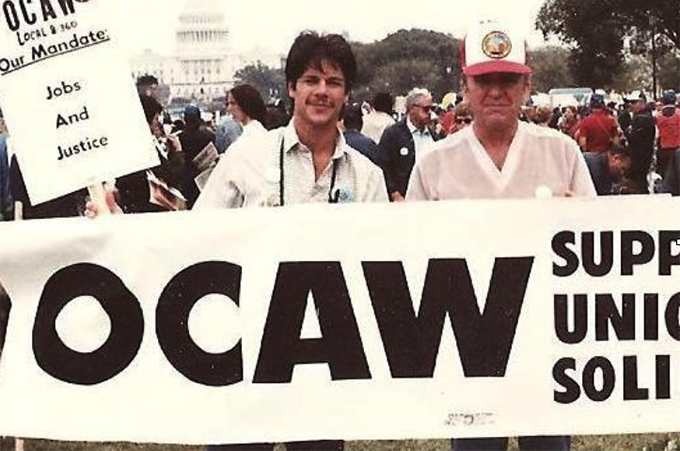
Nearly every week, a group of volunteer organizers (often accompanied by Mac) would travel to one or several factories all over Eastern Massachusetts that were in OCAW’s jurisdiction. We passed out union leaflets at shift changes hoping to engage workers about their on-the-job issues and the benefits of forming a union. Although quite naive in retrospect, our work resulted in several successful campaigns. Occasionally (and especially with third shift), workers would actually cheer, “the union is here, the union is here.”
At some point Mac (who by this time I regarded as my labor mentor) told me that Local 8-149 had an “in” at American Chemical and Refining which had just been purchased by Handy and Harman in Waterbury, CT. OCAW had a neutrality deal with H&H and if I was interested in organizing, I should consider working there.
So, I got a job there and moved into an apartment in the Waterville neighborhood where ACR was located. After a few weeks, I began building an organizing committee of interested workers. The company stayed true to its word and remained neutral. The workers at ACR, like others in the “brass valley” were a tough bunch — including a few self-proclaimed Klan members. Every week or so I met with Ed Ott, my organizer from Local 8-149. After a few months of intensive work, we petitioned for an NLRB representation election and the union easily won.
In addition to Ed Ott, the organizing at ACR led me to meet many of the other leaders and activists who were in Local 8-149 including Eric Scherzer, Neal Gorfinkle, Stan Fischer, and George Roach. Most significantly, I met Mark Dudzic, then a local officer who was working at a sister Handy and Harman facility in New Jersey. In later years, Mark became my “union brother from another mother.”
I returned home to Somerville determined to do more organizing and put into practice what I had learned in Waterbury. Without much thought or effort, I got a job sometime as a “quality control checker” at Clinical Assays (a subsidiary of Baxter Travenol Labs) in Cambridge.
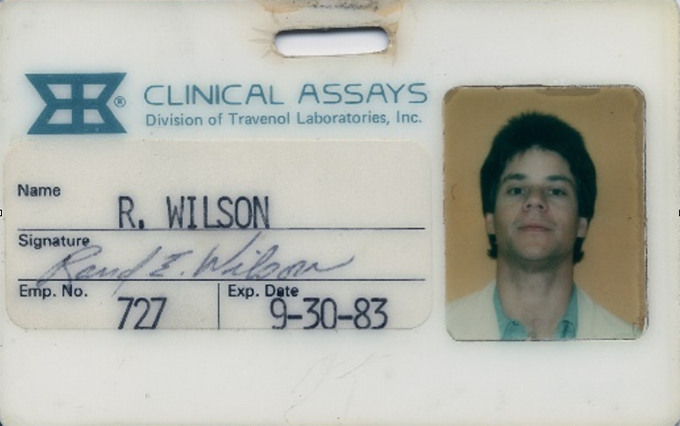
It turned out to be one of the most consequential (and challenging) experiences of my life.
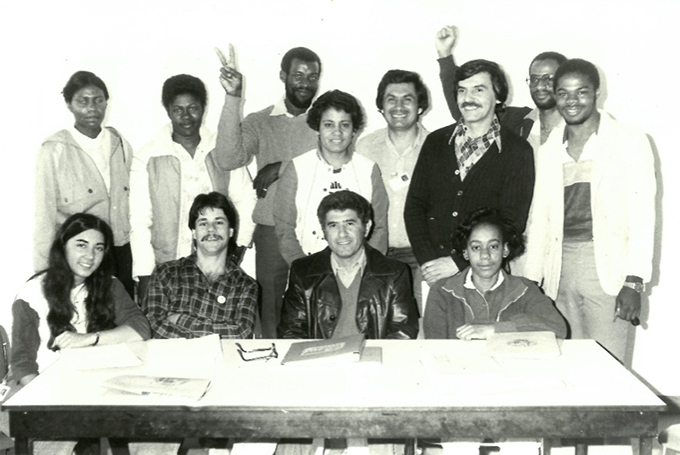
Clinical had a very diverse workforce. Half the workers were from different countries in Latin America and about a quarter were African American or of Caribbean descent. The challenge of building unity among these groups was daunting.
I worked for about six months just building relationships, identifying potential leaders, and never saying a word about unions. After I passed the probation period, I started getting more involved with typical workplace activities. Circulating birthday cards, raising money for coworkers out sick or facing a personal crisis, and helping with occasional lunchtime or after work parties. Being a QC inspector was especially advantageous, because I got to work in every production department and a chance meet just about every worker.
After about 10 months or so, I began to agitate about issues with co-workers who I thought would be receptive. Low pay, bad supervisors, health and safety, and unfair discipline all made very engaging issues.
I frequently asked my co-workers to teach me Spanish. Those informal lessons were a great opportunity for me to discuss shop floor issues and occasionally what I knew about workers’ rights. And I often discovered that many of the immigrant workers had been active with militant labor movements in their home countries.
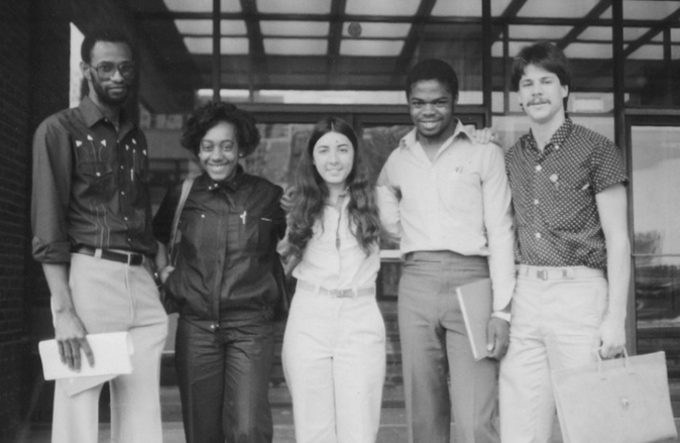
Some of the most active workers who organized with me (a few pictured at left) included Creceta Allen, Hubert Allen, Enrique Allen, Angie Seay, Jaime Salamanca, Darlene Stout, and Clyde Williamson. Other key activists were Ferdinand Barreto, Gloria Barrett, Carmine Crespo, Tim Griffin, John Morawetz, Mario Salinas and June Salvi.
One of the best actions was against a supervisor who sat at the front of the bottling department with a baseball bat. He would repeatedly pound the bat into his hand in a menacing way, urging us to work harder. It wasn’t hard to get lots of signatures on a petition calling on management to get him out. We turned in our petitions to management, and he was gone in a day!
Through on the job activity like that, it was easy to identify people with whom I could safely have the “union talk.” Then, in consultation with Mac, we decided it was time to have our first organizing committee meeting.
I spoke with each person about having our first meeting at a nearby elementary school. All confirmed that they would attend. Mac drove up from Long Island. You can only imagine my excitement about the meeting after months of patient work. Mac and I waited — and waited. Not one person showed.
I was completely shattered and crestfallen. But Mac had a great idea. Because no one showed, I could tell each potential committee person that the meeting was a great success. When they would inevitably ask who came, I would just say, “those who attended asked that it be kept confidential — and you shouldn’t miss the next meeting.”
The plan worked. The next day everyone asked about the meeting, and I told the big fib. When we had a second meeting two weeks later, nearly everyone showed up, and the new Clinical Assays / OCAW organizing committee was off to the races!
In a few weeks we had a majority of the employees signed up on membership authorization cards and filed a petition for an election with the National Labor Relations Board. The board scheduled an election for about six weeks later. That began the most intense six weeks of my life. Management brought in corporate lawyers from a top union busting law based in Chicago, scheduled meetings with every worker, and began a daily barrage of anti-union propaganda.
Despite our attempt to inoculate everyone in advance, the company’s campaign was having a huge impact. It had the intended effect of completely polarizing the natural harmony that existed among all of the workers. The “union question,” which had been met with either enthusiasm or indifference, now was perceived to have divided family members and friends. It created an almost intolerable atmosphere. People felt that if they voted for the union, management would never let up and the intense divisions between pro and anti-union workers would only get worse. Everyone’s focus changed from being fed up with our low wages and lack of respect, to concerns about union dues, strikes, fines and “outsiders” making decisions. Our majority support for the union was slipping fast.
I had one last ditch ploy to regain our momentum. There was a group of college educated lab techs who were excluded as professionals from our proposed bargaining unit. I quietly persuaded a very slim majority to sign cards and we filed for a separate election a week before the NLRB vote.
Management was blown away. The production workers were amazed that the higher paid “professionals” wanted a union too. A few workers who were wavering resumed their support. Momentum shifted in our favor and we won the election by three votes! But of course management challenged the eligibility of eight ballots. And because the challenged ballots could determine the outcome of the election, we had to wait for the Regional NLRB to rule on the eligibility of those ballots.
After about two months of tense waiting, the regional director ruled in our favor. Then the company appealed the decision to the national labor relations board in DC. Several more months went by. This was agony for me and our committee.
Because everything was in limbo, the delay gave the company time to make some favorable changes and also push out a few key union supporters. Others left just fed up with inaction. Most workers were convinced that the government had been bought off. It was a terribly demoralizing time.
Finally, five months after the original vote, the national board finally issued its decision and all of the challenged ballots were opened and counted. We won our union and the right to collectively bargain with management!
Once we were certified, OCAW International Rep. Frank Micale was assigned to help us negotiate our first contract. We elected a negotiating committee, set dates to bargain with management and drafted our demands.
Bargaining with professional union busting lawyers with just a 2% majority and no credible strike threat was not easy or fun. We did get a contract, but that’s a story for another day
Some things to consider before getting a job to organize
I fell into the job at Clinical without any forethought or research. I needed work, and there was a job opening. I didn’t consider that Baxter Travenol — a huge Fortune 500, multinational corporation with tens of thousands of employees in scores of facilities across the country and around the world – did not have a single union facility. That made the mission that I had taken on much too ambitious – and this was especially so because it was also not a strategic objective for OCAW. I had undertaken a campaign where the employer was deeply committed to a “union free environment” and had developed, and perfected over many years, a sophisticated “union avoidance” program.
So, there I was, on an impossible mission, trying to build a union with very little support against a global non-union empire. Oddly, not one of my union pals who should have known better bothered to tell me.
Nevertheless, organizing at Clinical Assays (and to a lesser extent at ACR), taught me many important lessons about the hard work of building on-the-job unity, and the challenges of engaging coworkers to take the risks of forming a union. My experience taught me respect for the drudgery of work, and the humiliation of having to obey a supervisor’s ignorant and often insulting commands.
I learned lessons about the challenges of maintaining a shop floor organization while management is waging a never-ending battle against it. And most importantly, my experience informed my thinking and sensitivity to workers’ struggles from the bottom up. For that, I’m eternally grateful because for the rest of my life it’s been the fire in my belly to keep organizing.
…
A concise chronicle of how Wilson’s life — and in fact legions of others — were defined in an historical moment (the advent of Reagan, the ruthless advance of neoliberalism, and the established labor movement’s feeble response). In part by serendipity — an address by a great and visionary fighter for justice, in this case, Mazzocchi — and the currents of the day. “What got me really inspired was Tony’s appraisal of how by organizing and building the labor movement, workers could change the nature of the debate…That evening’s lecture inspired me to dedicate my life to building the labor movement.” Keep building, companheiros.
Really enjoyed this biographical piece and your road to being a union. Oddly enough despite all the time we have worked together and hung out i never heard these stories. Thanks for sharing brother Rand. Keep ‘em coming
Great article. Puts my parallel experience in greater perspective. I lucked into an easier road toward union organizing and leadership, but under much closer scrutiny by more traditional (and conservative) union bureucracy.