Anthony “Tony” Fazio
By Mike Miller
Anthony Joseph Fazio (11/02/1947 – 04/25/2026), known as Tony or Papa, passed away peacefully at the age of 78 after a two-year battle with cancer. Tony was born in Providence, Rhode Island, to Joseph Fazio and Vincenza (Nancy) Baffoni Fazio. In 1968, Tony moved coast to coast to San Francisco, where he and his best friend –also named Tony– bought a house he famously bragged was with “no money down.” He and his buddies turned that house into the home he would bring his family to and live in for the rest of his life. While in San Francisco, and occasionally in Washington, D.C., Tony worked on impressive political races, won awards for creative and successful campaigns, made lifelong friends, and met and married his loving wife of 44 years, Marie Jobling. They had three children, and were grandparents to four.
Tony spent much of his career as an award-winning campaign consultant at Winning Directions. He moved from humble beginnings as a grocery clerk and warehouseman, to working in retail and nonprofit spaces, to community organizing, which was a true passion for Tony. Later he became a business owner and respected political consultant, building a life defined by political expertise, cultivating deep relationships, and a genuine passion for helping people.
[Published by San Francisco Chronicle from May 7 to May 10, 2026, republished on Legacy.com]
Mike Miller Remembers Tony
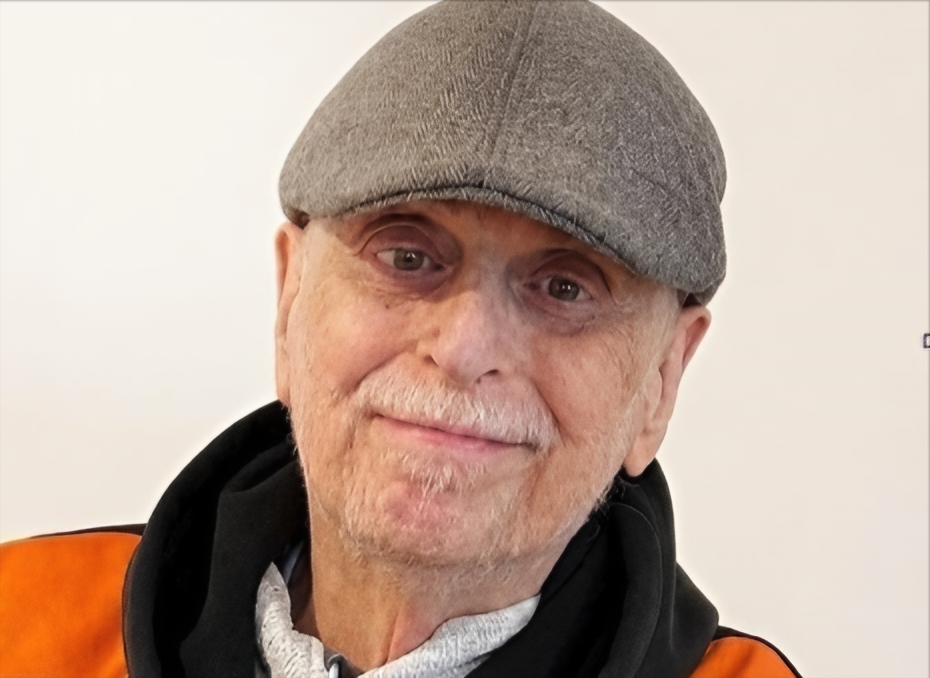
Tony was the most people-oriented person I’ve ever known. He loved people in all shapes and sizes, and from all backgrounds. If someone he knew, or a neighbor who he barely knew, had problems, Tony was there to offer help to solve them. His hospitality was legendary, as was his cooking that was often part of it. When I was in trouble with the San Francisco Planning and Building Inspection Departments and asked Tony to help, there were no reservations even though it was likely to be a time-consuming task.
This is the story of how we first met and how he became a committed community organizer.
In 1971, I was hired by Rev. Bill Smith, Executive Director of the Visitation Valley Community Center, to organize a neighborhood people power organization . Bill was a Presbyterian minister who had gone, as had many Presbyterian clergy with support from their denomination, to a 10-day organizing workshop led by Saul Alinsky, then America’s best known radical and community organizer. I had earlier directed one of Alinsky’s organizing projects.
Tony was a San Francisco State work-study placement at the Community Center. Smith invited him to be part of the organizing effort. That’s how Tony and I met. He hadn’t heard of Alinsky, and “community organizing” was only a vague idea in his head. But he was interested and took Bill up on his offer.
Tony already knew lots of people in “The Valley,” a neighborhood of about 30,000 people in the southeast corner of San Francisco. He made it his business to meet and get to know people. One of the people he knew was the neighborhood locksmith, a Black guy named Ron Morton. Tony recruited him to be part of the organizing effort’s temporary leadership. (A founding convention planned for several months down-the-road would elect annual leaders.)
At one of our meetings, Tony sadly told me that Morton was going to have to move. He had been turned down on a loan application by the Small Business Administration (SBA) which at the time had a special grants program for minority business people. Tony was sad. In our conversation that followed, Tony readily saw that the loan denial was not only a Ron Morton problem, but a neighborhood problem and that we could turn it into an issue.
Tony organized a delegation of Morton supporters. They went to Congressman Philip Burton’s office with a proposal that he intercede and get the loan to Morton. Burton did. Morton got the loan. Tony became a convert: he wanted to be a community organizer.
He did. He was an key organizer in the formation of All Peoples Coalition. There he was the key organizer of the Geneva Towers Tenant Association in a 500+ unit two building low-to-moderate income housing development. The successful effort led to an agreement with the landlord for a substantially lowered rent increase, multiple repairs and maintenance work, and new social programs. One of the leaders of the tenant organization was hired as a site manager—and promptly told by the rest of the Association’s leaders, “Marvin, you’re now on the other side of the table.”
He was later an organizer in the development of the Citizens Action League (CAL)—a statewide organization that won lifeline utility rates in California and almost passed the California Tax Justice Act—whose adoption would have aborted what became Proposition 13 and the beginning of the country’s mid-1970s conservative tax revolt.
He also was an organizer in South Dakota for ACORN—the Association of Community Organizations for Reform Now.
Tony and I were very good friends.
I miss him deeply.
…