Jesse Jackson Was a Labor Leader
By Gene Bruskin
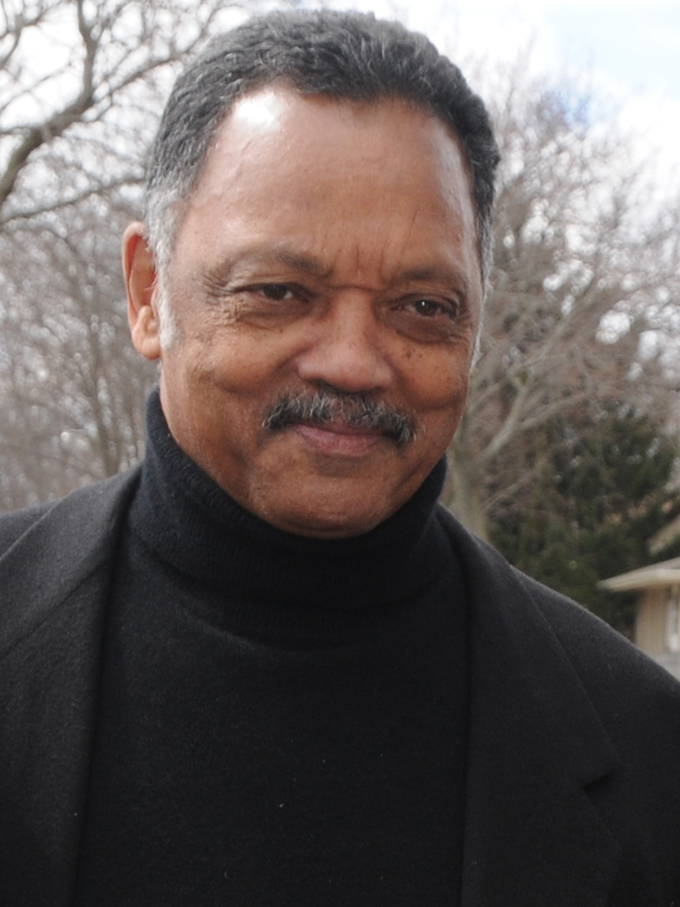
The Reverend Jesse Jackson was a labor leader of the most visionary kind, in the great tradition of WEB Dubois, Paul Robeson and Martin Luther King,
Like Dr King, who identified the “Triple Evils” of poverty, racism, and militarism”, Reverend understood the links between class/race and US foreign policy in a way that few labor leaders do, recognizing that making these connections was essential to building a powerful workers movement in the US and beyond.
I know that because I saw him in action repeatedly in the 2-year period, 1992-1994, that I worked for him at the National Rainbow Coalition as his labor deputy.
In 1988, while helping to build Labor For Jackson in Boston, and prior to my time at the Rainbow, I was inspired by Reverend’s emphasis on peace in the Middle East and Palestinian rights in his Presidential campaigns. This encouraged me to visit the West Bank as part of a labor solidarity delegation sponsored by the ADC (Arab American Anti-Discrimination Committee). Palestinians are workers, and I got to see firsthand the incredible obstacles they face to be respected as workers.
In 1990, while Bush was planning a massive deployment of troops to Kuwait, Reverend traveled to Iraq, met with Hussein and brought back a large group of Americans trapped there. Meanwhile, I was helping to form an Anti-Gulf War labor group in DC. This experience helped plant the seeds for the founding of US Labor Against the War in 2003 when the Iraq war broke out. Reverend of course opposed that war even before it started.
In 1992 I became his Labor Deputy as the fight against NAFTA was moving center stage in the US. I watched as Reverend repeatedly educated African Americans in churches about the dangers to all working-class people of a pro-corporate trade agreement that didn’t include them. Crossing borders, like Robeson and Dubois did, we organized two Rainbow sponsored labor rallies on the US-Canada border. One was near Niagara Falls and one in the Peace Park on the Washington State/British Columbia border. Mexican representatives participated in both rallies. Then Reverend sent me to Mexico to attend the Tri National Conference to oppose NAFTA.
In September 1993, I was with Reverend when he led a militant march and civil disobedience action with workers organizing for a union with ACTWU at Earle Industries in rural Arkansas. He then pressured the CEO to allow a vote that brought in the union. As the events there were concluding Reverend rushed off to charter a plane to join the signing of the OSLO accords in DC and meet with Arafat. Reverend was not invited to the signing, despite his years of Middle East peace work, but that didn’t stop him.
In 1993 in St Louis, I did the advanced planning for a city-wide pre-strike janitors rally. At the rally, the excited janitors were disappointed when they saw me coming on stage to read my remarks instead of Reverend. (very embarrassing role for me). At the last-minute Reverend had been asked by President Clinton to fly to South Africa to represent the US at the funeral of anti-apartheid leader Oliver Tambo, a friend of his. Reverend had been to South Africa as early as 1979 and was deeply involved in the Anti-Apartheid movement. But he also cared about the janitors in St Louis.
In 1993, when Nelson Mandela visited the US, Reverend planned a large rally for him in DC. My job was to raise the money for the event from Johnny Morris, the powerful leader of the Pennsylvania Conference of Teamsters and a big fan of Reverends. At an earlier statewide meeting of the Conference, I watched Reverend exhibit his insight into workers and their union leaders. When Reverend arrived at the podium to speak, accompanied by a loud applause, Johnny reached out to shake his hand. Instead, Reverend bent his knee and kissed Johnny’s ring, embarrassing him and shocking the amused workers in the room. No one did that to Johnny Morris. Then Reverend gave a powerful well received speech. Later Johnny agreed to provide the money as long as he and his team could get a photo with Mandela. My job was to arrange it. It was a great example of bringing solidarity with South Africa from an unlikely labor partner. And of course, it was an honor to watch Reverend and Nelson Mandela interact at this huge event, two great world leaders and friends.
In October 1993 Reverend was invited for the first time to speak at the annual AFL-CIO convention. Walter Johnson, the progressive SF Labor Council President called an outside rally, allegedly one of the first rallies ever held at an AFL-CIO convention. Although AFL-CIO President Lane Kirkland didn’t want Reverend to speak, Johnson declared it was his town and his rally. Reverend gave a powerful speech about NAFTA to a large cheering crowd.
Just as Reverend couldn’t resist an opportunity for righteous acts of international solidarity, he couldn’t resist a big worker fight. Another example was in Providence, RI prior to an election for a large unit of service and maintenance workers at the Rhode Island Hospital with the Teamsters, under Ron Carey. With great organizers on the ground (Bob Muehlenkamp, Valerie Ervin and Gary Stevenson) Reverend led a large rally with the workers in front of the hospital. Many of them had walked out to join him. The viciously anti-union CEO came out, thinking he could talk Reverend into a private meeting. Instead, Reverend led the rally into the hospital lobby and sat down with the CEO and organizing committee. He asked them to join hands and began a call and response prayer asking God to assure a fair election and contract for the workers. He then led large entourage through the hospital, promoting the union in every department, while the CEO trailed helplessly behind the workers, begging him to stop and meet alone with him. The Teamsters won the election.
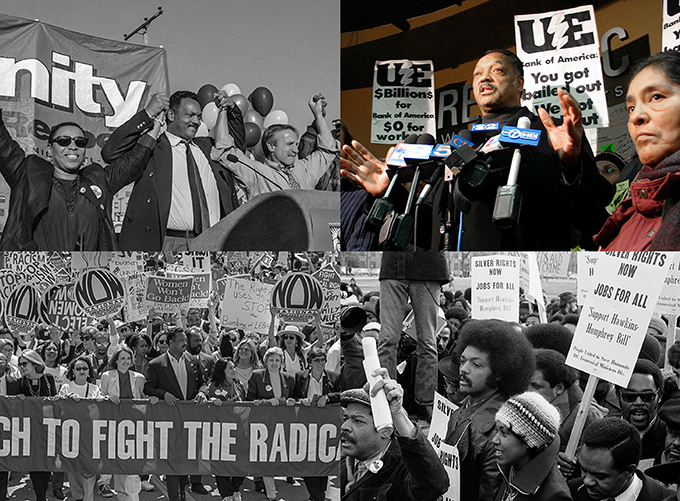
Another big labor issue of this period was striker replacement and the “Cesar Chavez Workplace Fairness Act” in Congress, to prohibit employers from hiring permanent replacements for striking workers. The AFL-CIO showed no interest in working with the Rainbow to promote this new bill, so Reverend asked me to organize a march. He loved marches for justice. In Atlanta, I worked with CLC President Steward Acuff and the legendary civil rights leader James Orange, to organize a two-day march in support of 150 high paid white male printing workers from GCIU in Doraville, GA, 15 miles into Atlanta. The workers had been permanently replaced during a 5-month strike. Reverend brought Al Sharton down to march with us “to give him more experience with labor,” he explained. Along with 1199 SEIU President Dennis Rivera, they marched in the front of this contingent of white male workers ending up in the offices of Georgia Senator Sam Nunn. To this day, the right of employers to permanently replace workers on economic strikes is a major impediment to holding companies accountable.
One last example of many that shows Reverend’s commitment to building a militant labor movement was in collaboration with the highly regarded, president of 1199 SEIU in Connecticut, Jerry Brown. 1199 was staging a statewide strike of nursing home workers and they invited Reverend to join them in blocking the main bridge in New Haven during rush hour and taking arrests.
Enroute to New Haven, at HERE’s request, Reverend led a march through a Westchester country club of service workers who were involved in a tough contract struggle. Reverend marched in the front with an older white woman worker, passing by the refurbished chicken coups that served as the workers’ housing. The women worker marching with Reverend had been the nanny for the now CEO when he was a child.
From there we were driven to the large New Haven rally and greeted by cheering women CNAs. He gave a rousing speech, including one of his favorite lines, “you take the early bus and then you work the late shift,” followed by a group chant “I am somebody.” He understood the powerful capitalist strategy to make workers feel like they are worthless and therefore shouldn’t complain. After essentially shutting down New Haven during rush hour Reverend demanded that the police arrest him, which they did reluctantly, and then escort him out of town to get to La Guardia in time for our flight home. Another day in the life.
Even during the short time I was with Reverend Jackson I witnessed many other dramatic examples of labor and international solidarity. Can you imagine how many of these happened during his lifetime? Jesse Jackson was a labor leader.
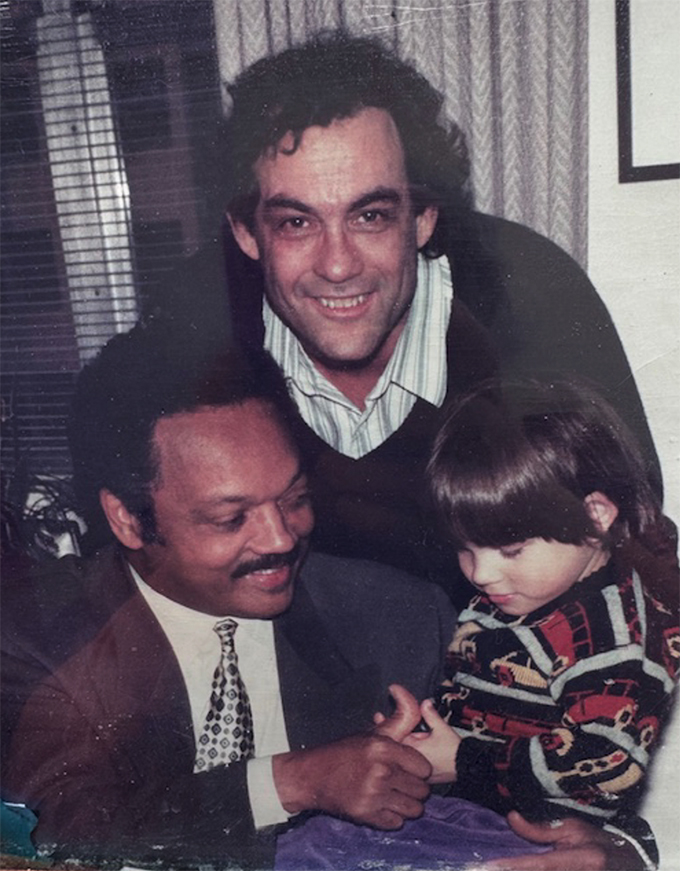
In January 1994 my wife Evie and I traveled to St Petersburg, Russia to adopt our daughter for life from an orphanage. As a caring gesture, Reverend wrote a letter for me to carry that essentially said, politely, “To Whom it May Concern; Don’t mess with all the paperwork approvals Gene needs, or you will have to mess with me.” Given his international renown, I knew things would go well.
Long live Reverend Jesse Jackson
Keep Hope Alive
…
Great stories! Jesse was deeply committed to workers in the struggle for dignity and respect. There was hardly a picket line he wasn’t on- providing hope and inspiration to union members.
In 1990 or 1991, 1300 RNs at Group Health in WA state were about to go out on strike. The boss threatened the workers with possibility that they may close one of their hospitals permanently if they struck.Diane Sosne, president of 1199NW and I briefed Jesse and his advisor Jack O’Dell on the situation. Jesse asked Jack what is it called when the boss uses fear to get workers to accept crumbs than fight onward. Jack said, “plantation mentality”. Jesse later used that in his rally speech. As we were driving to the rally, pedestrians throughout downtown Seattle noticing Jesse, waved and pointed. Jesse opened his window and in a way that was pure Jesse, waved back and shouted ‘love you’