The Death, Times, and Legacy of Mike Quill – Labor Champion, Anti-racist, Anti-colonialist
By Patrick Kelly
In the moment we are in when a vicious fascist would be dictator occupies the White House and sends his ICE agents to American cities to terrorize the populace, leadership is called for in the crisis. Rarely has a union leader displayed such courage in the face of repression and the “law” as Mike Quill, the founder and leader of the Transport Workers Union. January 28, 2026 is the sixtieth anniversary of Quill’s death, and my friend Pat Kelly, a retired Teamster leader, has penned a tribute that we are happy to publish on The Forum.
Peter Olney – Co-Editor of the Stansbury Forum
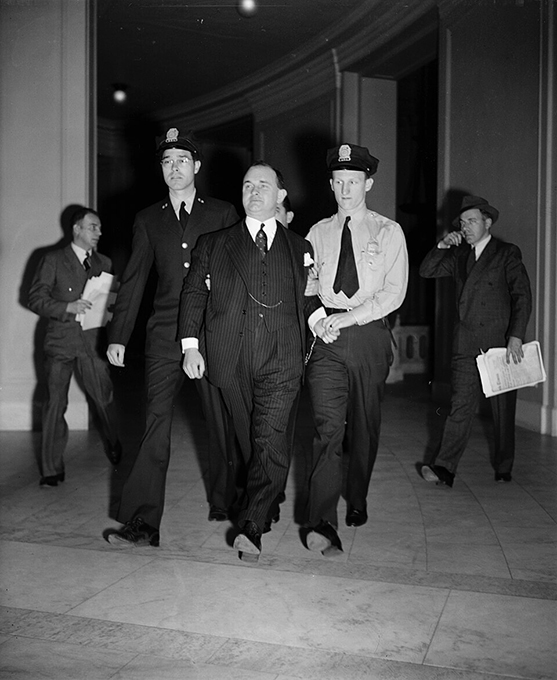
Michael John Quill was an Irish immigrant born in County Kerry in the southwest of Ireland, September 18, 1905, an Irish Catholic farm kid who was IRA all the way. Quill died of a heart attack in New York on January 28, 1966, sixty years ago, right after leading a historic and important strike by the Transport Workers Union. He was jailed for violating the infamous Taylor Law prohibiting strikes by public employees. He died a few days after being released from jail. At the time, many of us thought that Mike had been murdered. The judge knew he had a weak heart and that jail could kill him.
In 1966 I was a college student at the University of Wisconsin and a part-time casual in a Teamster warehouse called Central States Warehouse and Storage in Madison. This was a time of great turmoil and struggle. Malcolm X had been assassinated in February, 1965. James Chaney, Michael Schwerner, and Andrew Goodman were murdered by the Ku Klux Klan in the summer of 1964. And Viola Liuzzo was also murdered by the Klan in March of 1965. The war in Vietnam was raging and escalating with 100 or more young Americans dying every day. In the midst of these roiling historical moments I found great inspiration in the actions and leadership of Mike Quill.
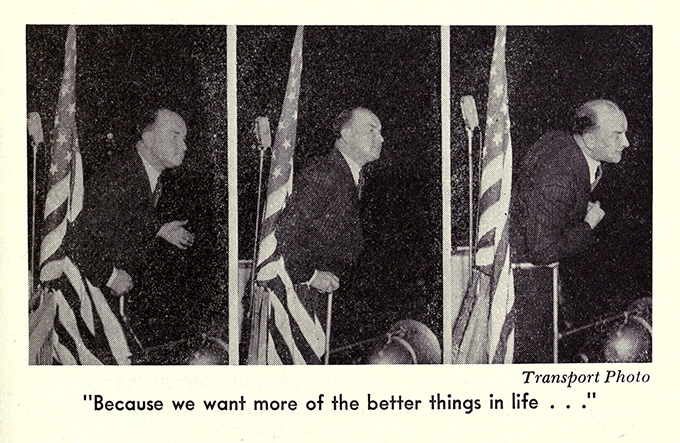
On December 29, 1965 Quill announced that the TWU would not bargain with the City of New York after midnight on New Year’s Eve. That afternoon Quill was served with papers telling him he had to explain in court why the union should not be stopped from striking. Quill called the press and went on TV that night and tore the summons up. Quill’s union put over 8,000 workers on the street stopping NYC from moving 6,280 subways cars at 481 stations and over 720 miles of track. He acted in defiance of a court order and went to jail. On Day 4 of the strike Quill suffered a heart attack and was transferred to Bellevue hospital. The strike lasted 12 days and resulted in a great victory. Quill was sent to Mt Sinai after settlement and rested there until he was released on January 25. He died three days later at home.
Mike Quill was one of the strongest and most effective labor organizers in the United States. He militantly pushed for industrial unionism and led many strikes. He was a significant leader of the CIO and of public employees as well as of contracted transit workers. A great advocate for racial equality, Quill was an early negotiator of non-discriminatory language in collective bargaining agreements. His youthful work as a courier for the IRA (Irish Republican Army) showed an early hostility to colonialism, and he remained a lifetime fighter against imperialism. He was an inspiration to thousands of youth and adults. Studying his life and actions will help us deal with the current Fascist threat and Gestapo tactics we are facing in the United States. Viva industrial unionism! Viva Mike Quill!
Learn about Mike Quill:
– Mike Quill Himself: A Memoir by Shirley Quill (his wife and coworker)
– In Transit: The Transport Workers Union in New York City, 1933-1966 by Joshua B. Freeman
– A Mighty Union: Quill, Connolly, and the TWU by Lorcan Collins
…
The 1966 strike made the Condon Waldlin Act a dead letter by defying it and showing its draconian provision – the firing of strikers – was unenforceable.
Its successor, the Taylor Law, continued the ban on NYS public employee strikes. But it also for the first time legally recognized the right of NYS public employees to form unions and bargain collectively with their employers. (The basic law, not including the many Public Employee Relations Board decisions refining it, is almost one hundred pages.) So part of the Union’s victory was gaining the legal right to Union recognition and collective bargaining, albeit with many restrictions.
It takes nothing away from Quill to say that NYC transit workers were themselves a key part of this history. Their militancy and self activity are outstanding and unique among NY public employee unions. Unfortunately, their next two strikes lacked the quality of leadership Quill provided. Since last month marked the 20th anniversary of the latest strike, it revived a lively and interesting discussion about the leadership of Roger Toussaint in 2005, a debate which, to some extent, is still ongoing. It also saw the publication of Marc Kagan’s book on the history of the local from the 1980 strike through the 2005 strike.
In this context, your intervention about Quill is important and welcome.
As a technical matter, Quill sent over 30,000 workers into the streets, not 8000. Also, although he had called many strikes, this was the first for subway workers in the 24 years since the system had been municipalized.
The Local 100 strike really opened the floodgates of NYC public sector militancy for a few years, but it’s worth noting that the UFT (teachers) had struck briefly in 1959 and 1962 and one of the two Social Worker unions waged a long strike the previous year – one that could well be characterized as a ‘Bargaining for the Common Good’ strike, since its demands were for lower caseloads and more rights for clients.
Quill himself was a more enigmatic figure than the mythologizing that goes on here. He was likely a member of the communist party, then purged communists from the union in 1949. One of his early nicknames was Red Mike, but by the early 60s, he had gained a more unflattering nickname, Nickel Mike, for the size of the raises he negotiated. He collaborated with the city of New York to smash the wildcat strike of train operators in 1957. And while he had a good record on the national civil rights movement, he steadfastly refused to integrate the higher ranks of local 100 officialdom. That led to the rise of Rank and File, a multi-racial dissident caucus, which garnered at least 25% of the vote in elections that preceded the strike by just weeks – more, if their charges of ballot stuffing are to be believed. I believe that was one of the major causes of the strike, that Quill could no longer rest easy on the throne. Another, I think, was that it was widely understood that Quill was a dying man, and perhaps he wanted to go out in a blaze of glory, returning to his militant roots of the 1930s. (A third factor was that the incoming mayor did not understand how to bargain in a way that allowed Quill to claim that those few nickels were a victory.)
That transit workers (I was one of them, as was Marian) have always mythologized Quill has served a useful organizing purpose of encouraging militancy, and pointing to the ability of the union to win a strike. (Much the same way many teachers mythologize Albert Shanker, an even more troublesome union figure, or UAW members Walter Reuther.) As historians, though, perhaps we should assess the whole arc of the man’s life, not just the glorious beginning and end.
Michael Quill did not violate the Taylor Law, since he died in 1966 and the Taylor Law was passed and enacted in 1967. He violated its predecessor law, the Condon Wadlin Act. While both acts forbid strikes by employees of New York State and its localities, there are important differences between them.
-Marian Swerdlow, author, “Underground Woman: My Four Years as a NYC Subway Conductor,” Temple University Press, 1998.