Immigrant Stories: Five and Six
By Myrna Santiago
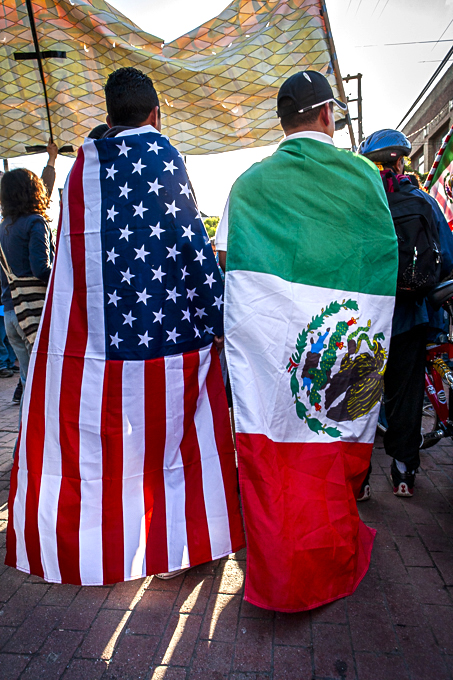
The final assignment for “World History: from 1500 to the present” is an oral history with an immigrant. It is a scary assignment for most of the students; after all, the majority take that class in the first semester of their first year. They were in high school only three months prior. The most frightening part is having to find an immigrant and ask them about that aspect of their life. I do not allow students to interview fellow students. They have to find someone older and with more experience. That makes the assignment nerve-wracking. How do you go up to an “adult” and ask her to talk about such intimate and potentially traumatic time in her life? The oral history is due at the end of the term, after we have reached the twentieth-century in the textbook, with its upheavals, wars, and drastic economic changes. The students know the context for their subjects’ lives and what led them to leave the land of their birth and their communities behind. When it is all done, students are truly glad they did the work. They learn so much from listening to just one person’s story. Their single story puts a human face to the texts they read and the news they hear or see in the media. Migration is not a sound bite anymore; it is real people revealing the reasons why they left behind everything they knew and love to venture into the United States. What you will read here is just a sampling. The compilers of the stories are: Marelize Meyer, Madeline Haun, Riley Drummond, Collin Kopchik, Colin Jones, and Adam Mills. All except for Adam are first year students.
Professor Myrna Santiago
Saint Mary’s College of California
From Central and South America to the Bay Area
I was born October 24 1961. I lived away from my mother in a small village in El Salvador. Not a big city or even what a suburban area would look like in the U.S., but a village, small but home. Most people there made their living by working in small businesses, like selling pupusas and tortillas in food stands or small restaurants. My mother moved to Venezuela early on in my life so I lived with my grandmother and my older sister. Most of my other relatives, like my cousins and my uncle, also lived in other areas around El Salvador. I lived in the village for most of my childhood leading up to high school. However, when I reached high school there weren’t any nearby high schools to go to, the only schools near my village were elementary and middle schools.
However, I wanted to continue my education so I ended up going to a school in another state. I still lived in my village, but now I had to ride a bus for hours to get to school. My sister eventually moved out to start college while I was in high school deciding to live on her campus grounds. I saw a few conflicts such as a short war, only lasting a few days, around when I was six or seven years old. The war was known as the “football war,” a war between us Salvadorans and the Hondurans. I didn’t know much about it at the time, just that it affected me and my family, I was too young to understand.
Then, while I was in high school, the civil war struck. The Salvadoran government started fighting an organization called the Farabundo Martí National Liberation Front (FMLN), a guerrilla rebel group that was founded to push back against the government’s mistreatment of poor people. The government responded to their formation by attacking the FMLN and killing Salvadoran citizens who supported their cause. Because of the killings me and my family were relocated to an area between El Salvador and Honduras. We didn’t have any houses or buildings there, just tents for a lot of people. So many people were relocated to this area that it was hard to keep track of people once they were there. Family and friends were often separated in the growing crowds, as was the case with my uncle who went missing there. Neither me nor my family ever saw him again.
Me and my grandmother lived in the camps while the war raged on. While we were there we learned that the Salvadoran military was killing college students who supported rights for poor people. Among those killed was my sister. I was 17 back then and she was 19. It was after that when my mother arrived to take me to Venezuela.
I left El Salvador while the war was still in progress. However, my other family members like my grandmother stayed behind. I then stayed with my mother in Venezuela for two years. I decided not to go to college during this time, or any time in the future. After spending those two years in Venezuela I decided to move to the U.S., in October 1988. I was allowed to visit as a tourist and was given a permit to stay for six months. After that I applied for citizenship, which was eventually approved. I often worked as a caretaker or babysitter while I was there. Eventually I had two daughters in the U.S. My first daughter decided to live in the U.S. for a while and then travelled back to Venezuela after growing up. My second daughter on the other hand decided to stay and would eventually have my granddaughter.
Even after the civil war was over there were still problems with the country. I learned that after the war the FMLN became a political party in the Salvadoran government and the government was reformed. However, many who served sentences after they immigrated from El Salvador to the U.S. were deported, so this resulted in many gang members being deported back to El Salvador where they caused problems without the intervention of the government. The two primary gangs were MS-13 and the 18th Street gang, mostly teenagers. Often they would recruit kids that thought they were cool, needed protection, or needed money. On top of killing each other they threatened workers to give them a portion of their pay. So for the food vendors who made their living selling food, now had to give up their money. If they didn’t pay up for any reason, then the gangs would make them disappear or just kill them on the street. This caused even more Salvadorans to come to the U.S. including my cousin, who, on top of having to deal with a large earthquake in 2001 which destroyed a lot of property, needed to provide for her children still living in El Salvador. She had lost everything in the earthquake but still needed to provide for her kids so she had to move here without them and send money back.
At this point in time most of my family was now living in the U.S., however, my grandmother still hadn’t come to the U.S. So after getting U.S. citizenship I wanted to return to El Salvador to see how things were. But as it turned out, my grandmother wasn’t in El Salvador anymore. She had moved to Honduras. And, in between the civil war and the gang violence, all transport to my village was cut off. There just weren’t any buses that could take you there anymore.
I’ve been in the U.S. for 33 years now. At this point I have lived in the U.S. for longer than any other place I’ve lived in, including El Salvador and Venezuela. Most of my family members in El Salvador have immigrated to other parts of the world, mostly to the U.S. My cousin lives close by, still sending the money she earns to her children. She had left them when they were 5 years and 3 years old respectively, now they are full grown adults. And although she knows they are still alive and well, she hasn’t seen them since she left. My second daughter also lives close by with my granddaughter who I sometimes take care of while she is at work.
My mother and first daughter still live in Venezuela, which now has its own problems. Venezuela is under a dictatorship at the current time which makes me worry for my mother and daughter’s safety. But at the present moment they are fine. El Salvador has gotten a new president who is cleaning up the country and taking care of the gang problem by jailing them.
However, there are still gangs in the country and the situation would be unlivable for people like me who would be considered too old for many jobs there. I’ve worked long-term as a caretaker for a family, taking care of their children and their house. I’ve worked for them for almost 20 years, so I’ve gotten to know the family very well. But the youngest is almost old enough to not need my help anymore, so I’ve been working with the family to try and find other potential jobs. Despite that bump, I have been living a steady life with financial or social problems.
However, that doesn’t mean there aren’t any problems with this country. The most recent problem for immigrants like me is ICE deporting people like me who can only make a living here. I thankfully have citizenship, but people like my cousin who only have temporary protection status are at risk of being deported if ICE ever comes here. So although I’m not personally at risk of deportation, I am scared that my cousin or other family and friends could be sent to a place where they can’t sustain themselves or their families. Everyone who comes to the U.S. has their reasons and even if they aren’t citizens, it’s upsetting that my cousin who has spent more than twenty years in the U.S. paying her taxes, working, and paying to live here could be at risk. I understand that some people like MS-13 and the 18th Street Gang come to the U.S. and cause more problems than benefits, but people like me and my cousin have sacrificed a lot just to be here to keep our families and ourselves safe. And yet the people here try and force us out back to the wars and the gangs. So although this country lets me and others work and make our living, it’s also the cause of our fear just as the wars and gangs once were. But even after all that was lost and after all who died I still believe that the steps I take and the price me and my cousin pay is worth it.
.
My Story Moving to the U.S.
Hello, I am 54 years old. I was born on January 16,1971 and I grew up all throughout my childhood and until I reached the age of 21 in Mexico. But, then in February of 1993 at age 22, I immigrated to Texas. I was not able to migrate until I was of an adult primarily due to my parents residing in Mexico and my mother only having a work visa to come to the United States on provisional status.
I remember my mother saying how wonderful the United States was as a child, and I always wished I could live there but it was not possible as my father was working in Mexico. I finished all the required schooling in Mexico at age 17 and then worked at a local factory where the temperature was extremely hot. I made little money and lived in a small home with my father and other family members. I worked at the factory as I was waiting on a temporary work visa so I could go to the United States. I wanted more opportunities of advancement and freedom and felt that I could have made a better life in the United States.
I had a few family members that already lived in the United States in Texas, so I moved in with them and began looking for employment. The largest problem with coming to the United States is that I did not speak English at all. I had to learn English and if I had known how hard it was, I would have learned that before I came. Unfortunately, I only had a temporary work visa, so not many companies would hire me when I came to Texas, so I worked as a waitress making most of my money from tips at local Mexican restaurants. They want you to work many hours and only for low pay, they tell me that I should be happy to be here since I am only here on a temporary visa. I worked as many hours as I could. Not knowing our income taxes, I made little money after paying social security tax. Mexico does not have social security tax, so this is something to which I was not used to.
American people were not very friendly when they realized I could not speak English. I always felt they treated me meanly and worthless. I know that I could not speak up for myself or even report anything to anyone as I really did not have a voice. It was extremely hard adjusting to how Americans would treat me. My family would tell me it is because I am from Mexico and with not being able to speak English, they assumed I was illegal. I began taking classes at community college where I could afford to go to. Since it is so expensive in the United States I was only able to afford a couple classes that helped me communicate better, but still to present day I cannot speak English fluently. My English is combined with Spanish, and I just apologize when I cannot explain something clearly. My family only spoke Spanish in Mexico so I was just trying to learn what I could in a brief time and it helped a little, but at least I knew how to communicate a little bit. I did know that in order to get a good paying job and really make something of my life I would have to learn and get help anywhere that I could.
I met my husband after eight years of living here in the United States. After marrying my husband and having two children I returned to Mexico to visit my parents after living a total of nine years in the United States. In returning to Texas, I realized that my work visa had expired. Not being able to return to the United States legally, I decided to use my mother’s visa identification to gain entry. I was successful and when I returned to Texas, I began the process for my own documentation for renewal. The documentation process took
almost two years, and I had to save money for the citizenship renewal which cost hundreds of dollars. Upon my appointment with the immigration office, they asked me how I came back to the United States with an expired work visa? I was honest with them and told them what I had done with using my mother’s identification and they said that I will be deported back to Mexico. With my children, I was given four months to leave voluntarily, or I would risk a much larger penalty for falsifying my legal status and possibly never gain entry again to the United States. If I did not deport voluntarily, I would be at risk not being able to come back to the United States for ten years. My penalty was three years, and I could not go back to Texas at all. I voluntarily left the United States with my two daughters (ages 7 and 8), while my husband remained in San Antonio.
Having little money and with the two children, we decided to sell our home in San Antonio that my husband owned, and he moved to Mexico to be with us. We could not be a family for three years, and it is too expensive for him to travel to Mexico and see the children and me. Because of the money that he made from selling the home we were able to eventually build a small home in Mexico, but having to go back was extremely hard on the children and was a big adjustment for us. Again, I spoke truly little English, but my daughters spoke English and now had to learn Spanish. It was hard on them, but they had to learn. The other children made fun of them as they knew they were not from Mexico because from the way they looked, dressed, and talked. My husband who worked in manufacturing was able to work closer to the border to Texas and Mexico so he would visit us regularly and help when he could.
As part of the penalty, I had to stay where I was originally from, so I took my children and moved back with my parents. To watch our daughters struggle the way that they did bothered me the most. They could have stayed with family in Texas that already lived there, but they did not want to, and I did not want that either. I could not imagine not being able to see my children for three years. They now understand as adults why they were treated the way that they were, but as children they never understood. Even though they were Mexican by their heritage, they were not born there and that is very different. The schooling in Mexico is not as good as in the United States so I was worried that they would not learn as much as they did when they were in Texas. I studied with the girls on learning to speak Spanish for school and helped them adjust the best way I could.
As time passed the kids and I adjusted and my husband was making good money in manufacturing, so we were able to build a home in Mexico. It was a smaller sized home, but at least at least my family and I were able to have our own home. We remained in Mexico until I could begin my citizenship renewal and until the penalty was complete. We returned to Texas almost four and half years after I voluntarily deported, now legally back to the United States. I received my permanent resident card which I had to have for five years and then would be able to get my Certificate of Naturalization which took two more years. Our daughters returned to Texas, finished high school as well as graduated from college at the University of Texas. The home in Mexico we still own today to which we visit family and spend holidays there. Both of my daughters now speak fluent Spanish and English which now I am glad for both, but I remember how hard it was for them to learn. With becoming a legal citizen and returning to Texas, I was able to find good employment with larger pay and finding more opportunities than before when I was in the United States. I have all the things I dreamed of: a good paying job, a home, and family support that is always here. I miss my family in Mexico, but we can go see them now freely as we wish to. I tell all my family in Mexico how hard it was to get here and how difficult it is to succeed.
My biggest lesson I learned was learn English before you come to the United States, come here legally, and do not let your documentation expire. I know it would not have been as hard if I had done that myself, but until I went through everything I really did not understand. Getting out of Mexico for the American dream is what I wanted and never had anyone tell me how difficult it would be. My biggest regret is letting my renewal documentation expire but thankful for the opportunity to be back in the United States and living in Texas but my greatest satisfaction is how successful my daughters have turned to be.
…