We Need to Tax the Rich. Are Unions Going About it the Right Way in California?
By Fred Glass
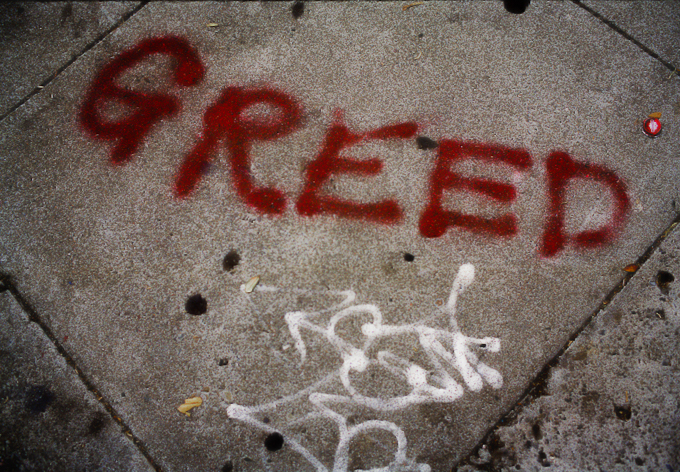
Quick, what action is guaranteed to freak out the capitalist class? If you answered, “Propose a credible campaign to pass a progressive tax”, congratulations! Ever since Marx and Engels in The Communist Manifesto included “taxing the rich” among activities the working class could take to advance its cause, the response by capital to any notion of parting with any portion of its ill-gotten gains has been predictable. Most recently we witnessed the lurid warnings of disaster looming in New York should democratic socialist Zohran Mamdani be elected Mayor, emanating from his idea for a modest income tax increase on the wealthy to fund improvements needed by all New Yorkers if they wanted to be able to afford to live in the city in which they work.
The arguments against taxing the people best able to pay higher taxes are stored in a well-thumbed playbook, rolled out of mothballs by right wing defenders of privilege every time the notion of tax fairness re-enters public conversation. But just as mothballs tend to lose their potency over time, shibboleths about taxes in place since Prop 13, passed in 1978 in the dawn of the neoliberal era in California have lost their ability to shield the rich from voter anger.
Why? Economic inequality, growing over the past fifty years in tandem with the decline of organized labor, has accelerated since the first Trump presidency, and now, with an oligarchy and the MAGA movement well on the way to crushing the sad remnants of New Deal regulations and programs, replacing them with open looting of the public sector, the tired anti-tax refrains are no longer playing well in Peoria, let alone New York.
Does anyone still believe that billionaires are “job creators”, who would rather pay workers a wage to produce a product than invest in job-killing AI? Does anyone other than Republican elected officials think cutting taxes for the wealthy actually leads to more jobs, versus adding more mansions or yachts to their hoard?
Here in the Golden State, fourth largest economy in the world, and home to one quarter of the country’s billionaires, two proposals are potentially heading to the November 2026 ballot that would provide the working class with opportunities to retrieve some of the wealth it produces, in the form of state revenues to pay for desperately needed public services. They will also hand the wealthy a choice: either do right, agree to a modest restoration of tax fairness, and demonstrate that the superrich remain a part of the broader human community; or resist, watch their failed messaging fail again, and further cement pariah status for themselves.
One of these ballot measures is already gathering signatures to qualify for the 2026 November ballot. It is the product of a re-energized progressive tax coalition, dormant since the defeat of Proposition 15 in 2020, but responsible for two prior victories, Proposition 30 in 2012 and its renewal in 2016 as Proposition 55. These bumped the top income tax brackets up to 13.3% (including a 1% surcharge on incomes of a million dollars), bringing in between six and twelve billion dollars per year to bolster schools and social services in the wake of the Great Recession, while other states were slashing education and healthcare.
Props 30 was written as a temporary tax. Prop 55 extended it to 2030. The current petition drive, headed by public sector unions but mainly bankrolled by the California Teachers Association, aims to make the tax permanent. But as a tax already in place for more than a dozen years, its rollover is unlikely to produce more than token opposition from right wing rich people who have lost on the issue twice before. Perhaps some of them have learned from experience that (shocker) they are still rich people despite paying the highest state income taxes in the country. And the very richest among them might be keeping their powder dry to try to stop the other initiative.
This one, spearheaded by SEIU-United Health Workers, proposes to assess a one-time tax of 5% on the wealth of the state’s two hundred billionaires (who combined hold almost two trillion dollars) to offset the pending impact of federal cuts to Medicaid funding to the state, estimated to be around $20 billion per year. If left unaddressed, these cuts would throw several million people off of Medi-Cal (California’s version of Medicaid) and destroy tens of thousands of health care jobs. The UHW proposal—which has not yet been issued a title and summary by the state attorney general, a necessary step before signature gathering—is supported by a southern California hospital association. It would raise an estimated $100 billion over five years and then expire.
Crucially, however, the “California Billionaire Tax Act” has no other labor backers, not even the parent organization of UHW, the SEIU State Council. The campaign website foregoes the standard “supporters” page, most likely because there aren’t any. No matter; UHW has the money to qualify the initiative by itself, should it choose to do so. Passing it is another question.
No sane person who cares about health care for the poorest Californians can disagree about the need for something like this, given the Trump regime’s federal budgetary moves. And glib, historically false arguments about runaway rich people leaving California a smoking fiscal desert aside, it’s past time for billionaires to cough up a fairer share of taxes. But many questions arise, out of which I’ll just broach two: if both measures make the ballot, will the Billionaires Tax harm the chances of making Prop 30/55 permanent? And can the two campaigns figure out how to get along and make public conversation about taxing the rich a positive and dominant narrative—instead of, say, allowing the capitalist class to spend bajillions to make it “union thugs kill the goose that lays the golden egg for the golden state”?
Time is short. November 2026 will be upon us before we know it. Let’s hope the necessary work of coalition building, message agreement and assembling the field campaigns will show the way to getting the wealthiest Californians to pay their fair share for the common good.
…