Berkeley’s 1970 political poster explosion
By Lincoln Cushing
A Good Political Poster Can Threaten Authority
UC Berkeley’s Daily Cal recently reported about the closing the student Multicultural Community Center, specifically noting art and signage on their windows and walls. “If any posters on the wall related to student activism, international relations or ethnic studies, administrators required them to be relatively uncontroversial, according to a campus junior and MCC intern who wished to remain anonymous in fear of retribution.” (“UC Berkeley administration silently shutters student multicultural space” by Emewodesh Eshete, November 25, 2025)
Berkeley is known for being a hotbed of activism, but posters weren’t always part of the equation. The seminal Free Speech Movement in 1964? Just a very crude one for a legal defense fundraiser. But as activism rolled up – Stop the Draft Week, the rise of the Black Panther Party, the fight for ethnic studies at San Francisco State and UC Berkeley, People’s Park – posters gained traction.
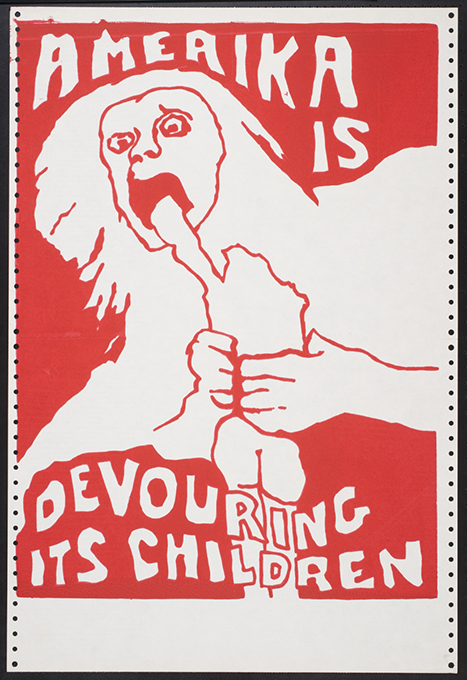
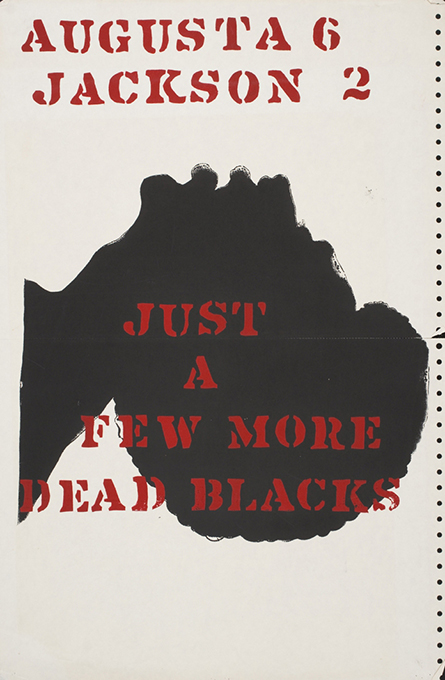
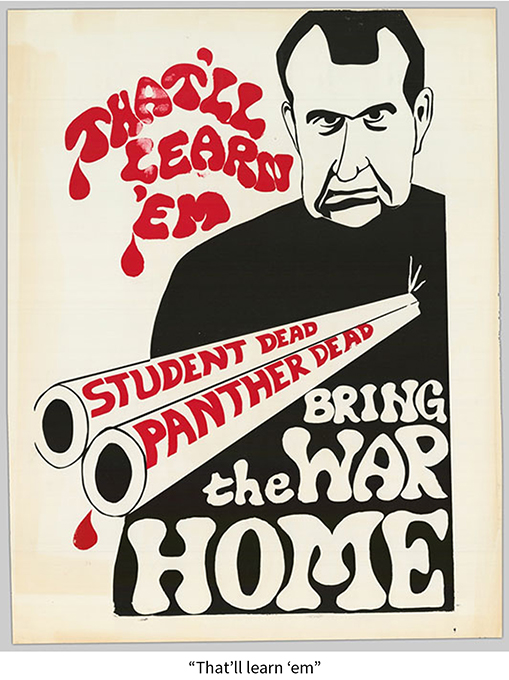
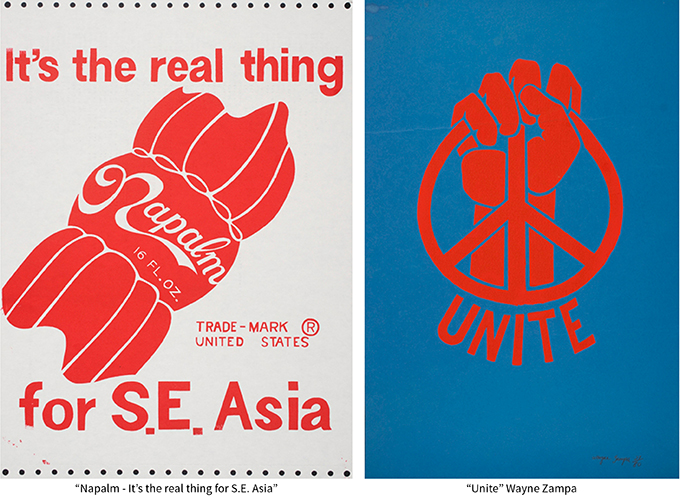
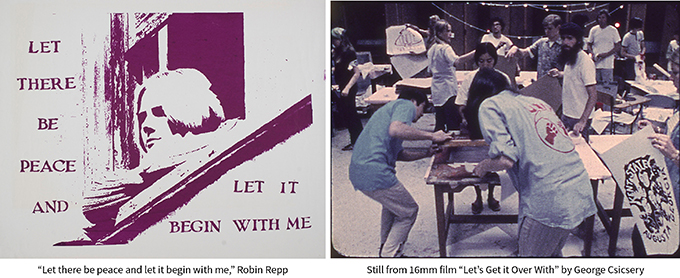
After Richard Nixon escalated the Vietnam war by expanding into Laos and Cambodia, Ohio National Guard troops killed four protesting students at Kent State on May 4, 1970. 11 days later, two African American students were killed at Mississippi’s Jackson State College. A simmering student movement exploded in rage, and college campuses all over the country went on strike and made posters. The epicenter was UC Berkeley, where new research is revealing the details of that brief few months when over 500 distinct titles were printed that rivaled the fabled student posters of Paris 1968. The subjects ranged widely – not just against the war, and against all war, but also taking on G.I rights, police brutality, the environment, educational reform, consumerism, and an out-of-control president. Most were made by amateurs, their first and only handmade piece of original art.
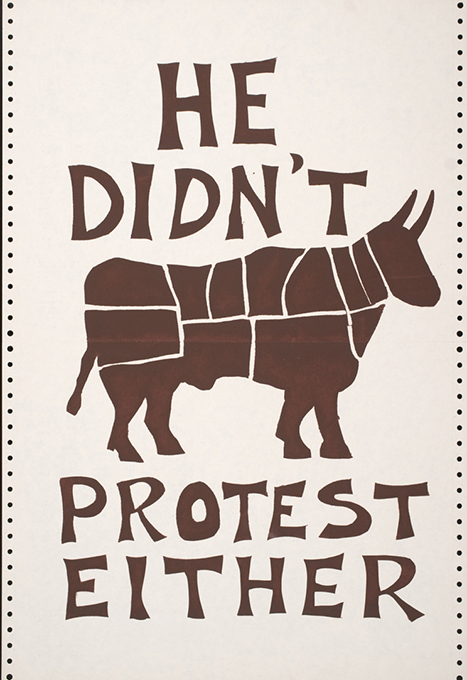
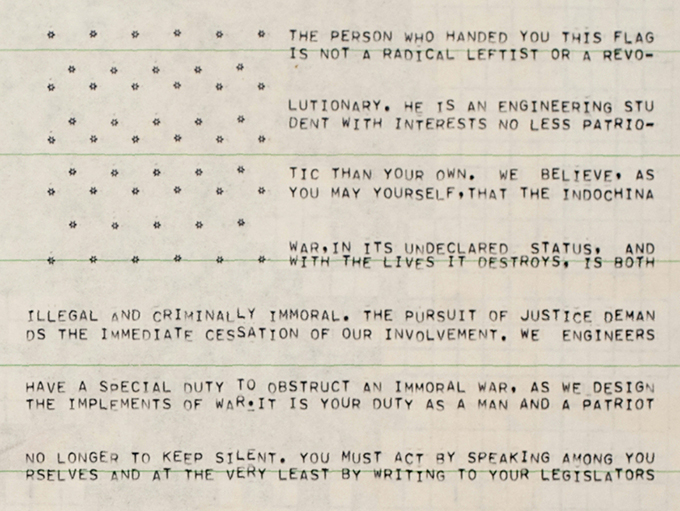
The output has been generically credited as “Berkeley Political Poster Workshop” but no such entity existed. The primary screenprint workshop was Gorilla Graphics, in the basement of UC Berkeley’s Wurster Hall. Others were made at the Art Department and Wheeler Hall. At least one was printed at a nearby fraternity, another made of embossed vinyl. Several were offset printed at sympathetic shops near campus, including Berkeley Graphic Arts under the hand of FSM veteran David Lance Goines. One of the distinctive features of the screenprints was that many were printed on the back of used tractor-feed computer paper, and even that feature offers depth. A dot-matrix American flag polemic begins with “The person who handed you this flag is not a radical leftist or a revolutionary, he is an engineering student with interests no less patriotic than your own…”
Some art faculty were very supportive, especially Peter Selz and Herschel B. Chipp, who organized an exhibition of protest art at the University Art Gallery. Professor Chipp also produced Posters for Peace, a fundraising folio edition of selected images. He noted that “Students of the College of Environmental Design led in organizing effective production and distribution and were soon joined by art students and many others. Unlike the French students of 1968, their efforts were directed toward enlisting the support of the public, and they opened their workshops to it and provided posters to anyone who wished to use them.”
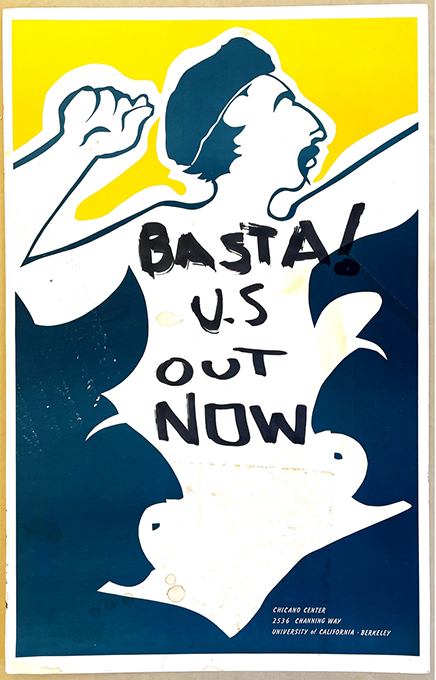
Yet contradictions existed. While Chicano artist and UC instructor Malaquias Montoya appreciated seeing the new political energy expressed as art, he could not help but notice how many Berkeley faculty that had just earlier disdained such work were now embracing such activity. “These students were all of a sudden getting A’s for making political posters, and when I was doing the same thing they gave me shit every day.”
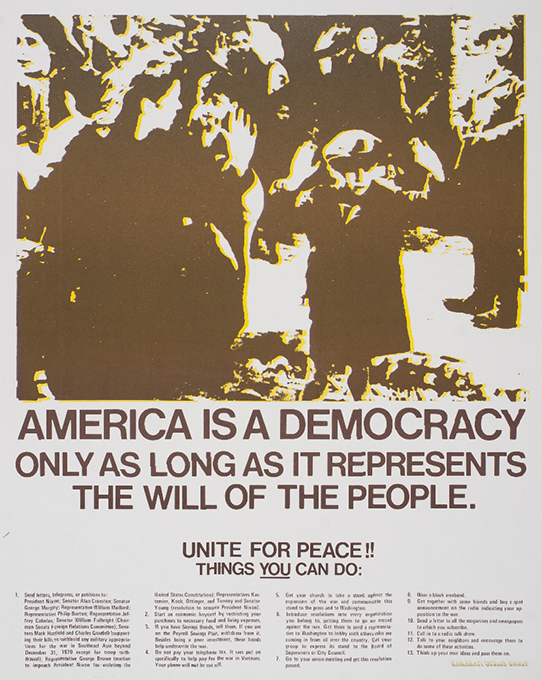
Many of these are eerily prescient. A poster by Kamakazi Design Group (a short-lived project with a made-up name led by UC professor Marc Treib) shows 1943 Nazis rounding up Warsaw ghetto civilians with the headline “America is a democracy only as long as it represents the will of the people.”
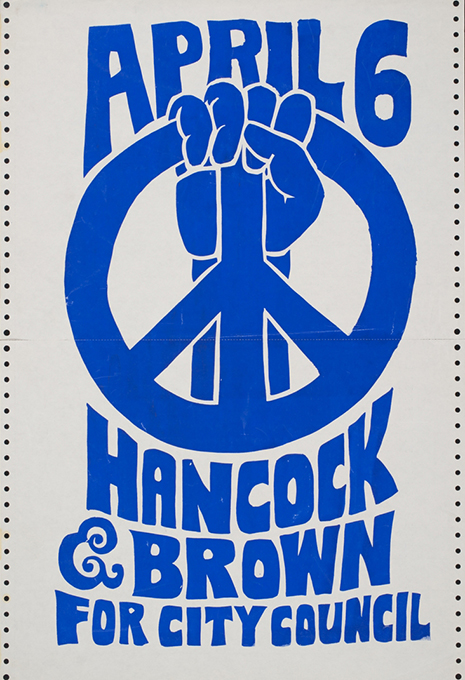
An image combining the clenched fist with a peace symbol was later recycled for the April Coalition for Berkeley City Council, the progressive slate that included Loni Hancock – and won.
As we can see from current UC administration actions responding to the heavy hand of a Trump presidency, posters are still a threat. Despite being a unique and powerful event in the history of popular democratic media, the 1970 posters from Berkeley and other sites nationwide have not seen enough serious scholarship. Books and exhibitions on protest art give this body of work a nod, but much of what has been written has errors and is woefully incomplete. The clock is ticking for gathering first-hand accounts. These posters deserve better.
There is now an effort to compile a catalog raisonné of these posters by reviewing physical and digital collections to identify distinct titles and determine where they were produced. It’s an imprecise and incomplete process, compounded by the fact that few were dated, few were credited as to source or artist, and posters were freely shared between groups, making provenance murky. Many institutional special collections include posters from other years or workshops. Readers are encouraged to look at this evolving art history project and submit corrections or additions. As in 1970, it takes a village to get it right.
You can check out more here
All 1970 and artist unknown, unless noted.
…
This was a time a lot like now, when we’d just found out that Nixon, while promising peace in Southeast Asia, had been secretly conducting a brutal bombing campaign in Cambodia. Meanwhile, the war in Vietnam raged on, with no end in sight. People, especially students who faced being sent there, wanted to do something about it, but street protests had been put down with unprecedented cruelty, with teargas and batons in Berkeley and outright murder on the campus of Kent State University in Ohio. Making posters seemed like something people could do, and many threw themselves into a frenzy of production, leading to a sudden renaissance of political art. This burst of creativity in the face of repression has a lot to tell us today, showing us how to stand up without immediately being pushed down. Some attention to this movement by art historians would be timely, since many who participated are still alive, but their stories have yet to be told.
Great to hear about what you’re doing, Lincoln. Our local history group is doing something similar, but on a smaller scale. We’re researching the history of the use of 2214 Grove Street during the ’60s and ’70s by a series of radical groups starting with the Free Speech movement. Good luck with your project!