RAMBLING THOUGHTS ON COURAGE
By Mike Miller
Editors Note: On Saturday, July 19th my friend Mike Miller celebrated his 88th birthday at the 7 Mile House on Old Bayshore Avenue not far from the Sunnydale Housing Projects where he grew up. The party was great food and a beautiful mixture of Mike’s colleagues, friends and family. One grandson saluted Mike by proclaiming: “I love Mike, he made me Mac and Cheese once but he forgot the cheese!” That brought down the house.
Others saluted Mike’s work and influence on their development as organizers. I told MIke as he was leaving the event that I always esteemed his courage in going South as a Freedom Rider and braving the mortal dangers of the early civil rights movement. I asked that he write something about those experiences and he has kindly complied. Here below are his thoughts on courage.
Peter Olney
Preface
Some weeks ago, maybe even months, Peter Olney asked me to write a piece on “courage.” I’ve started writing these thoughts numerous times. It turned out to be a more difficult subject than I think either of us realized.
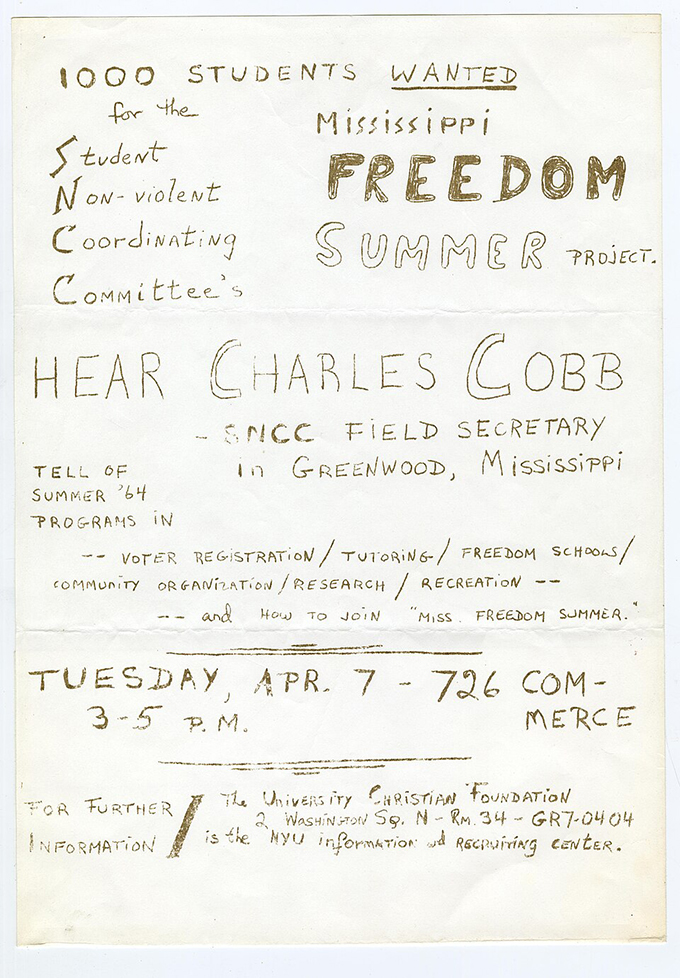
I don’t now recall what prompted Peter’s request; it may have been the fact that I was one of two whites who spent the Summer of 1963 in Greenwood, Mississippi as a Student Nonviolent Coordinating Committee (SNCC) field secretary.
Mississippi Delta, 1963
That was a year before “Mississippi Summer,” when nearly a thousand northern, mostly white, volunteers came to the State in response to a call from the Council of Federated Organizations (COFO), largely staffed by SNCC, to break down its wall of racism. Earlier experiences of whites working in the Delta were accompanied by an increase in violence against local people. The question was intensely discussed by SNCC staffers Jim Forman, Bob Moses and Sam Block. The compromise agreement was that we would stay close to the office.
After only a week-or-so there we were picked up a couple of blocks from the SNCC office by a cop. Outside the jailhouse, he yelled up to white prisoners looking out a cell window on flight up, “Got me some nggr lovers here, boys.” Dick Frey and I were scared. Waiting at the booking desk, we could hear the muffled voices of the arresting officer and Chief Larry, but couldn’t make out what they were saying. A couple of minutes turned into five, then ten. They seemed like hours. The arresting cop came out of the Chief’s office door and told us to get back in the car.
Now we were in a panic. Was he taking us to the river to shoot us and dump us in its waters?
No, he wasn’t.
“You see that school over there, boys, we built that for our nigras (he’d modified “nggrs”). He repeated that performance at a new recreation park. The next thing we knew, we were back at the SNCC office. We entered to laughter and applause! What prompted it is that Project Director Sam Black had called the Chief and bluffed: “Chief, don’t mess with those boys, they know the Governor of California.” We didn’t.
Going to Mississippi from the student movement context at U.C. Berkeley didn’t seem to me to be courageous at the time. I was in a campus “movement’ culture that fully supported me. Indeed, going gave me a kind of special status when I returned. I admit to enjoying it.
In those days, I thought (and still think) all the SNCC workers in the south were courageous. Sam Block and Willie Peacock, the first two field secretaries to work in Greenwood, slept in their cars for several months before any local family opened their home to them.
Local Black people challenging racism took their lives in their hands. Those who opened their doors to civil rights workers, attended “mass meetings” (often only a handful of people) and finally went to the Courthouse to attempt to register were perhaps even more courageous: Sam and Willie were there by choice. “Local people” were by definition not. They risked firing, house burning, beating and death.
Rev. Aaron Johnson was the first to open his church to SNCC meetings. He lost members as a result. He stuck by his civil rights commitments. That was courage.
Going Against The Flow
Refusing to go along with the crowd when you think the crowd is wrong is another form of courage. I’ve been courageous in such circumstances, and I’ve not been in others.
In my junior high school in San Francisco, I was President of the scholarship society (a group of students who got good grades). We had an afterschool dance one day, attended by our only Black member. While others danced, she sat at the edge of the dance floor.
I asked her to dance. In the context of my largely white working class school with very few Black students, I think that was courageous. I stepped up, risking raised eyebrows and gossip behind my back. I stood up for my values.
In my civics class, I reported on a San Francisco Milk Wagon Drivers’ strike and called those who crossed the picket lines “scabs” — the word routinely used by my left-wing parents to describe strikebreakers. Homeroom teacher, Miss Madden, was offended by that, and asked me, “Are you a Communist Michael?” (That was 1950, at the peak of the McCarthy era.) I was quick on my feet: “Yes, I am, and Mike _______ is vice-president and Karl _______ is secretary of our group here at Denman.” (They had earlier expressed support for the strikers.) My classmates laughed; Miss Madden blushed. At the time, and now, I thought that was a risky thing to do.
Other times in junior high, and senior high I didn’t do so well. When Fred ________ used the word “kike,” I didn’t challenge him. I could have. We were a group of friends spending a week-end day at Berkeley’s Lake Anza. Silence was prompted by the fear of speaking against a common slur used in those days. Why didn’t I? I think it was a lack of courage, a fear of being different.
Taking Risk
A lot of people take daily risks in their work: racing drivers, coal miners, police, mountain climbers. Are they courageous? I don’t want to use the word here though I can’t quite tell you why.
Take it to an extreme: are the Sherpas who accompany people seeking to climb Mt. Everest courageous? It’s hard not to think of them that way. On the other hand, economic necessity is typically the driving force in their choice of work. Does that diminish their courage? Something in me wants to limit “courage” to acts freely taken, not those born of necessity — economic or otherwise.
What about men at war? When a soldier throws himself on a hand grenade tossed into a foxhole he shares with others, he gives his life to save theirs. I think that’s courageous. But why aren’t the others in the foxhole who were volunteers also courageous?
Are spies who infiltrate Iranian atomic research sites to learn who the physicists are so that their Israeli employers can assassinate the scientists, courageous? If caught, they are probably summarily executed, perhaps after torture. Here’s another place where I’m reluctant to use the word.
At some point risk becomes foolhardiness. How is the line between them drawn? By whom?
At another point, failure to take risk is undue fearfulness. The likelihood of danger is exaggerated in the mind of the fearful. It justifies inaction when the justification is without merit.
Can Adversaries Be Courageous?
I think so. When a conservative student speaks up in a liberal classroom, that’s as courageous as the radical speaking up in a conservative context.
Here’s a tricky one: I think the group that attempted to assassinate Hitler in 1944 was courageous. What about the man who assassinated Gandhi? Or the assassin of Malcolm X, Martin Luther King, Jr, John F. Kennedy, Robert Kennedy? Is “courage” only applied to those whose acts we support? I don’t think so, but I hate to think of King’s assassin as courageous!
If pressed here, I can find no justification for limiting the notion of courage to acts taken by people on our political side of the fence. That is both a defining characteristic of it, and why courage is not enough. It is possible to be courageous and immoral.
Postscript: In subsequent discussions, Mike has identified other worthy present day courageous historical actors: The activists who sailed on the Pro Palestine freedom flotillas and the people on the streets defending immigrants against ICE attacks. Peter Olney
…